pañuelo
“pañuelo” means “handkerchief” in Spanish. It has 2 different meanings depending on context:

handkerchief
Also: tissue
📝 In Action
Necesito un pañuelo, tengo un resfriado muy fuerte.
A1I need a handkerchief; I have a very bad cold.
Siempre llevo un pañuelo limpio en el bolsillo de mi chaqueta.
A2I always carry a clean handkerchief in my jacket pocket.
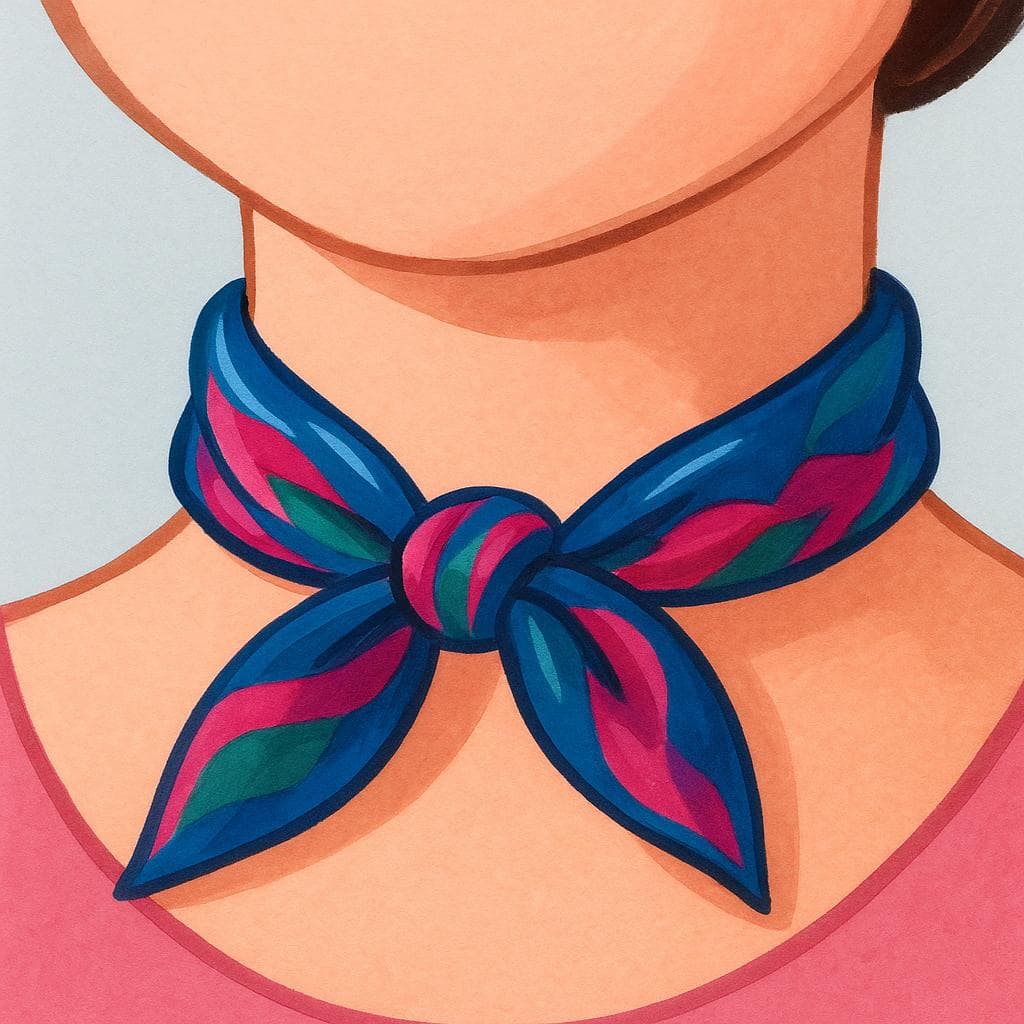
scarf
Also: bandana, neckerchief
📝 In Action
Se ató el pañuelo rojo a la cabeza para protegerse del sol.
B1She tied the red bandana around her head to protect herself from the sun.
Llevaba un elegante pañuelo de seda al cuello.
B2He was wearing an elegant silk scarf around his neck.
Translate to Spanish
✏️ Quick Practice
Quick Quiz: pañuelo
Question 1 of 2
If your friend says, 'Qué bonito pañuelo llevas en la cabeza,' what is the most likely translation?
📚 More Resources
👥 Word Family▼
📚 Etymology▼
Comes from the word *paño* (cloth), plus the diminutive ending *-uelo*. It literally means 'small piece of cloth'. *Paño* itself originates from the Latin word *pannus* meaning 'piece of cloth'.
First recorded: Medieval Spanish
Cognates (Related words)
💡 Master Spanish
Take your Spanish to the next level. Read 200+ illustrated and narrated Spanish stories tailored to your level with the Inklingo app!
Frequently Asked Questions
¿Pañuelo de papel o simplemente pañuelo?
When speaking, most Spanish speakers will understand 'pañuelo' to mean a tissue, but if you want to be perfectly clear that you mean the disposable paper kind, say 'pañuelo de papel'.
Is 'pañuelo' just for the nose?
No! It is also used for small scarves and bandanas worn for decoration or to protect the hair/neck. Think of it as any small, versatile piece of cloth.