Inklingo

pensabas

/pen-SAH-bahs/

you were thinking

A cartoon figure with a pensive expression sits on a small stool, a simple, empty thought cloud floating above their head, symbolizing active thinking.

This image shows the continuous mental action when someone 'was thinking'.

pensabas(verb)

A2regular (stem-changing in present tense, but regular in imperfect) ar

you were thinking

?

Past continuous action or state of mind (tú form)

,

you used to think

?

Past habitual action (tú form)

Also:

did you think

?

When asking about ongoing thoughts in the past

📝 In Action

¿Qué pensabas cuando te vi ayer?

A2

What were you thinking when I saw you yesterday?

De niño, pensabas que los perros podían volar.

B1

As a child, you used to think that dogs could fly.

Yo pensaba que tú pensabas lo mismo.

B1

I thought that you were thinking the same thing.

Word Connections

Synonyms

  • reflexionabas (you were reflecting)
  • meditabas (you were meditating)

Common Collocations

  • pensabas en voz altayou were thinking out loud

💡 Grammar Points

The 'Tú' Form

'Pensabas' is the informal 'you' form (tú). It is used when speaking to friends, family, or people you know well.

Imperfect vs. Preterite

Use 'pensabas' (Imperfect) for thoughts that were ongoing or repeated, like a background activity. If you want to say you had one single, complete thought, you would use the Preterite: 'pensaste' (you thought once).

❌ Common Pitfalls

Confusing Imperfect Endings

Mistake: "Using 'pensaste' when describing a background state: 'Yo cocinaba mientras tú pensaste.'"

Correction: Use the Imperfect for the ongoing action: 'Yo cocinaba mientras tú pensabas.' (I was cooking while you were thinking.)

⭐ Usage Tips

Describing Past Scenarios

The Imperfect form 'pensabas' is perfect for setting the scene in a story or describing what your mental state was like at a specific time in the past.

A person stands confidently next to a large, stylized star drawn on a wall, pointing at it firmly, representing a strongly held past belief.

Before you changed your mind, you 'believed' this was true.

pensabas(verb)

B1conjugated form of pensar ar

you believed

?

Referring to a past long-held opinion (tú form)

,

you were of the opinion

?

Describing a past conviction

Also:

you considered

?

When evaluating options in the past

📝 In Action

Pensabas que el proyecto era imposible, ¿verdad?

B1

You believed the project was impossible, right?

Antes de la reunión, ¿qué pensabas de su propuesta?

B2

Before the meeting, what did you think (what was your opinion) of their proposal?

Word Connections

Synonyms

  • creías (you believed)
  • opinabas (you opined)

Common Collocations

  • pensabas diferenteyou thought differently

💡 Grammar Points

Expressing Past Opinions

When describing a past belief, the Imperfect ('pensabas') is usually necessary because beliefs are continuous states, not sudden, completed actions.

⭐ Usage Tips

Using 'Que'

When expressing a belief, 'pensabas' is almost always followed by 'que' (that): 'Pensabas que iba a llover' (You believed that it was going to rain).

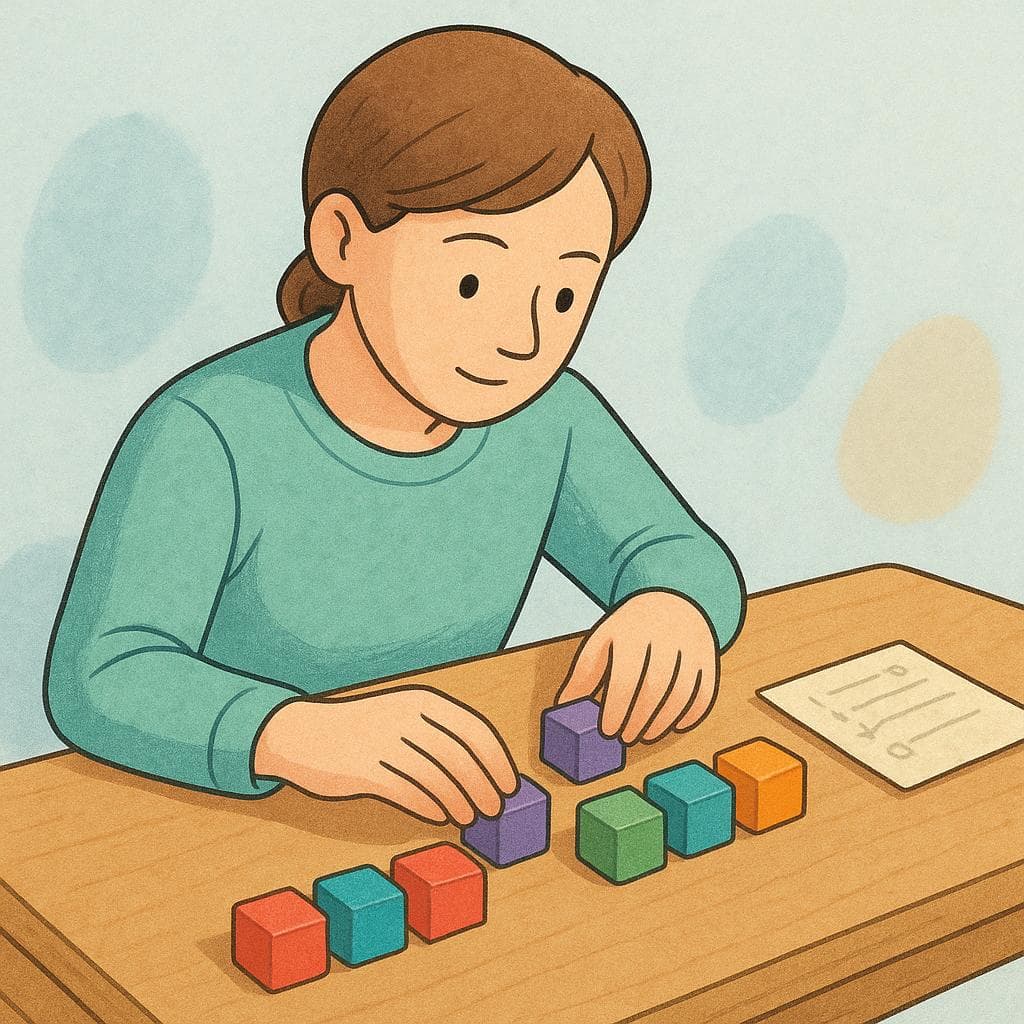
A person is sitting at a desk, carefully moving and arranging three distinct, brightly colored geometric blocks on the surface, depicting the action of planning or organizing a sequence.

This image illustrates the past intention when you 'were planning' an action.

pensabas(verb)

B1conjugated form of pensar ar

you were planning

?

Referring to an intention or plan in the past (tú form)

,

you intended

?

Describing a past goal

📝 In Action

Pensabas viajar a México este verano.

B1

You were planning to travel to Mexico this summer.

¿Pensabas en mí cuando me llamaste?

B2

Were you thinking/planning on me when you called me? (Used with 'en')

Word Connections

Synonyms

  • planeabas (you were planning)
  • proponías (you were proposing/intending)

Common Collocations

  • pensabas hacerloyou were planning to do it

💡 Grammar Points

Planning with Infinitives

To express a past intention, 'pensabas' is often followed directly by an action word (infinitive): 'Pensabas correr' (You were planning to run).

❌ Common Pitfalls

Using 'Pensar' for Future

Mistake: "Using 'pensabas' when referring to a definite, near future plan: 'Pensabas ir mañana.'"

Correction: While okay, it's more common to use 'Ibas a ir' (You were going to go) for definite future plans that didn't happen.

🔄 Conjugations

indicative

present

él/ella/ustedpiensa
yopienso
piensas
ellos/ellas/ustedespiensan
nosotrospensamos
vosotrospensáis

imperfect

él/ella/ustedpensaba
yopensaba
pensabas
ellos/ellas/ustedespensaban
nosotrospensábamos
vosotrospensabais

preterite

él/ella/ustedpensó
yopensé
pensaste
ellos/ellas/ustedespensaron
nosotrospensamos
vosotrospensasteis

subjunctive

present

él/ella/ustedpiense
yopiense
pienses
ellos/ellas/ustedespiensen
nosotrospensemos
vosotrospenséis

imperfect

él/ella/ustedpensara/pensase
yopensara/pensase
pensaras/pensases
ellos/ellas/ustedespensaran/pensasen
nosotrospensáramos/pensásemos
vosotrospensarais/pensaseis

✏️ Quick Practice

💡 Quick Quiz: pensabas

Question 1 of 2

Which sentence correctly uses 'pensabas' to describe a repeated action in the past?

📚 More Resources

Word Family

pensar(to think) - verb

Frequently Asked Questions

Why does 'pensabas' look so different from the present tense 'piensas'?

'Pensabas' is in the Imperfect tense, which is a very regular tense for -ar verbs and does not have the stem change (e->ie) that you see in the present tense ('piensas'). The Imperfect form is always 'pensaba, pensabas, pensaba,' etc.

When should I use 'pensabas en' versus just 'pensabas'?

Use 'pensabas en' (you were thinking *about*) when the thought is directed toward a specific person or topic: 'Pensabas en la tarea' (You were thinking about the homework). Use just 'pensabas' when describing the general state of your mind or belief: 'Pensabas que era tarde' (You believed it was late).