piano
“piano” means “piano” in Spanish. It has 2 different meanings depending on context:
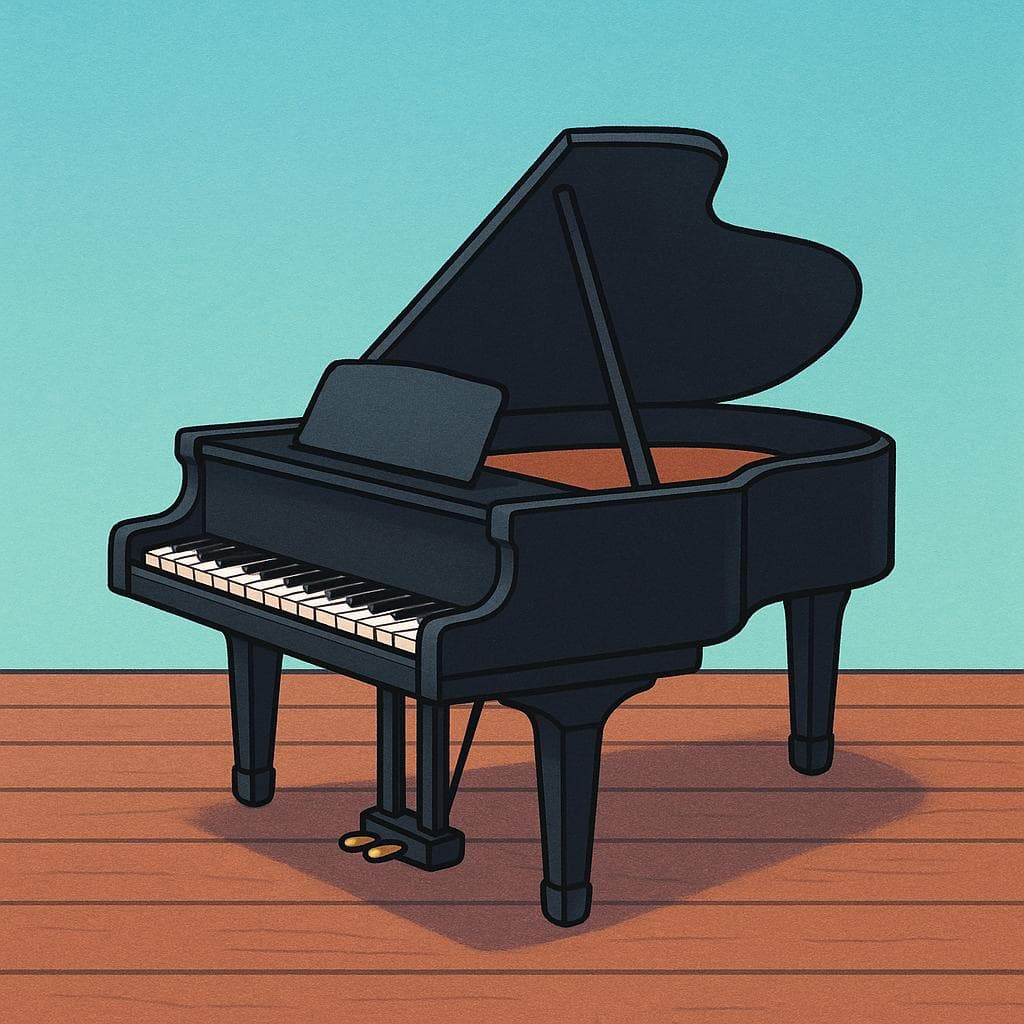

piano
📝 In Action
Mi hermano toca el piano desde que era niño.
A1My brother has played the piano since he was a child.
Necesitamos mover el piano de la sala al estudio.
A2We need to move the piano from the living room to the study.
Ella prefiere el sonido de un piano acústico en lugar de uno digital.
B1She prefers the sound of an acoustic piano instead of a digital one.
softly
Also: quietly
📝 In Action
El violín debe entrar piano en el compás dieciséis.
B2The violin must enter softly (quietly) at measure sixteen.
La partitura indica que esa sección se toca 'piano, piano', es decir, muy suave.
C1The score indicates that that section is played 'piano, piano,' meaning very softly.
✏️ Quick Practice
Quick Quiz: piano
Question 1 of 2
If a composer writes 'tocar piano' in the sheet music, what does it mean?
📚 More Resources
👥 Word Family▼
📚 Etymology▼
This word is a shortened version of the Italian term *pianoforte*. It literally means 'soft-loud,' because the instrument was revolutionary for allowing players to control the volume, unlike earlier keyboard instruments.
First recorded: 18th century (in its current form)
Cognates (Related words)
💡 Master Spanish
Take your Spanish to the next level. Read 200+ illustrated and narrated Spanish stories tailored to your level with the Inklingo app!
Frequently Asked Questions
Why is 'piano' a masculine word when it ends in '-o'?
'Piano' is masculine (el piano) because most Spanish nouns ending in '-o' are masculine. While there are a few exceptions, this is the standard pattern.
Is the word 'piano' originally Spanish?
No. 'Piano' is one of many musical terms borrowed directly from Italian, which is the traditional language for classical music notation.