pólvora
“pólvora” means “gunpowder” in Spanish (explosive mixture).
gunpowder
Also: firework powder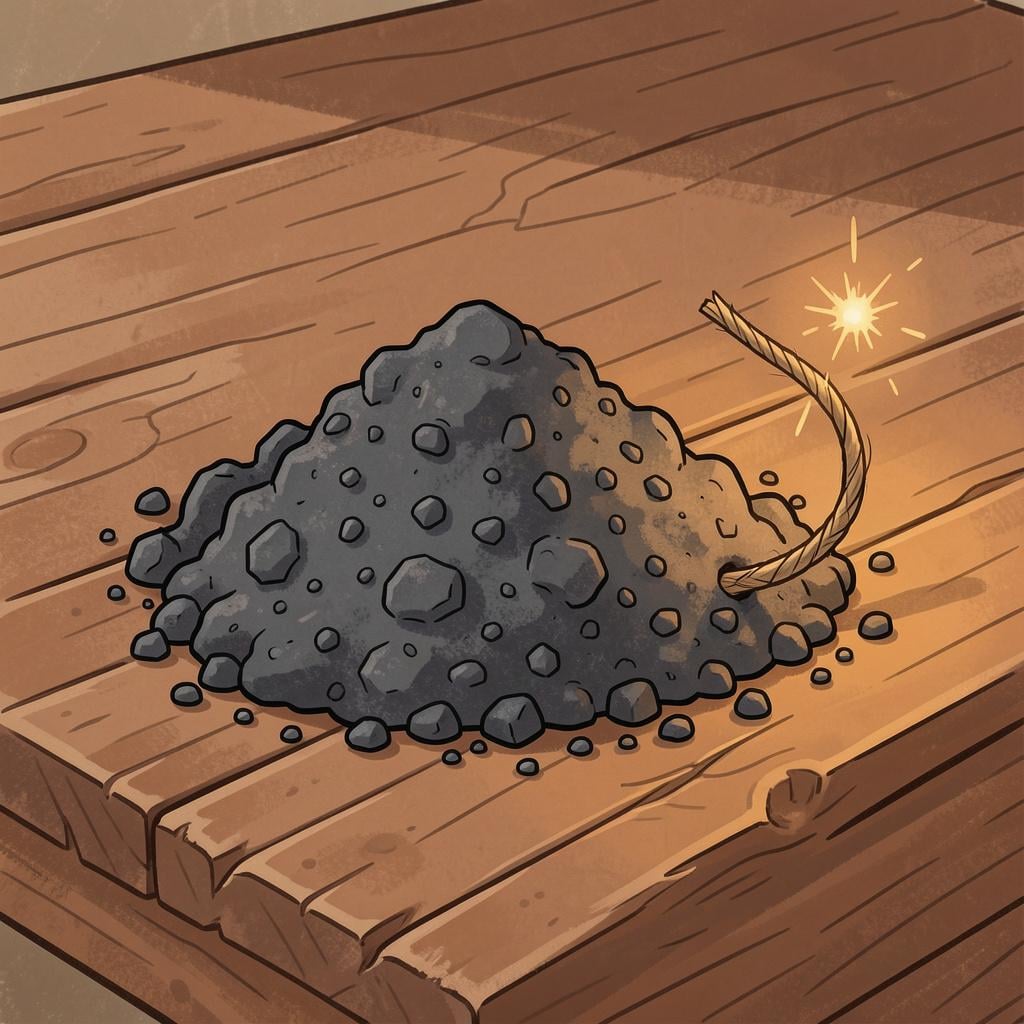
📝 In Action
Los barcos antiguos llevaban barriles llenos de pólvora.
B1Ancient ships carried barrels full of gunpowder.
El aire olía a pólvora después de los fuegos artificiales.
B1The air smelled like gunpowder after the fireworks.
No gastes pólvora en chimangos; ese problema no tiene solución.
C1Don't waste your energy on something not worth it; that problem has no solution.
Translate to Spanish
✏️ Quick Practice
Quick Quiz: pólvora
Question 1 of 1
If someone tells you 'No has inventado la pólvora,' what are they implying?
📚 More Resources
👥 Word Family▼
🎵 Rhymes▼
📚 Etymology▼
From the Latin word 'pulvis,' which means 'dust' or 'powder.' Over time, it specifically came to describe the explosive powder used in weaponry.
First recorded: 13th century
Cognates (Related words)
💡 Master Spanish
Take your Spanish to the next level. Read 200+ illustrated and narrated Spanish stories tailored to your level with the Inklingo app!
Frequently Asked Questions
Can I use 'pólvora' for the powder I put on my face?
No. For makeup, you should use the word 'polvos' (usually in plural). 'Pólvora' is strictly for explosives.
Is 'pólvora' a masculine or feminine word?
It is feminine: 'la pólvora'.