religión
“religión” means “religion” in Spanish. It has 2 different meanings depending on context:

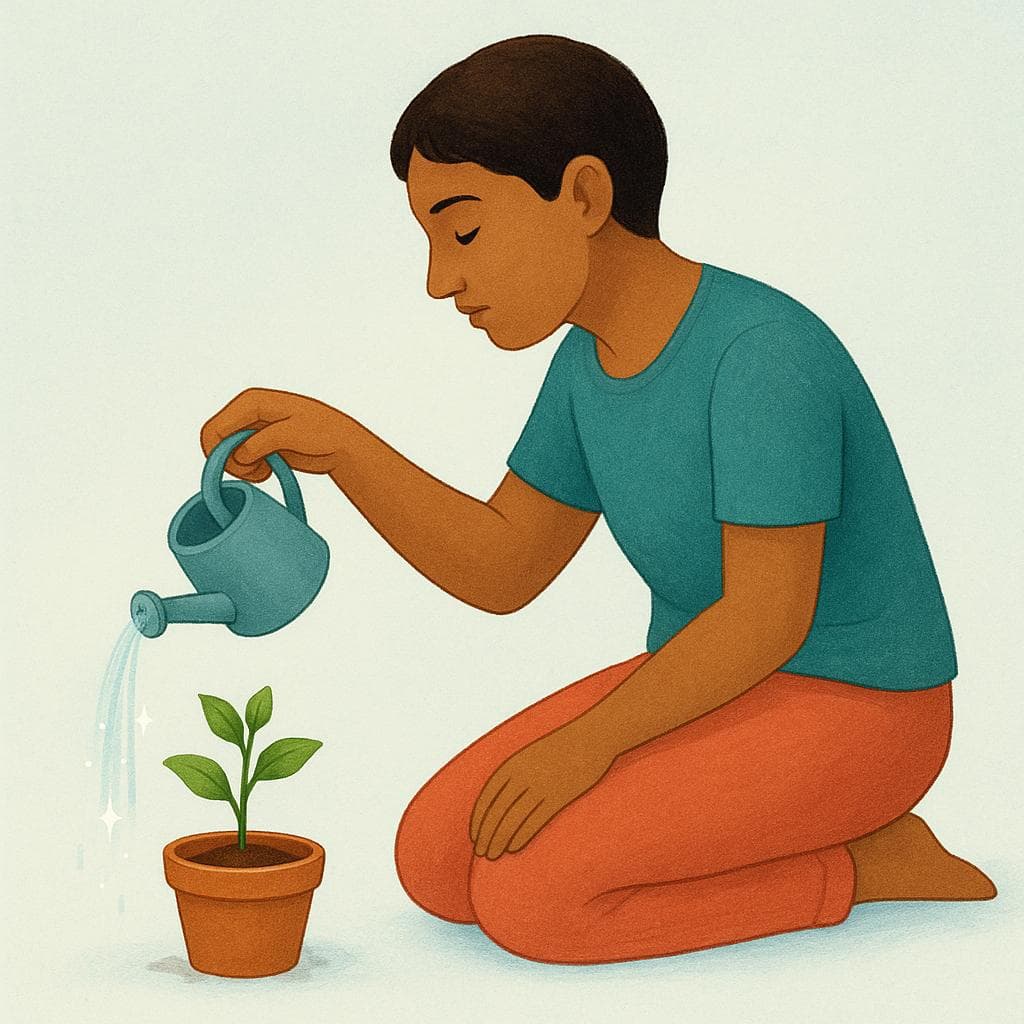
religionAlso: faith, creed

📝 In Action
Su familia practica la religión católica.
A2His family practices the Catholic religion.
Hay libertad de religión en este país.
B1There is freedom of religion in this country.
¿Cuál es la religión mayoritaria aquí?
B2What is the majority religion here?
Word Connections
devotion, dedicationAlso: obsession

📝 In Action
Para muchos aficionados, el fútbol es una religión.
B2For many fans, football (soccer) is a religion.
Su religión en la vida es el trabajo y la disciplina.
C1His religion in life is work and discipline (meaning: his deepest commitment).
Word Connections
✏️ Quick Practice
Quick Quiz: religión
Question 1 of 2
Which sentence uses 'religión' in its figurative sense (meaning deep dedication)?
📚 More Resources
👥 Word Family
🎵 Rhymes
📚 Etymology
Comes from the Latin word 'religio,' which meant 'reverence' or 'piety.' It is often thought to be derived from the verb 'religare,' meaning 'to bind fast' or 'to reconnect,' suggesting a connection between people and a divine power.
First recorded: Medieval Latin period (c. 10th-12th century)
Cognates (Related words)
💡 Master Spanish
Take your Spanish to the next level. Read 200+ illustrated and narrated Spanish stories tailored to your level with the Inklingo app!
Frequently Asked Questions
Is 'religión' masculine or feminine?
It is feminine. You always use 'la religión' or 'una religión.' This is tricky because many words ending in -ón are masculine (like 'el camión'), but 'religión' is an exception.
How is 'religión' different from 'fe'?
'Religión' refers to the structured system, practices, and institutions (like Christianity or Islam). 'Fe' refers to the personal belief, trust, or confidence in something, whether spiritual or secular.