saludar
“saludar” means “to greet” in Spanish. It has 2 different meanings depending on context:
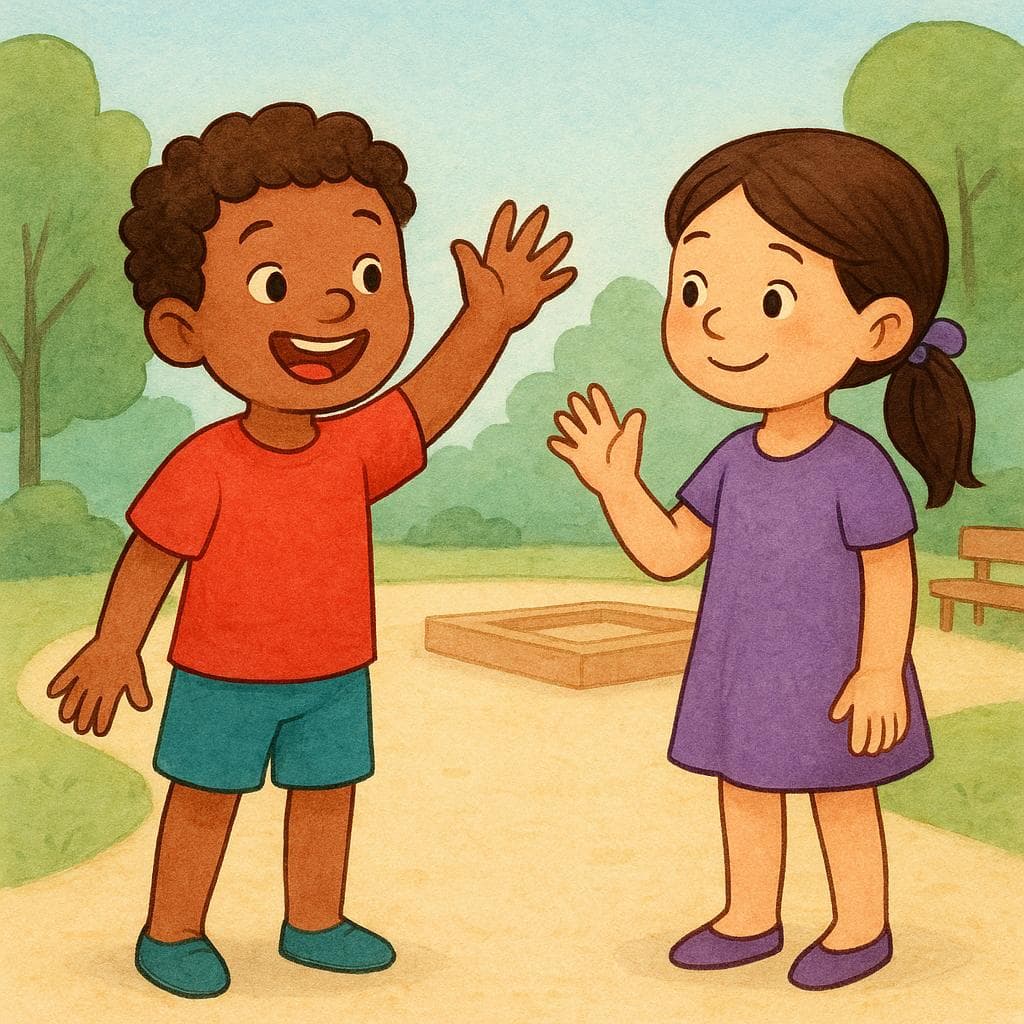

to greetAlso: to say hello, to wave at

📝 In Action
Siempre me gusta saludar a mis vecinos por la mañana.
A1I always like to greet my neighbors in the morning.
Ella me saludó con un beso en la mejilla.
A2She greeted me with a kiss on the cheek.
¿Vas a saludar a la señora de la caja?
A1Are you going to say hello to the lady at the register?
Word Connections
to saluteAlso: to honor

📝 In Action
El soldado saludó a su superior antes de recibir la orden.
B1The soldier saluted his superior before receiving the order.
La banda de música saludó a la bandera nacional.
B2The marching band saluted the national flag.
Word Connections
Indicative
Present
Imperfect
Preterite
Subjunctive
Present Subjunctive
Imperfect Subjunctive
✏️ Quick Practice
Quick Quiz: saludar
Question 1 of 2
Which sentence correctly uses 'saludar' when talking about a specific person?
📚 More Resources
👥 Word Family
📚 Etymology
Comes from the Latin word *salus*, meaning 'health' or 'well-being.' When you greet someone, you are essentially wishing them good health.
First recorded: 13th century
Cognates (Related words)
💡 Master Spanish
Take your Spanish to the next level. Read 200+ illustrated and narrated Spanish stories tailored to your level with the Inklingo app!
Frequently Asked Questions
How is 'saludar' different from 'despedirse'?
'Saludar' means to initiate an interaction or say hello. 'Despedirse' (which is reflexive, meaning the action reflects back on the subject) means to end an interaction or say goodbye/farewell. They are opposites!
Is 'saludar' only used for people?
Usually, yes, for the common meaning of greeting. However, in formal or ceremonial language (like the military use), you can 'saludar' a flag, a monument, or an institution to show respect.