semillas
“semillas” means “seeds” in Spanish. It has 2 different meanings depending on context:
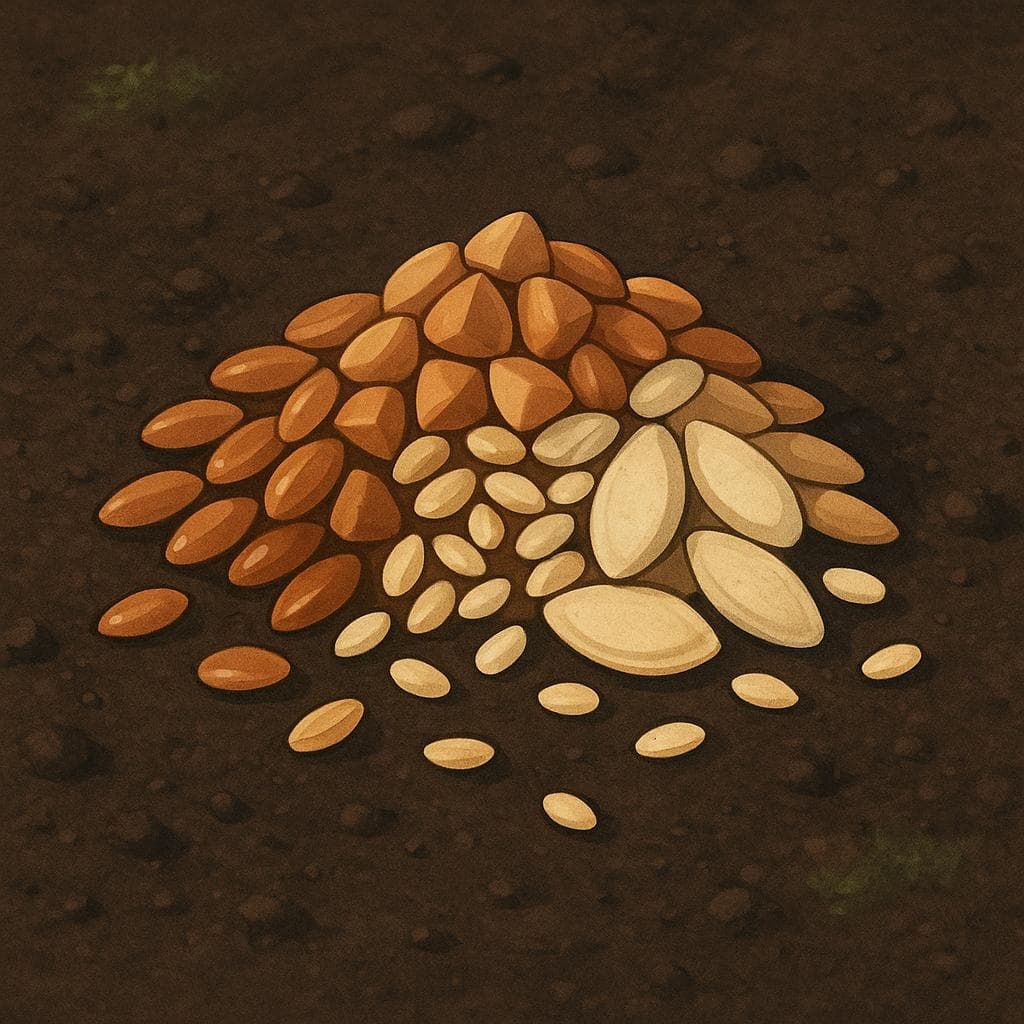
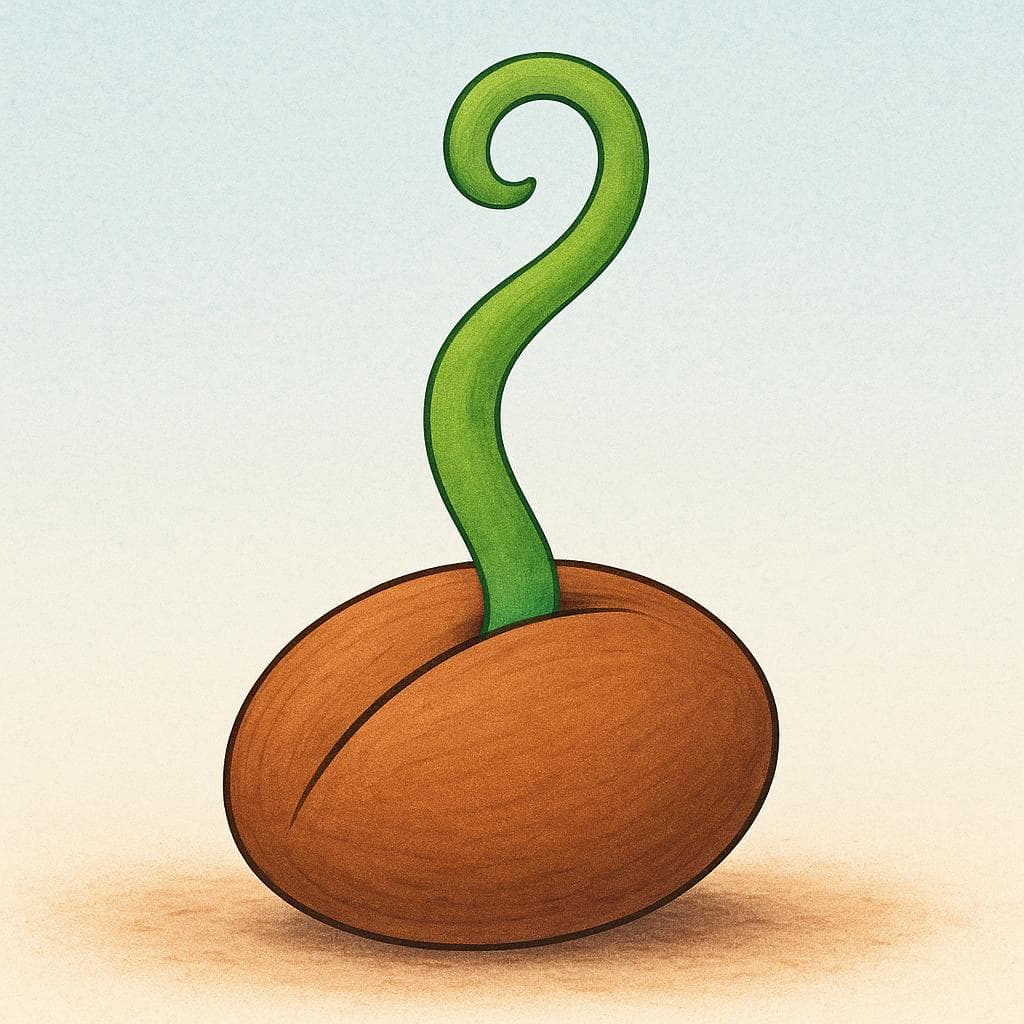
seeds
Also: kernels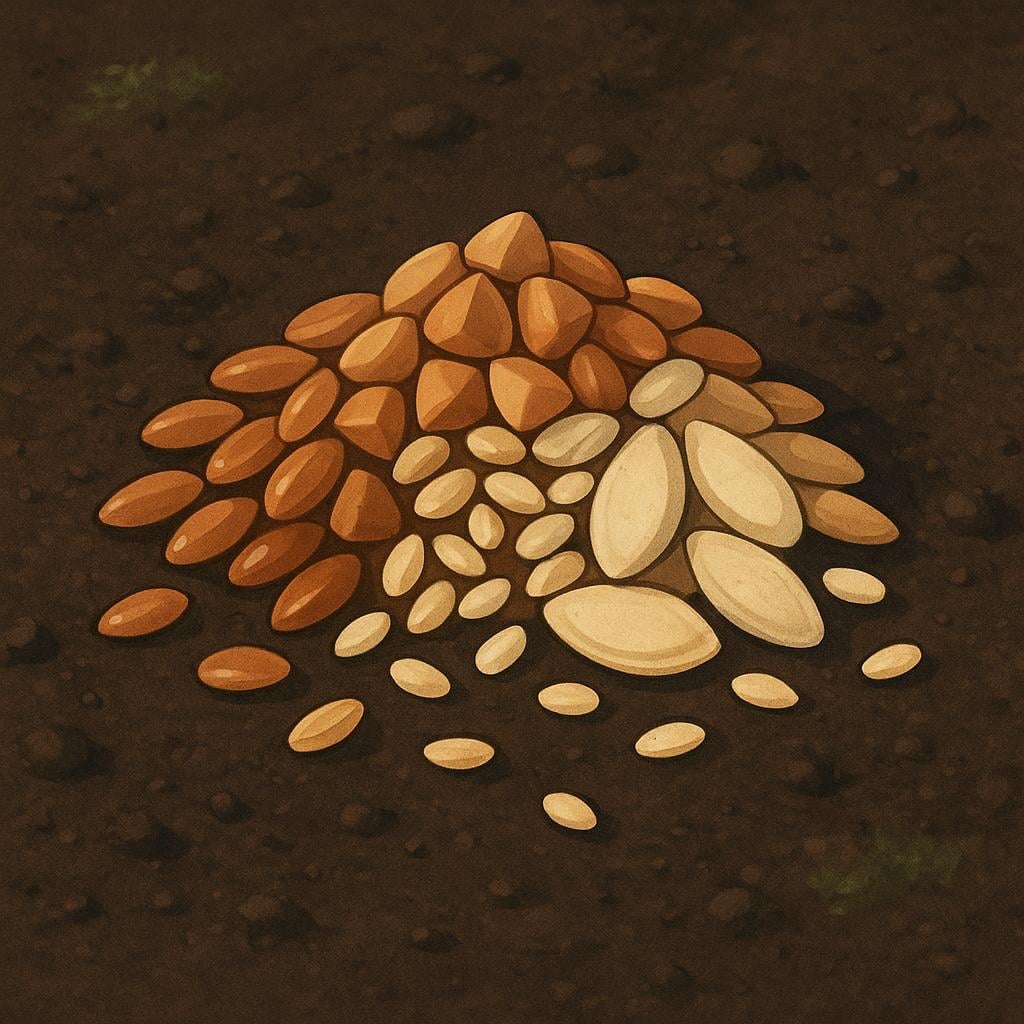
📝 In Action
Compré semillas de chía para añadir a mi yogur.
A1I bought chia seeds to add to my yogurt.
Necesitas plantar las semillas en la tierra fértil.
A2You need to plant the seeds in fertile soil.
Mi pájaro solo come semillas de girasol.
B1My bird only eats sunflower seeds.
source, inception
Also: germ
📝 In Action
Las protestas de 2019 fueron las semillas del cambio político actual.
B2The 2019 protests were the seeds of the current political change.
Sembraron las semillas de la duda en el jurado.
C1They sowed the seeds of doubt in the jury.
Translate to Spanish
✏️ Quick Practice
Quick Quiz: semillas
Question 1 of 2
¿Cuál es la traducción más común y literal de 'semillas'?
📚 More Resources
👥 Word Family▼
🎵 Rhymes▼
📚 Etymology▼
The word comes directly from the Latin word *sēmen* (meaning 'seed') and specifically from its plural form, *sēmina*. This root is shared by many words related to planting and growth.
First recorded: Around the 13th century in Spanish.
Cognates (Related words)
💡 Master Spanish
Take your Spanish to the next level. Read 200+ illustrated and narrated Spanish stories tailored to your level with the Inklingo app!
Frequently Asked Questions
¿Por qué 'semillas' es un sustantivo femenino?
Like its Latin root, 'semilla' (the singular form) is feminine. This means that even in the plural, we must use feminine articles and adjectives with it (e.g., 'las semillas', 'semillas pequeñas').
¿Cuál es el verbo relacionado con 'semillas'?
The most closely related verb is 'sembrar,' which means 'to sow' or 'to plant' the seeds.