venas
“venas” means “veins” in Spanish. It has 2 different meanings depending on context:
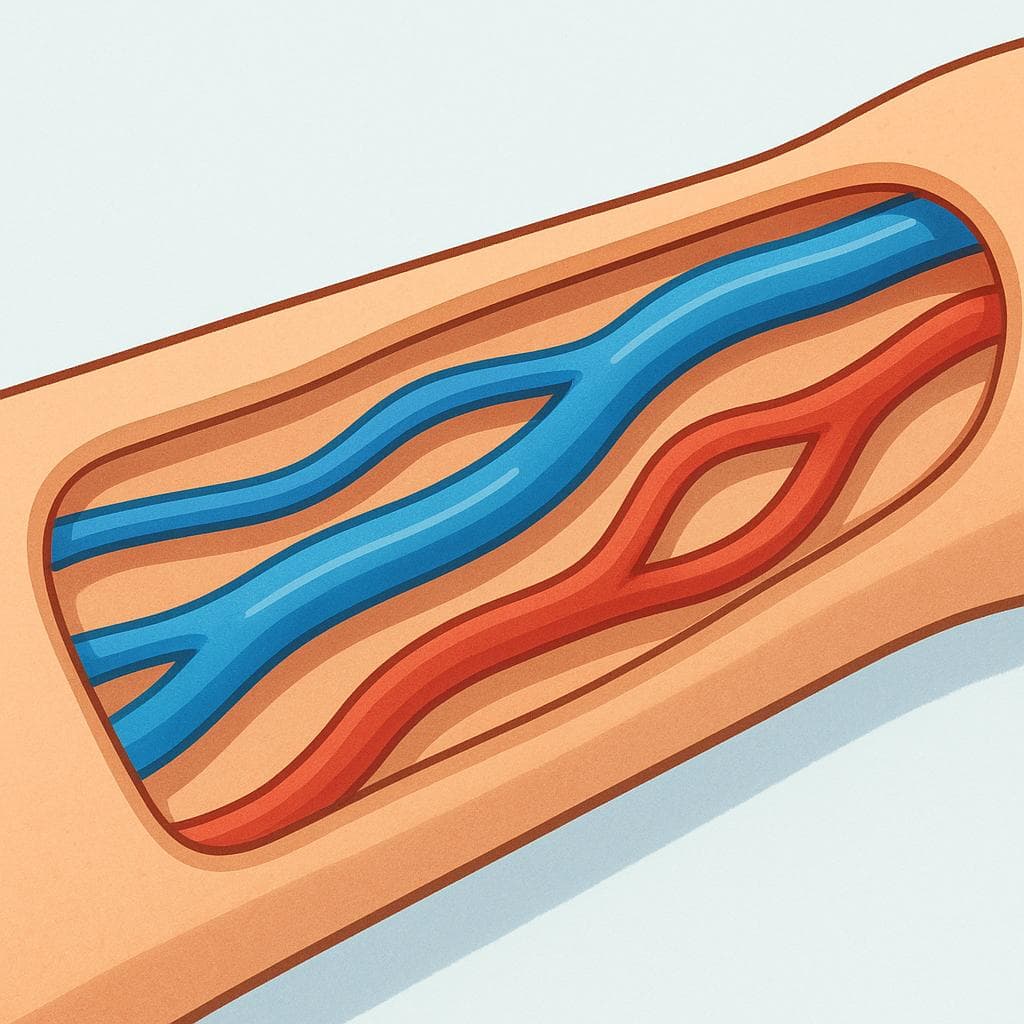

veins
Also: blood vessels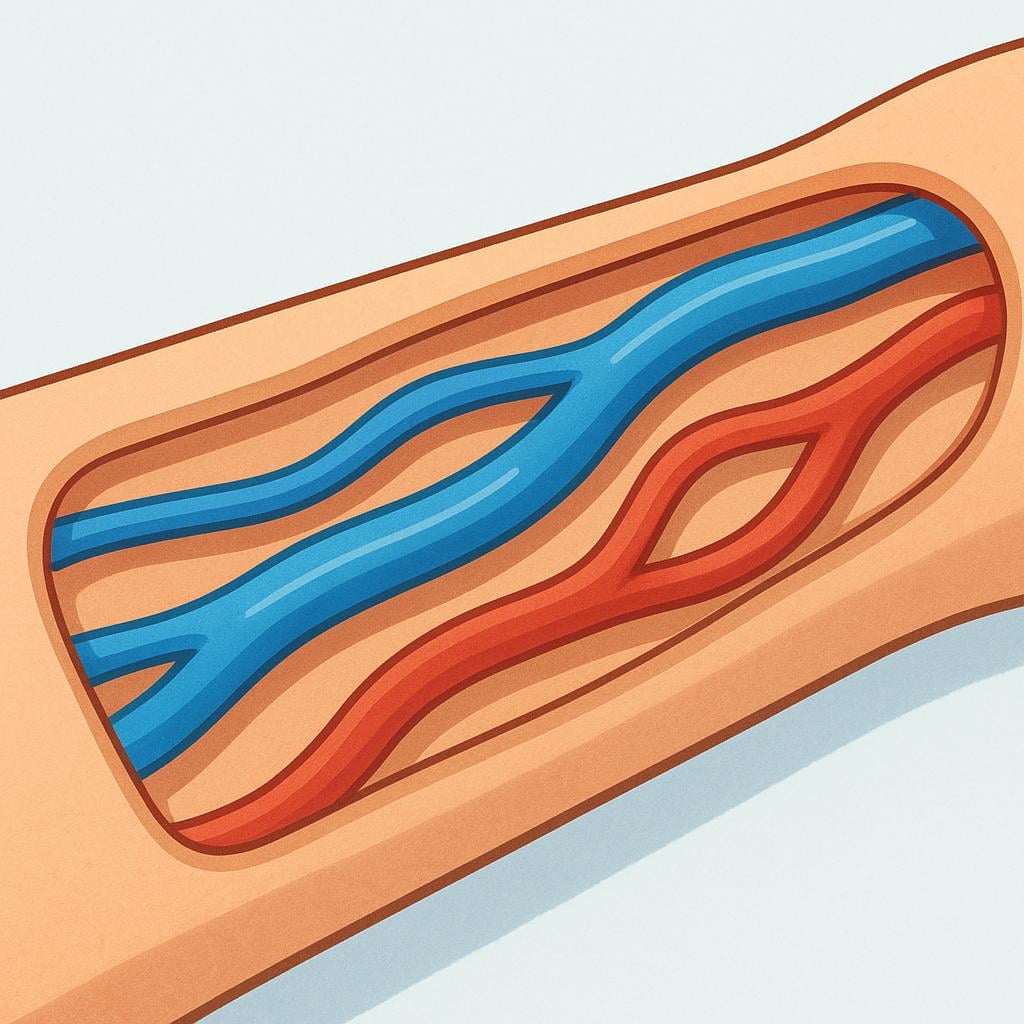
📝 In Action
Las venas azules se veían claramente bajo su piel.
A2The blue veins were clearly visible beneath her skin.
La enfermera tuvo que buscar una vena para poner la inyección.
A1The nurse had to find a vein to give the shot.
Las venas llevan la sangre al corazón.
B1Veins carry the blood back to the heart.
disposition, streak
Also: inspiration
📝 In Action
Parece que hoy estás con la vena cómica.
B2It seems you're in a comedic mood (or 'on a funny streak') today.
Tiene la vena artística de su abuela; le encanta pintar.
C1She has her grandmother's artistic inclination; she loves to paint.
Cuando le da la vena de la limpieza, no hay quien la pare.
B2When the cleaning bug hits her, there's no stopping her. (Figurative: when she gets the cleaning streak)
Translate to Spanish
✏️ Quick Practice
Quick Quiz: venas
Question 1 of 2
Which sentence uses 'venas' to describe a feeling or talent?
📚 More Resources
👥 Word Family▼
📚 Etymology▼
The word comes directly from the Latin word 'vēna,' which meant a blood vessel, and also metaphorically, a source of water or a natural inclination.
First recorded: 13th century
Cognates (Related words)
💡 Master Spanish
Take your Spanish to the next level. Read 200+ illustrated and narrated Spanish stories tailored to your level with the Inklingo app!
Frequently Asked Questions
Why is 'venas' (plural) used more often than 'vena' (singular)?
When talking about the body, we usually refer to the entire circulatory system, which involves many veins, so the plural 'venas' is the default term. The singular 'vena' is typically reserved for medical contexts or when referring to a specific, single vessel.
How do I say 'veins' in my hands hurt?
You would say, 'Me duelen las venas de las manos.' Always use the plural form 'las venas' in this context.