Inklingo

verse

/vehr-seh/

to see oneself

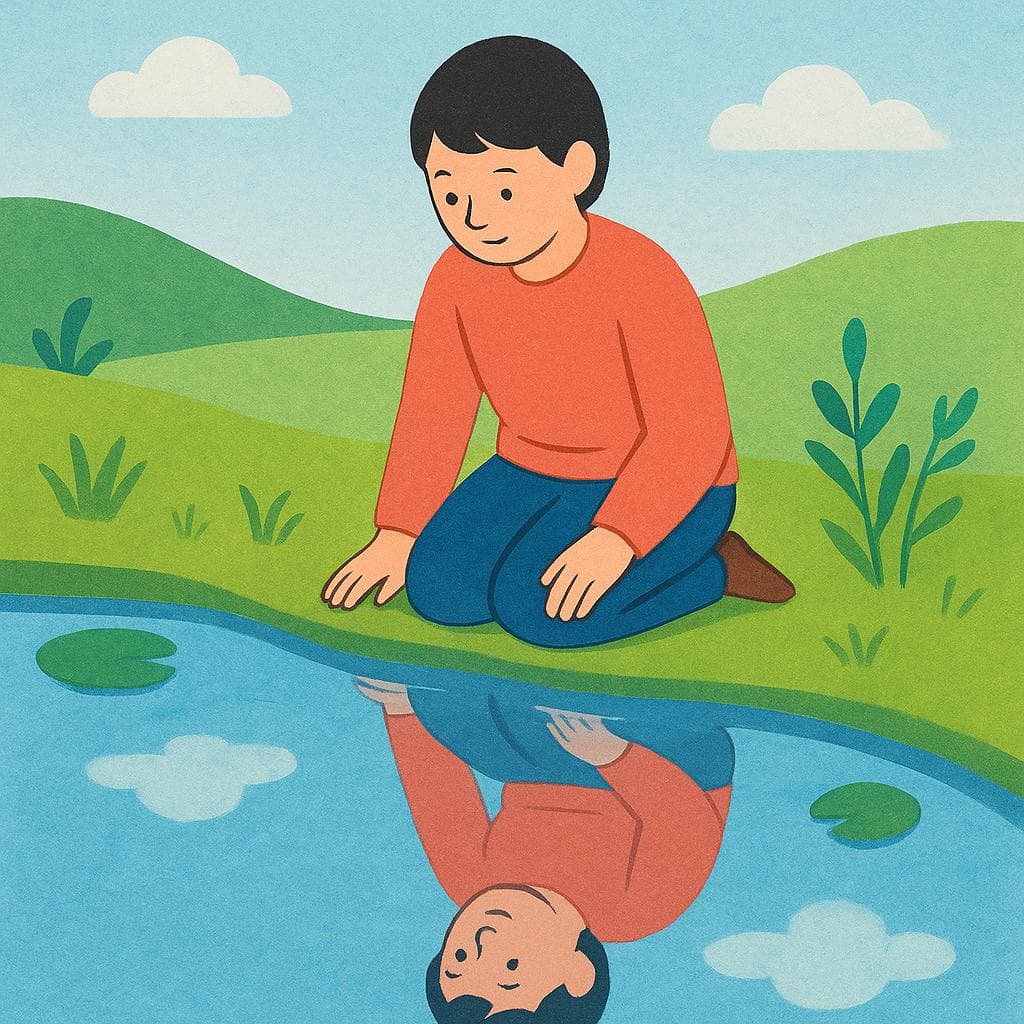
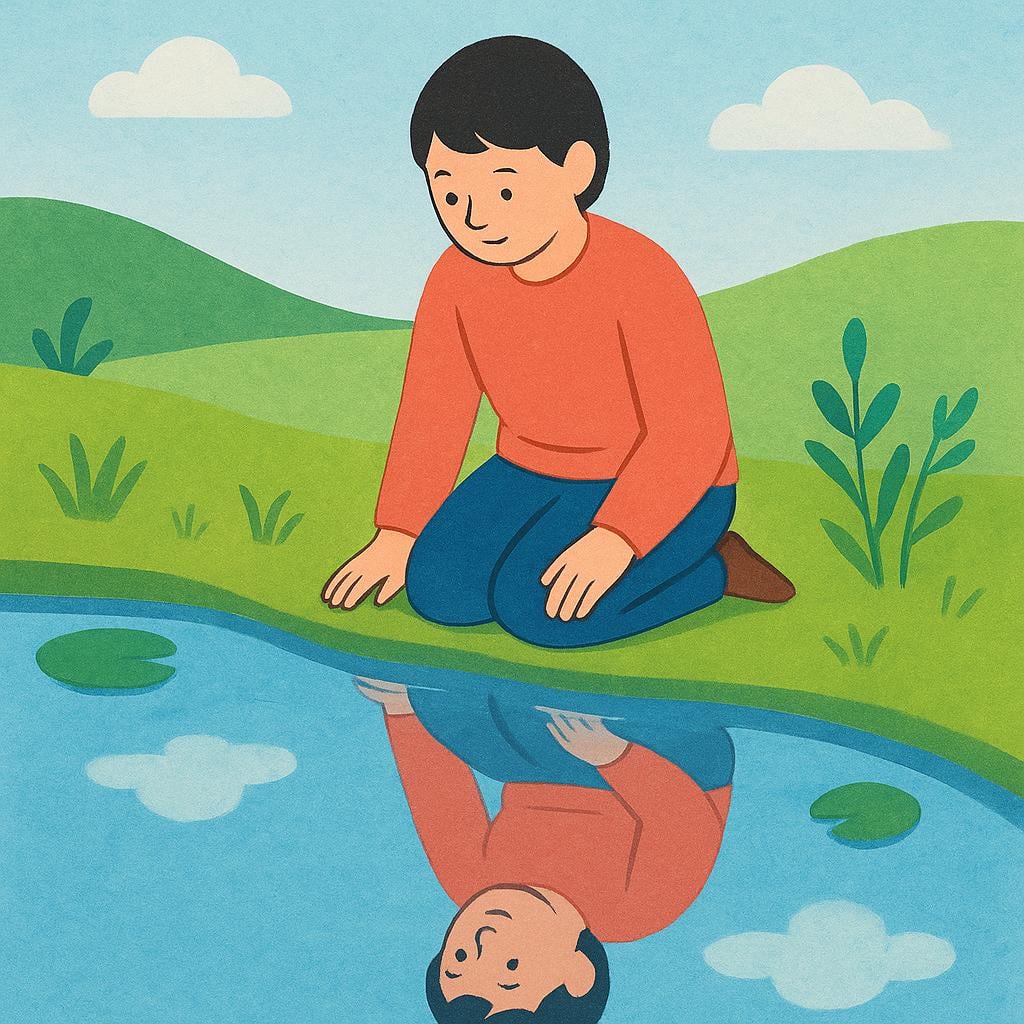
A person kneeling by a calm pond, looking intently at their own reflection in the water's surface.

Verse: To see oneself (literal reflection).

verse(verb)

A1irregular (in base form 'ver') er

to see oneself

?

literal reflection

Also:

to look (at oneself)

?

checking appearance

📝 In Action

Ella se ve en el espejo antes de salir.

A1

She sees herself in the mirror before leaving.

¿Te ves bien con ese vestido?

A2

Do you like how you look in that dress? (Literally: Do you see yourself well?)

💡 Grammar Points

The Reflexive 'Se'

When you use 'verse', the action is happening to the subject. 'Yo veo' is 'I see,' but 'Yo me veo' is 'I see myself.'

⭐ Usage Tips

Placement of Pronouns

In compound tenses (like 'voy a ver'), the pronoun can go before the conjugated verb ('Me voy a ver') or attached to the infinitive ('Voy a verme').

A young person sitting on a bench, looking exhausted, yawning and rubbing their tired eyes.

Verse: To look/To seem (e.g., tired).

verse(verb)

B1irregular (in base form 'ver') er

to look

?

to seem or appear (e.g., tired, happy)

,

to find oneself

?

in a situation or condition

Also:

to imagine oneself

?

future plans or potential

📝 In Action

Después del maratón, me veo agotado.

B1

After the marathon, I look/feel exhausted.

Ella se ve muy feliz en su nuevo trabajo.

B1

She seems very happy in her new job.

No me veo viviendo en una ciudad tan grande.

B2

I don't imagine myself living in such a big city.

Word Connections

Synonyms

Common Collocations

  • verse obligado ato be forced to
  • verse involucrado ento become involved in

💡 Grammar Points

Talking About Appearance

When 'verse' means 'to look' or 'to seem,' it is always followed by an adjective (like 'cansado' or 'feliz').

❌ Common Pitfalls

Confusing 'Verse' and 'Parecer'

Mistake: "Using 'Me parezco cansado.'"

Correction: Use 'Me veo cansado.' 'Parecer' means 'to look like' someone else, not 'to seem' or 'to look' a certain way personally.

Two people standing on opposite sides of a path, smiling and waving directly at each other.

Verse: To see each other (reciprocal action).

verse(verb)

A2irregular (in base form 'ver') er

to see each other

?

reciprocal action

,

to meet

?

to arrange a meeting

Also:

see you (later)

?

used as a farewell ('Nos vemos')

📝 In Action

Nos vemos el sábado en el café.

A2

We'll see each other/We are meeting on Saturday at the cafe.

¡Adiós! ¡Nos vemos!

A1

Goodbye! See you!

Ellos se vieron después de muchos años.

B1

They saw each other after many years.

💡 Grammar Points

Reciprocal Action

This meaning uses the plural pronouns ('nos' or 'se') because the action goes back and forth between two or more people.

⭐ Usage Tips

The Farewell 'Nos vemos'

This is one of the most common ways to say goodbye in Spanish, much like saying 'See you later' in English.

A brightly lit, clearly visible red apple sitting alone on a flat surface, emphasizing clarity and easy observation.

Verse: It is seen/clear (impersonal observation).

verse(verb)

B2irregular (in base form 'ver') er

it is seen/clear

?

impersonal observation

,

to be found

?

passive construction substitute

📝 In Action

Se ve que has estudiado mucho para el examen.

B2

It is clear that you have studied a lot for the exam.

No se veía la salida por la niebla.

C1

The exit could not be seen because of the fog. (Literally: The exit did not see itself.)

💡 Grammar Points

The Impersonal 'Se'

When 'se' is followed by a conjugated verb (like 'se ve'), it often creates an impersonal statement, meaning 'one sees' or 'it is generally seen/known'.

❌ Common Pitfalls

Overusing Passive Voice

Mistake: "Trying to translate 'The error was seen' as 'El error fue visto.'"

Correction: Spanish often prefers the 'se' construction: 'El error se vio.' This sounds much more natural.

🔄 Conjugations

indicative

present

él/ella/ustedse ve
yome veo
te ves
ellos/ellas/ustedesse ven
nosotrosnos vemos
vosotrosos veis

imperfect

él/ella/ustedse veía
yome veía
te veías
ellos/ellas/ustedesse veían
nosotrosnos veíamos
vosotrosos veíais

preterite

él/ella/ustedse vio
yome vi
te viste
ellos/ellas/ustedesse vieron
nosotrosnos vimos
vosotrosos visteis

subjunctive

present

él/ella/ustedse vea
yome vea
te veas
ellos/ellas/ustedesse vean
nosotrosnos veamos
vosotrosos veáis

imperfect

él/ella/ustedse viera/viese
yome viera/viese
te vieras/vieses
ellos/ellas/ustedesse vieran/viesen
nosotrosnos viéramos/viésemos
vosotrosos vierais/vieseis

✏️ Quick Practice

💡 Quick Quiz: verse

Question 1 of 2

Which sentence uses 'verse' in the reciprocal sense (meaning 'to see each other')?

📚 More Resources

Frequently Asked Questions

Is 'verse' the same as 'ver'?

No. 'Ver' means simply 'to see' (I see a cat: 'Veo un gato'). 'Verse' means 'to see oneself' (I see myself: 'Me veo') or 'to see each other' ('Nos vemos'), or it describes how you look or feel.

Why is 'Nos vemos' used for 'See you later'?

It's a short way of saying 'We will see each other later.' Even if you don't have a specific plan, it implies a future meeting or encounter.