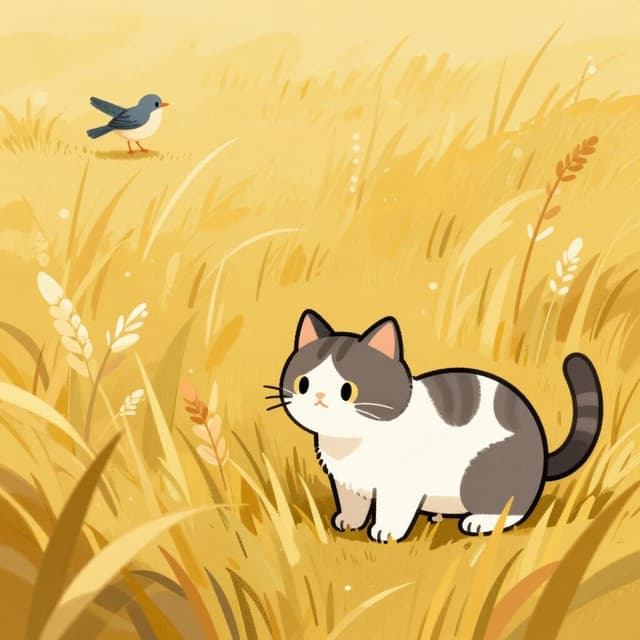
Koniugacja acechar Czas przyszły
acechar — to stalk
The future tense (acecharé, acecharás, etc.) indicates actions that will happen or expresses probability.
Formy acechar Czas przyszły
Kiedy używać Czas przyszły
Use the future to talk about something that is certain to happen ('I will stalk the deer tomorrow') or to express a likelihood or assumption ('He is probably stalking the corridors').
Uwagi dotyczące acechar w czasie Czas przyszły
Acechar is regular in the future tense. The stem is the full infinitive 'acechar', and the endings are standard.
Przykładowe zdania
Mañana acecharé al zorro cerca del gallinero.
Tomorrow I will stalk the fox near the chicken coop.
yo
Seguro que acecharán a los invitados sorpresa.
They will surely stalk the surprise guests.
ellos/ellas/ustedes
¿Tú acecharás al gato para ver qué hace?
Will you stalk the cat to see what it does?
tú
El detective acechará al sospechoso toda la noche.
The detective will stalk the suspect all night.
él/ella/usted
Częste błędy
Błąd: Using the present tense to express future actions.
Poprawnie: For definite future actions, use the future tense ('acecharé') or 'ir a + infinitive' ('voy a acechar').
Dlaczego: While Spanish sometimes uses the present for near future, the dedicated future tense is clearer for planned or inevitable events.
Błąd: Forgetting the accent on the future endings (e.g., 'acecharé').
Poprawnie: All future tense endings carry a written accent, typically on the last vowel (e.g., 'acecharé', 'acecharás', 'acechará').
Dlaczego: The accent marks the stressed syllable and distinguishes future forms from other verb forms.
Opanuj hiszpańskie czasowniki w kontekście
Zapamiętywanie tabel to dopiero początek. Przeczytaj ponad 200 ilustrowanych i udźwiękowionych hiszpańskich historii, aby zobaczyć czasowniki takie jak 'acechar' używane naturalnie — w czasach, których się uczysz.
Powiązane czasy
Czas teraźniejszy
yo: acecho
The present indicative (acecho, acechas, acecha, acechamos, acecháis, acechan) describes current actions, habits, or general truths.
Czas przeszły prosty
yo: aceché
The preterite of acechar is regular: aceché, acechaste, acechó, acechamos, acechasteis, acecharon.
Czas przeszły niedokonany
yo: acechaba
The imperfect (acechaba, acechabas, etc.) describes ongoing or habitual past actions, and background settings.
Tryb warunkowy
yo: acecharía
The conditional (acecharía, acecharías, etc.) is used for hypotheticals ('would stalk'), polite requests, and future-in-the-past.
Tryb Subj. teraźniejszy
yo: aceche
The present subjunctive (aceche, aceches, etc.) follows expressions of doubt, desire, emotion, or uncertainty.
Tryb Subj. przeszły niedokonany
yo: acechara
The imperfect subjunctive (acechara/acechase) expresses past hypotheticals, wishes, or doubts.
Tryb rozkazujący (twierdzący)
yo: acecha
Use 'acecha' for tú commands, 'aceche' for usted, 'acechemos' for nosotros, 'acechad' for vosotros, and 'acechen' for ustedes.
Tryb rozkazujący (przeczący)
yo: no aceches
Negative commands use 'no' plus the present subjunctive: no aceches (tú), no aceche (usted), no acechemos (nosotros), no acechéis (vosotros), no acechen (ustedes).