Koniugacja apagar Czas przeszły prosty
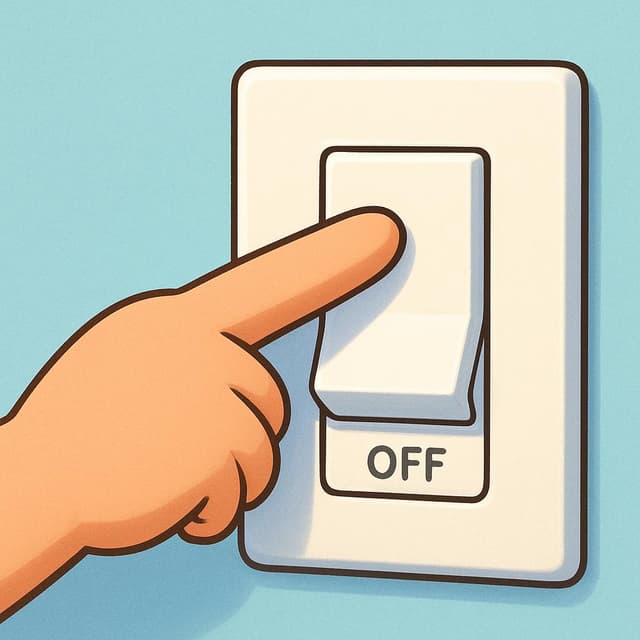
apagar — turn off
The preterite of apagar requires a spelling change in the 'yo' form (apagué) to keep the hard 'g' sound.
Formy apagar Czas przeszły prosty
Kiedy używać Czas przeszły prosty
Use the preterite for specific moments when you switched something off, like a light, a computer, or an engine, at a definitive point in time.
Uwagi dotyczące apagar w czasie Czas przeszły prosty
This verb is a 'g' to 'gu' changer in the first person singular (yo) to preserve the hard sound of the 'g'. All other forms are regular.
Przykładowe zdania
Apagué la televisión antes de dormir.
I turned off the television before sleeping.
yo
¿Apagaste las luces de la cocina?
Did you turn off the kitchen lights?
tú
El técnico apagó el servidor ayer.
The technician turned off the server yesterday.
él/ella/usted
Apagaron el fuego rápidamente.
They put out the fire quickly.
ellos/ellas/ustedes
Częste błędy
Błąd: Writing 'apagé' for the 'yo' form.
Poprawnie: apagué
Dlaczego: Without the 'u', the 'g' followed by 'e' sounds like a 'j' (h-sound). Adding the 'u' keeps the hard 'g' sound found in the infinitive.
Opanuj hiszpańskie czasowniki w kontekście
Zapamiętywanie tabel to dopiero początek. Przeczytaj ponad 200 ilustrowanych i udźwiękowionych hiszpańskich historii, aby zobaczyć czasowniki takie jak 'apagar' używane naturalnie — w czasach, których się uczysz.
Powiązane czasy
Czas teraźniejszy
yo: apago
The present tense of apagar is regular: apago, apagas, apaga, apagamos, apagáis, apagan.
Czas przeszły niedokonany
yo: apagaba
The imperfect of apagar is regular: apagaba, apagabas, apagaba, apagábamos, apagabais, apagaban.
Czas przyszły
yo: apagaré
The future tense is regular: add endings to the infinitive (apagaré, apagarás, apagará...).
Tryb warunkowy
yo: apagaría
The conditional is regular: add -ía, -ías, -ía... to the infinitive apagar.
Tryb Subj. teraźniejszy
yo: apague
The present subjunctive uses a 'gu' spelling in all forms: apague, apagues, apague...
Tryb Subj. przeszły niedokonany
yo: apagara
Formed from the 'ellos' preterite: apagara, apagaras, apagara...
Tryb rozkazujący (twierdzący)
yo: apaga
Direct commands: apaga (tú), apague (usted), apagad (vosotros), apaguen (ustedes).
Tryb rozkazujący (przeczący)
yo: no apagues
Negative commands always use the present subjunctive forms: no apagues, no apague, no apaguéis, no apaguen.