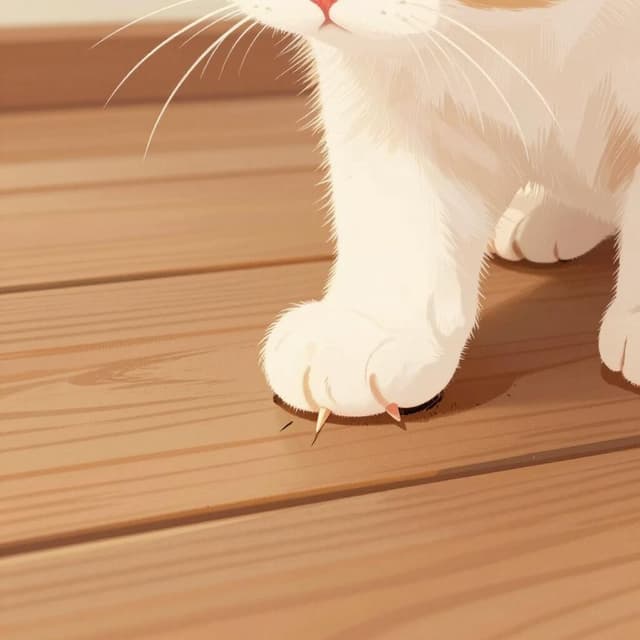
Koniugacja arañar Tryb Subj. teraźniejszy
arañar — to scratch
Wishes, doubts, or emotions about scratching happening now or in the future.
Formy arañar Tryb Subj. teraźniejszy
Kiedy używać Tryb Subj. teraźniejszy
Use the present subjunctive after expressions of desire, doubt, emotion, or uncertainty when the subject of the main clause is different from the subject of the subordinate clause, and the action relates to the present or future. For 'arañar', it's used when you wish, doubt, or feel something about scratching.
Uwagi dotyczące arañar w czasie Tryb Subj. teraźniejszy
Arañar is regular in the present subjunctive. The stem remains 'arañ-' and the endings are added as usual for -ar verbs.
Przykładowe zdania
Espero que no arañes el sofá.
I hope you don't scratch the sofa.
tú
Quiero que arañemos la pared para que el perro no se aburra.
I want us to scratch the wall so the dog doesn't get bored.
nosotros
Dudo que ellos arañen el cuadro.
I doubt they will scratch the painting.
ellos/ellas/ustedes
Me alegra que usted no arañe al gato.
I'm glad you don't scratch the cat.
Częste błędy
Błąd: Using the present indicative instead of the present subjunctive.
Poprawnie: After verbs expressing doubt, desire, emotion, etc., use the subjunctive form like 'arañes' or 'arañen', not 'arañas' or 'arañan'.
Dlaczego: The subjunctive mood is essential for expressing these subjective or non-factual ideas.
Błąd: Using the subjunctive when the subject is the same.
Poprawnie: If the subject is the same, use the infinitive: 'Quiero arañar el sofá' (I want to scratch the sofa), not 'Quiero que arañe el sofá'.
Dlaczego: The subjunctive is typically triggered by a change of subject between the main and subordinate clauses.
Opanuj hiszpańskie czasowniki w kontekście
Zapamiętywanie tabel to dopiero początek. Przeczytaj ponad 200 ilustrowanych i udźwiękowionych hiszpańskich historii, aby zobaczyć czasowniki takie jak 'arañar' używane naturalnie — w czasach, których się uczysz.
Powiązane czasy
Czas teraźniejszy
yo: araño
Scratching happening now, habitually, or generally.
Czas przeszły prosty
yo: arañé
Completed actions of scratching in the past.
Czas przeszły niedokonany
yo: arañaba
Ongoing or habitual scratching in the past.
Czas przyszły
yo: arañaré
The future action of scratching.
Tryb warunkowy
yo: arañaría
What would happen if one were to scratch.
Tryb Subj. przeszły niedokonany
yo: arañara
Hypothetical or past wishes/doubts about scratching.
Tryb rozkazujący (twierdzący)
yo: araña
Commands like 'scratch!' or 'let's scratch!' for arañar.
Tryb rozkazujący (przeczący)
yo: no arañes
Negative commands for arañar, like 'don't scratch!'.