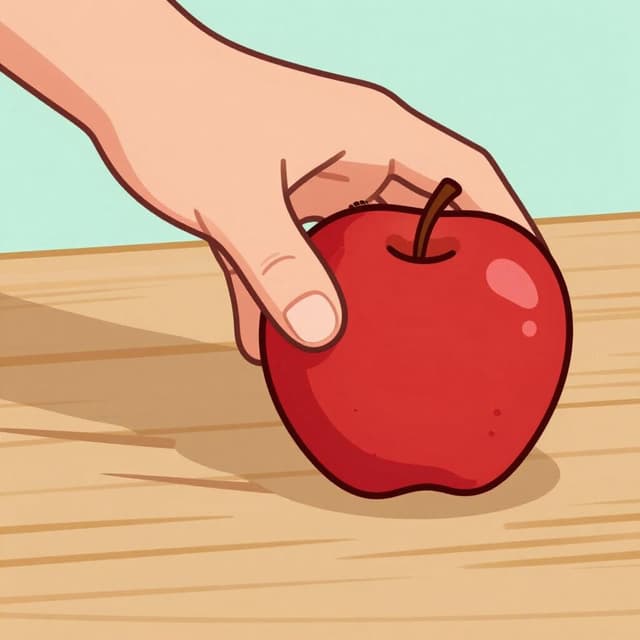
Koniugacja arrebatar Czas przeszły niedokonany
arrebatar — to snatch
Use imperfect forms like 'arrebataba' and 'arrebataban' for ongoing or habitual past actions.
Formy arrebatar Czas przeszły niedokonany
Kiedy używać Czas przeszły niedokonany
The imperfect describes actions that were happening over a period in the past, habitual actions, or background settings. For example, 'Cuando era niño, yo arrebataba dulces de la tienda' (When I was a child, I used to snatch candy from the store).
Uwagi dotyczące arrebatar w czasie Czas przeszły niedokonany
Arrebatar is regular in the imperfect tense. The endings are standard for -ar verbs.
Przykładowe zdania
Él arrebataba los bocadillos de la mesa.
He used to snatch the snacks from the table.
él/ella/usted
Nosotros arrebatábamos las flores del jardín.
We used to snatch the flowers from the garden.
nosotros
Tú siempre arrebatabas mi atención.
You always snatched my attention.
tú
Ellos arrebataban la pelota mientras jugaban.
They were snatching the ball while they played.
ellos/ellas/ustedes
Częste błędy
Błąd: Using the preterite instead of the imperfect for habitual past actions.
Poprawnie: Use the imperfect ('arrebataba') for repeated or ongoing actions in the past.
Dlaczego: The preterite ('arrebató') describes a single, completed event.
Błąd: Confusing the nosotros imperfect 'arrebatábamos' with the preterite 'arrebatamos'.
Poprawnie: The imperfect has the '-aba-' stem and the accent on the 'a' before the ending: 'arrebatábamos'. The preterite is 'arrebatamos'.
Dlaczego: These forms sound similar but refer to different time frames (ongoing/habitual vs. completed).
Opanuj hiszpańskie czasowniki w kontekście
Zapamiętywanie tabel to dopiero początek. Przeczytaj ponad 200 ilustrowanych i udźwiękowionych hiszpańskich historii, aby zobaczyć czasowniki takie jak 'arrebatar' używane naturalnie — w czasach, których się uczysz.
Powiązane czasy
Czas teraźniejszy
yo: arrebato
Use present forms like 'arrebato' and 'arrebatan' for habitual actions or things happening now.
Czas przeszły prosty
yo: arrebaté
Use preterite forms like 'arrebaté' and 'arrebataron' for completed actions in the past.
Czas przyszły
yo: arrebataré
Use future forms like 'arrebataré' and 'arrebatarán' for actions that will happen.
Tryb warunkowy
yo: arrebataría
Use conditional forms like 'arrebataría' and 'arrebatarían' for hypothetical situations ('would').
Tryb Subj. teraźniejszy
yo: arrebate
Use present subjunctive forms like 'arrebate' and 'arrebaten' after expressions of doubt, desire, or emotion.
Tryb Subj. przeszły niedokonany
yo: arrebatara
Use imperfect subjunctive forms like 'arrebatara' or 'arrebatase' for past hypotheticals or wishes.
Tryb rozkazujący (twierdzący)
yo: arrebata
Use imperative forms like 'arrebata' and 'arrebatad' for direct commands.
Tryb rozkazujący (przeczący)
yo: no arrebates
Use negative commands like 'no arrebates' and 'no arrebaten' with the present subjunctive.