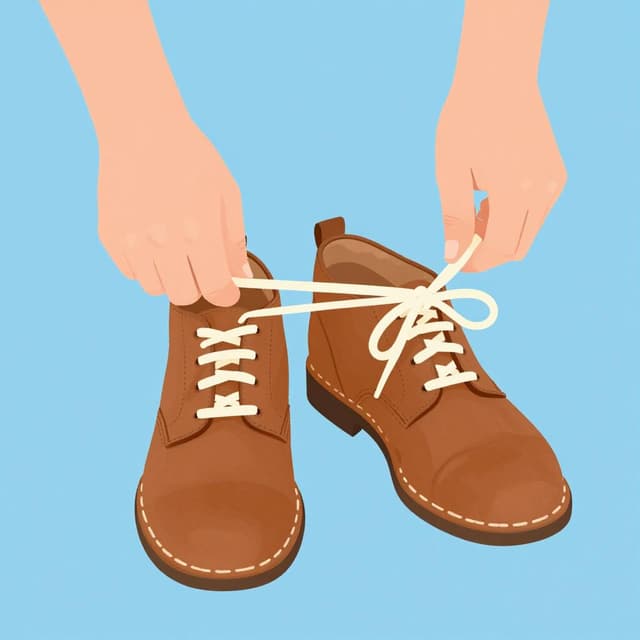
Koniugacja atar Tryb Subj. teraźniejszy
atar — to tie
Use 'ate', 'ates', 'atemos', 'atéis', 'aten' after expressions of doubt, desire, emotion, or uncertainty.
Formy atar Tryb Subj. teraźniejszy
Kiedy używać Tryb Subj. teraźniejszy
The present subjunctive is used when the main clause expresses doubt, desire, emotion, or uncertainty about the action in the subordinate clause. For 'atar', you might say 'Dudo que ates bien los cordones' (I doubt you tie your shoelaces well) or 'Quiero que ates tu mochila' (I want you to tie your backpack).
Uwagi dotyczące atar w czasie Tryb Subj. teraźniejszy
'Atar' is regular in the present subjunctive. The forms are derived from the 'yo' form of the present indicative ('ato') by changing the '-o' ending to the appropriate subjunctive endings.
Przykładowe zdania
Espero que ates tu zapato antes de salir.
I hope you tie your shoe before leaving.
tú
No creo que aten los cables correctamente.
I don't think they tie the cables correctly.
ellos/ellas/ustedes
Te pido que ate bien ese nudo.
I ask you to tie that knot well.
Es importante que atemos los remos.
It's important that we tie up the oars.
nosotros
Częste błędy
Błąd: Using the present indicative instead of the present subjunctive.
Poprawnie: Use 'ates' after 'espero que', 'dudo que', etc., not 'atas'.
Dlaczego: Expressions of doubt, desire, and emotion trigger the subjunctive mood.
Błąd: Forgetting the subjunctive ending for -ar verbs (e.g., using '-e' for 'yo' instead of '-e').
Poprawnie: The yo form is 'ate', not 'ato'.
Dlaczego: The present subjunctive for -ar verbs uses the 'e' sound, not the 'a' sound like the indicative.
Opanuj hiszpańskie czasowniki w kontekście
Zapamiętywanie tabel to dopiero początek. Przeczytaj ponad 200 ilustrowanych i udźwiękowionych hiszpańskich historii, aby zobaczyć czasowniki takie jak 'atar' używane naturalnie — w czasach, których się uczysz.
Powiązane czasy
Czas teraźniejszy
yo: ato
Use 'ato', 'atas', 'ata', 'atamos', 'atáis', 'atan' for actions happening now or habitual actions.
Czas przeszły prosty
yo: até
Use 'até', 'ataste', 'ató', 'atamos', 'atasteis', 'ataron' for completed actions in the past.
Czas przeszły niedokonany
yo: ataba
Use 'ataba', 'atabas', 'ataba', 'atábamos', 'atabais', 'ataban' for ongoing or habitual past actions.
Czas przyszły
yo: ataré
Use 'ataré', 'atarás', 'atará', 'ataremos', 'ataréis', 'atarán' for actions that will happen.
Tryb warunkowy
yo: ataría
Use 'ataría', 'atarías', 'ataría', 'ataríamos', 'ataríais', 'atarían' for hypothetical situations or polite requests.
Tryb Subj. przeszły niedokonany
yo: atara
Use 'atara', 'ataras', 'atáramos', 'atarais', 'ataran' for past hypothetical or unreal situations.
Tryb rozkazujący (twierdzący)
yo: ata
Use 'ata' (tú), 'ate' (usted), 'atemos' (nosotros), 'atad' (vosotros), 'aten' (ustedes) for direct commands.
Tryb rozkazujący (przeczący)
yo: no ates
Use 'no ates' (tú), 'no ate' (usted), 'no atemos' (nosotros), 'no atéis' (vosotros), 'no aten' (ustedes) for negative commands.