Koniugacja conspirar Tryb warunkowy
conspirar — to conspire
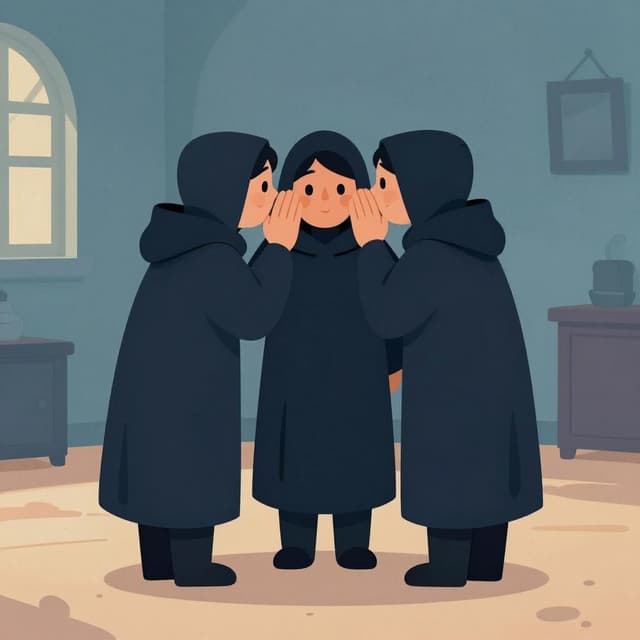
The conditional of conspirar (conspiraría, conspirarías, etc.) is for hypotheticals ('would conspire') and polite requests.
Formy conspirar Tryb warunkowy
Kiedy używać Tryb warunkowy
Use the conditional tense for hypothetical situations ('what would happen'), polite requests, or to express the future from a past perspective. For 'conspirar', it might be about imagining a conspiracy or politely suggesting one.
Uwagi dotyczące conspirar w czasie Tryb warunkowy
Conspirar is regular in the conditional tense. The stem is the infinitive 'conspirar', and the endings are the standard conditional endings.
Przykładowe zdania
Si tuviera la oportunidad, conspiraría contra la injusticia.
If I had the opportunity, I would conspire against injustice.
yo
¿Conspirarías tú para ayudarnos?
Would you conspire to help us?
tú
Ellos conspirarían si pensaran que tendrían éxito.
They would conspire if they thought they would succeed.
ellos/ellas/ustedes
Me gustaría que usted conspirara con nosotros.
I would like you to conspire with us.
él/ella/usted
Częste błędy
Błąd: Using the conditional for simple future actions.
Poprawnie: For actions that *will* happen, use the future tense: 'Conspirarán mañana'. The conditional is for 'would'.
Dlaczego: The conditional expresses hypothetical or polite situations, not definite future events.
Błąd: Confusing conditional with imperfect subjunctive in 'if' clauses.
Poprawnie: Use imperfect subjunctive for the 'if' clause and conditional for the main clause: 'Si conspirara, actuaría'.
Dlaczego: This is the standard structure for hypothetical ('unreal') conditions in Spanish.
Opanuj hiszpańskie czasowniki w kontekście
Zapamiętywanie tabel to dopiero początek. Przeczytaj ponad 200 ilustrowanych i udźwiękowionych hiszpańskich historii, aby zobaczyć czasowniki takie jak 'conspirar' używane naturalnie — w czasach, których się uczysz.
Powiązane czasy
Czas teraźniejszy
yo: conspiro
The present tense of conspirar (conspiro, conspiras, conspira, etc.) describes current or habitual plotting.
Czas przeszły prosty
yo: conspiré
The preterite of conspirar is regular: conspiré, conspiraste, conspiró, conspiramos, conspirasteis, conspiraron.
Czas przeszły niedokonany
yo: conspiraba
The imperfect of conspirar (conspiraba, conspirabas, etc.) describes ongoing or habitual past conspiracies.
Czas przyszły
yo: conspiraré
The future tense of conspirar (conspiraré, conspirarás, etc.) refers to future plotting or expresses probability.
Tryb Subj. teraźniejszy
yo: conspire
The present subjunctive of conspirar (conspire, conspires, conspiren) follows verbs of wishing, doubting, or emotion.
Tryb Subj. przeszły niedokonany
yo: conspirara
The imperfect subjunctive of conspirar (conspirara, conspiraras, etc.) is used for past hypotheticals, wishes, and polite requests.
Tryb rozkazujący (twierdzący)
yo: conspira
Use the imperative of conspirar for direct commands like 'conspira' (you) or 'conspiren' (they/you all).
Tryb rozkazujący (przeczący)
yo: no conspires
Form negative commands with 'no' + present subjunctive, like 'no conspires' (you) or 'no conspiren' (they/you all).