Koniugacja conspirar Czas przeszły niedokonany
conspirar — to conspire
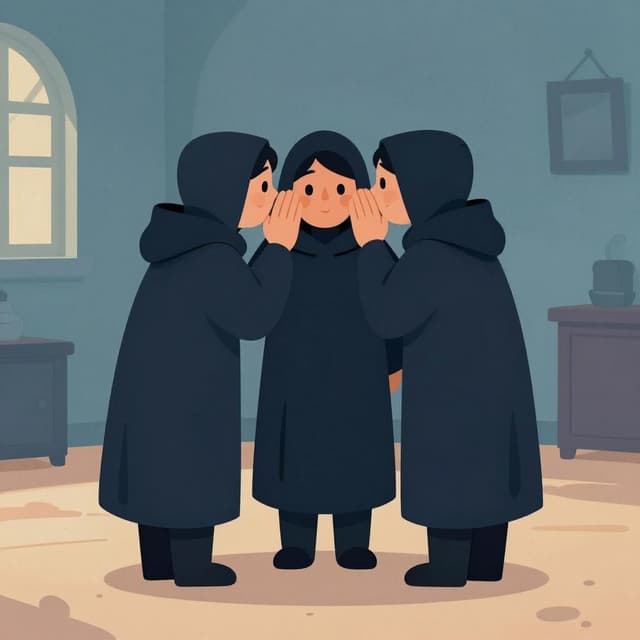
The imperfect of conspirar (conspiraba, conspirabas, etc.) describes ongoing or habitual past conspiracies.
Formy conspirar Czas przeszły niedokonany
Kiedy używać Czas przeszły niedokonany
Use the imperfect tense for ongoing actions in the past, habitual actions, or background descriptions. For 'conspirar', it paints a picture of a conspiracy that was in progress or happened repeatedly.
Uwagi dotyczące conspirar w czasie Czas przeszły niedokonany
Conspirar is regular in the imperfect tense, following the standard -ar verb pattern.
Przykładowe zdania
Ellos conspiraban contra el rey cuando fueron descubiertos.
They were conspiring against the king when they were discovered.
ellos/ellas/ustedes
Yo conspiraba en secreto cada vez que nos reuníamos.
I used to conspire in secret every time we met.
yo
¿Conspirabas tú para ganar el favor del jefe?
Were you plotting to gain the boss's favor?
tú
El grupo conspiraba durante horas.
The group was conspiring for hours.
él/ella/usted
Częste błędy
Błąd: Using the imperfect for a single, completed act of conspiracy.
Poprawnie: For a finished action, use the preterite: 'Conspiraron para el golpe', not 'Conspiraban para el golpe'.
Dlaczego: The imperfect describes duration or repetition, not a single completed event.
Błąd: Confusing the imperfect 'conspiraba' (yo) with the imperfect 'conspiraba' (él/ella/usted).
Poprawnie: The form is the same, so context or subject pronouns ('yo', 'él', 'ella', 'usted') are needed to clarify who is conspiring.
Dlaczego: This is a common feature of imperfect conjugations for -ar verbs.
Opanuj hiszpańskie czasowniki w kontekście
Zapamiętywanie tabel to dopiero początek. Przeczytaj ponad 200 ilustrowanych i udźwiękowionych hiszpańskich historii, aby zobaczyć czasowniki takie jak 'conspirar' używane naturalnie — w czasach, których się uczysz.
Powiązane czasy
Czas teraźniejszy
yo: conspiro
The present tense of conspirar (conspiro, conspiras, conspira, etc.) describes current or habitual plotting.
Czas przeszły prosty
yo: conspiré
The preterite of conspirar is regular: conspiré, conspiraste, conspiró, conspiramos, conspirasteis, conspiraron.
Czas przyszły
yo: conspiraré
The future tense of conspirar (conspiraré, conspirarás, etc.) refers to future plotting or expresses probability.
Tryb warunkowy
yo: conspiraría
The conditional of conspirar (conspiraría, conspirarías, etc.) is for hypotheticals ('would conspire') and polite requests.
Tryb Subj. teraźniejszy
yo: conspire
The present subjunctive of conspirar (conspire, conspires, conspiren) follows verbs of wishing, doubting, or emotion.
Tryb Subj. przeszły niedokonany
yo: conspirara
The imperfect subjunctive of conspirar (conspirara, conspiraras, etc.) is used for past hypotheticals, wishes, and polite requests.
Tryb rozkazujący (twierdzący)
yo: conspira
Use the imperative of conspirar for direct commands like 'conspira' (you) or 'conspiren' (they/you all).
Tryb rozkazujący (przeczący)
yo: no conspires
Form negative commands with 'no' + present subjunctive, like 'no conspires' (you) or 'no conspiren' (they/you all).