Koniugacja conspirar Czas teraźniejszy
conspirar — to conspire
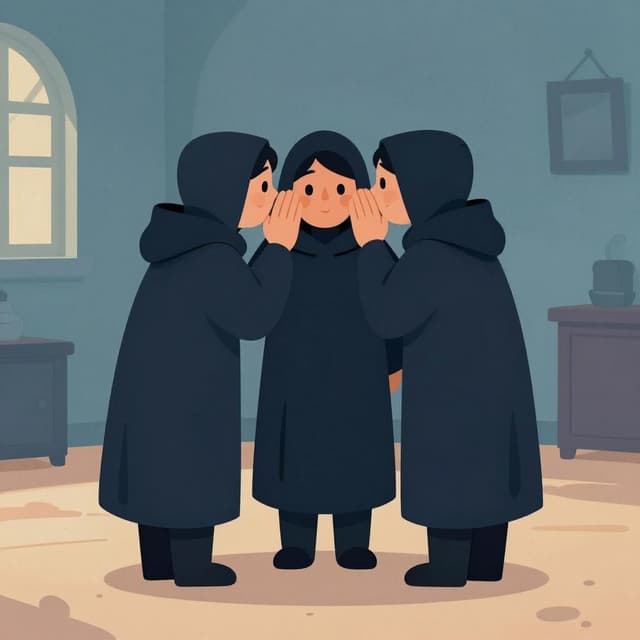
The present tense of conspirar (conspiro, conspiras, conspira, etc.) describes current or habitual plotting.
Formy conspirar Czas teraźniejszy
Kiedy używać Czas teraźniejszy
Use the present tense for actions happening right now, habitual actions, or general truths. For 'conspirar', it could mean people are currently plotting something, or that a certain group habitually conspires.
Uwagi dotyczące conspirar w czasie Czas teraźniejszy
Conspirar is a regular -ar verb and conjugates as expected in the present indicative tense.
Przykładowe zdania
Los villanos conspiran para dominar el mundo.
The villains are conspiring to take over the world.
ellos/ellas/ustedes
Yo conspiro para que todo salga bien.
I plot so that everything goes well.
yo
¿Tú conspiras en secreto?
Do you plot in secret?
tú
Ella siempre conspira para conseguir lo que quiere.
She always schemes to get what she wants.
él/ella/usted
Częste błędy
Błąd: Using the present tense for completed past actions.
Poprawnie: For finished actions, use the preterite: 'Conspiraron ayer', not 'Conspiran ayer'.
Dlaczego: The present tense refers to the current moment or habitual actions, not completed past events.
Błąd: Confusing 'conspiramos' (present) with 'conspiramos' (preterite).
Poprawnie: Context is key; 'Conspiramos para la fiesta' (present) means 'We are plotting/planning', while 'Conspiramos ayer' (preterite) means 'We plotted yesterday'.
Dlaczego: The nosotros form is identical in the present and preterite indicative, requiring context for clarity.
Opanuj hiszpańskie czasowniki w kontekście
Zapamiętywanie tabel to dopiero początek. Przeczytaj ponad 200 ilustrowanych i udźwiękowionych hiszpańskich historii, aby zobaczyć czasowniki takie jak 'conspirar' używane naturalnie — w czasach, których się uczysz.
Powiązane czasy
Czas przeszły prosty
yo: conspiré
The preterite of conspirar is regular: conspiré, conspiraste, conspiró, conspiramos, conspirasteis, conspiraron.
Czas przeszły niedokonany
yo: conspiraba
The imperfect of conspirar (conspiraba, conspirabas, etc.) describes ongoing or habitual past conspiracies.
Czas przyszły
yo: conspiraré
The future tense of conspirar (conspiraré, conspirarás, etc.) refers to future plotting or expresses probability.
Tryb warunkowy
yo: conspiraría
The conditional of conspirar (conspiraría, conspirarías, etc.) is for hypotheticals ('would conspire') and polite requests.
Tryb Subj. teraźniejszy
yo: conspire
The present subjunctive of conspirar (conspire, conspires, conspiren) follows verbs of wishing, doubting, or emotion.
Tryb Subj. przeszły niedokonany
yo: conspirara
The imperfect subjunctive of conspirar (conspirara, conspiraras, etc.) is used for past hypotheticals, wishes, and polite requests.
Tryb rozkazujący (twierdzący)
yo: conspira
Use the imperative of conspirar for direct commands like 'conspira' (you) or 'conspiren' (they/you all).
Tryb rozkazujący (przeczący)
yo: no conspires
Form negative commands with 'no' + present subjunctive, like 'no conspires' (you) or 'no conspiren' (they/you all).