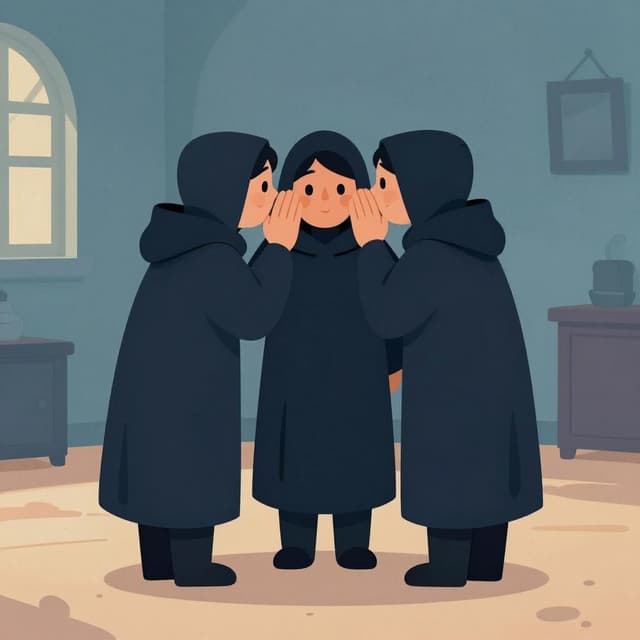
Koniugacja conspirar Tryb rozkazujący (przeczący)
conspirar — to conspire
Form negative commands with 'no' + present subjunctive, like 'no conspires' (you) or 'no conspiren' (they/you all).
Formy conspirar Tryb rozkazujący (przeczący)
Kiedy używać Tryb rozkazujący (przeczący)
Use negative commands to tell someone *not* to do something. For 'conspirar', it means instructing someone not to plot or scheme.
Uwagi dotyczące conspirar w czasie Tryb rozkazujący (przeczący)
Negative commands for 'conspirar' use the present subjunctive forms, which are regular for this verb. The 'vosotros' form is 'no conspiréis'.
Przykładowe zdania
No conspires contra tus amigos.
Don't conspire against your friends.
tú
No conspiréis en secreto.
Don't conspire in secret.
vosotros
No conspiren para engañar a nadie.
Don't conspire to deceive anyone.
No conspiremos contra la ley.
Let's not conspire against the law.
nosotros
Częste błędy
Błąd: Using the imperfect subjunctive instead of present subjunctive for negative commands.
Poprawnie: Always use the present subjunctive after 'no' for negative commands: 'no conspires', not 'no conspiraras'.
Dlaczego: The present subjunctive is the standard for negative commands in Spanish.
Błąd: Forgetting the 'no'.
Poprawnie: Ensure 'no' is always present before the verb in negative commands.
Dlaczego: The 'no' is essential to turn an affirmative command into a negative one.
Opanuj hiszpańskie czasowniki w kontekście
Zapamiętywanie tabel to dopiero początek. Przeczytaj ponad 200 ilustrowanych i udźwiękowionych hiszpańskich historii, aby zobaczyć czasowniki takie jak 'conspirar' używane naturalnie — w czasach, których się uczysz.
Powiązane czasy
Czas teraźniejszy
yo: conspiro
The present tense of conspirar (conspiro, conspiras, conspira, etc.) describes current or habitual plotting.
Czas przeszły prosty
yo: conspiré
The preterite of conspirar is regular: conspiré, conspiraste, conspiró, conspiramos, conspirasteis, conspiraron.
Czas przeszły niedokonany
yo: conspiraba
The imperfect of conspirar (conspiraba, conspirabas, etc.) describes ongoing or habitual past conspiracies.
Czas przyszły
yo: conspiraré
The future tense of conspirar (conspiraré, conspirarás, etc.) refers to future plotting or expresses probability.
Tryb warunkowy
yo: conspiraría
The conditional of conspirar (conspiraría, conspirarías, etc.) is for hypotheticals ('would conspire') and polite requests.
Tryb Subj. teraźniejszy
yo: conspire
The present subjunctive of conspirar (conspire, conspires, conspiren) follows verbs of wishing, doubting, or emotion.
Tryb Subj. przeszły niedokonany
yo: conspirara
The imperfect subjunctive of conspirar (conspirara, conspiraras, etc.) is used for past hypotheticals, wishes, and polite requests.
Tryb rozkazujący (twierdzący)
yo: conspira
Use the imperative of conspirar for direct commands like 'conspira' (you) or 'conspiren' (they/you all).