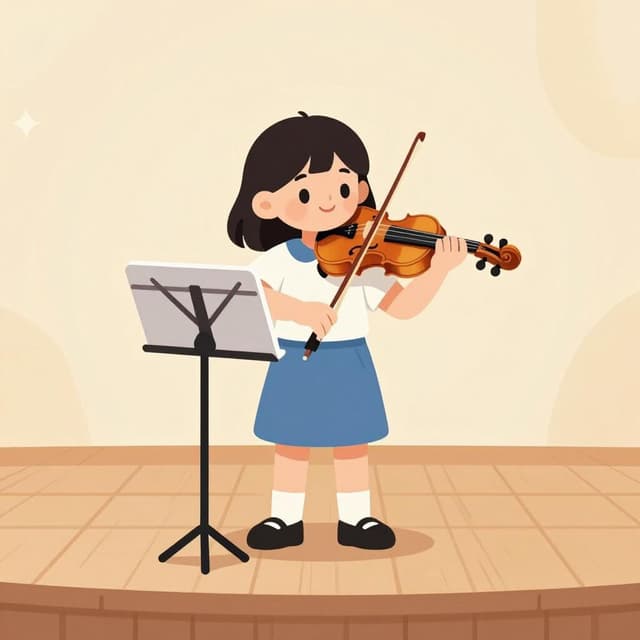
Koniugacja ensayar Czas przyszły
ensayar — to rehearse
The future of ensayar is regular: ensayaré, ensayarás, ensayará, ensayaremos, ensayaréis, ensayarán.
Formy ensayar Czas przyszły
Kiedy używać Czas przyszły
Use the future tense to talk about actions of rehearsing that will definitely happen. It can also express probability or conjecture about the present.
Uwagi dotyczące ensayar w czasie Czas przyszły
Ensayar is a regular -ar verb and is completely regular in the future tense. The stem is the infinitive 'ensayar', and the standard future endings are added.
Przykładowe zdania
Mañana ensayaremos la escena final del acto.
Tomorrow we will rehearse the final scene of the act.
nosotros
Creo que el director ensayará con nosotros más tarde.
I think the director will rehearse with us later.
él/ella/usted
¿Tú ensayarás para la competencia?
Will you rehearse for the competition?
tú
Ellos ensayarán la canción nueva el lunes.
They will rehearse the new song on Monday.
ellos/ellas/ustedes
Częste błędy
Błąd: Using the present indicative ('ensayamos') instead of the future ('ensayaremos') for a future action.
Poprawnie: For clear future actions, use the future tense: 'Nosotros ensayaremos la próxima semana'.
Dlaczego: While the present can sometimes imply future, the future tense is definitive for planned or predicted events.
Błąd: Forgetting the accent on the 'nosotros' and 'vosotros' forms of the future tense, e.g., 'ensayaremos' instead of 'ensayaremos'.
Poprawnie: The nosotros and vosotros future forms are 'ensayaremos' and 'ensayaréis', respectively. The accent is on the penultimate syllable.
Dlaczego: The stress falls naturally on the 'e' of 'ensayaremos' and 'e' of 'ensayaréis'.
Opanuj hiszpańskie czasowniki w kontekście
Zapamiętywanie tabel to dopiero początek. Przeczytaj ponad 200 ilustrowanych i udźwiękowionych hiszpańskich historii, aby zobaczyć czasowniki takie jak 'ensayar' używane naturalnie — w czasach, których się uczysz.
Powiązane czasy
Czas teraźniejszy
yo: ensayo
The present indicative of ensayar is regular: ensayo, ensayas, ensaya, ensayamos, ensayáis, ensayan.
Czas przeszły prosty
yo: ensayé
The preterite of ensayar is regular: ensayé, ensayaste, ensayó, ensayamos, ensayasteis, ensayaron.
Czas przeszły niedokonany
yo: ensayaba
The imperfect of ensayar is regular: ensayaba, ensayabas, ensayaba, ensayábamos, ensayabais, ensayaban.
Tryb warunkowy
yo: ensayaría
The conditional of ensayar is regular: ensayaría, ensayarías, ensayaría, ensayaríamos, ensayaríais, ensayarían.
Tryb Subj. teraźniejszy
yo: ensaye
The present subjunctive of ensayar (ensaye, ensayes) is used after expressions of doubt, desire, emotion, or uncertainty.
Tryb Subj. przeszły niedokonany
yo: ensayara
The imperfect subjunctive of ensayar (ensayara/ensayase) is used for past hypotheticals, wishes, or doubts.
Tryb rozkazujący (twierdzący)
yo: ensaya
The imperative of ensayar uses regular -ar endings, except for tú which is ensaya.
Tryb rozkazujący (przeczący)
yo: no ensayes
Negative commands for ensayar use the present subjunctive: no ensayes, no ensaye, no ensayemos, no ensayéis, no ensayen.