Koniugacja ensayar Tryb Subj. przeszły niedokonany
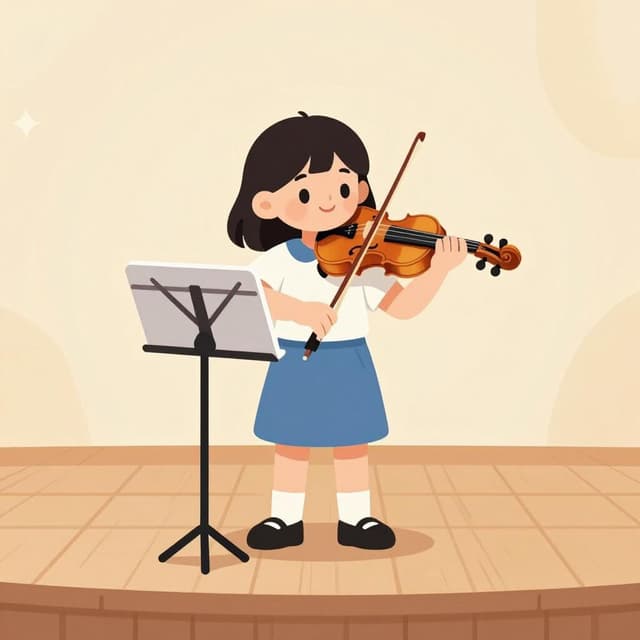
ensayar — to rehearse
The imperfect subjunctive of ensayar (ensayara/ensayase) is used for past hypotheticals, wishes, or doubts.
Formy ensayar Tryb Subj. przeszły niedokonany
Kiedy używać Tryb Subj. przeszły niedokonany
Use the imperfect subjunctive after expressions of doubt, desire, emotion, or necessity in the past, or in 'if' clauses referring to unlikely or hypothetical situations. For 'ensayar', it's about rehearsing in a past hypothetical context.
Uwagi dotyczące ensayar w czasie Tryb Subj. przeszły niedokonany
Ensayar is regular in the imperfect subjunctive. Both the -ra and -se forms exist (e.g., ensayara, ensayase). The -ra form is generally more common in everyday speech.
Przykładowe zdania
Si ensayara más, creo que le iría mejor.
If he rehearsed more, I think he would do better.
él/ella/usted
Me pidió que ensayara la escena con él.
He asked me to rehearse the scene with him.
yo
Dudaba que ensayáramos para la obra.
I doubted that we would rehearse for the play.
nosotros
¿Tú qué harías si te dijera que ensayaras ahora?
What would you do if I told you to rehearse now?
tú
Częste błędy
Błąd: Using the imperfect indicative ('ensayaba') instead of the imperfect subjunctive ('ensayara') in hypothetical 'if' clauses.
Poprawnie: In hypothetical 'if' clauses (si...), use the imperfect subjunctive: 'Si ensayara...'.
Dlaczego: The imperfect subjunctive is required for unreal or hypothetical conditions.
Błąd: Confusing the -ra and -se forms, or using the wrong ending for the pronoun.
Poprawnie: Ensure you use the correct ending for the pronoun with either the -ra (ensayara, ensayaras, etc.) or -se (ensayase, ensayases, etc.) stem.
Dlaczego: Each pronoun (yo, tú, él, etc.) has a specific ending for both -ra and -se forms.
Opanuj hiszpańskie czasowniki w kontekście
Zapamiętywanie tabel to dopiero początek. Przeczytaj ponad 200 ilustrowanych i udźwiękowionych hiszpańskich historii, aby zobaczyć czasowniki takie jak 'ensayar' używane naturalnie — w czasach, których się uczysz.
Powiązane czasy
Czas teraźniejszy
yo: ensayo
The present indicative of ensayar is regular: ensayo, ensayas, ensaya, ensayamos, ensayáis, ensayan.
Czas przeszły prosty
yo: ensayé
The preterite of ensayar is regular: ensayé, ensayaste, ensayó, ensayamos, ensayasteis, ensayaron.
Czas przeszły niedokonany
yo: ensayaba
The imperfect of ensayar is regular: ensayaba, ensayabas, ensayaba, ensayábamos, ensayabais, ensayaban.
Czas przyszły
yo: ensayaré
The future of ensayar is regular: ensayaré, ensayarás, ensayará, ensayaremos, ensayaréis, ensayarán.
Tryb warunkowy
yo: ensayaría
The conditional of ensayar is regular: ensayaría, ensayarías, ensayaría, ensayaríamos, ensayaríais, ensayarían.
Tryb Subj. teraźniejszy
yo: ensaye
The present subjunctive of ensayar (ensaye, ensayes) is used after expressions of doubt, desire, emotion, or uncertainty.
Tryb rozkazujący (twierdzący)
yo: ensaya
The imperative of ensayar uses regular -ar endings, except for tú which is ensaya.
Tryb rozkazujący (przeczący)
yo: no ensayes
Negative commands for ensayar use the present subjunctive: no ensayes, no ensaye, no ensayemos, no ensayéis, no ensayen.