hervirKoniugacja
hervir oznacza wrzeć.
Kompletne tabele koniugacji
Odniesienie do wszystkich czasów i trybów
Subjunctive
Imperfect Subjunctive
The imperfect subjunctive uses the 'hirvier-' stem for all forms (hirviera, hirvieras, etc.).
Present Subjunctive
Hervir changes e > ie in most forms, but importantly shifts e > i in the nosotros and vosotros forms.
Imperative
Negative Imperative
All negative commands for hervir are identical to the present subjunctive forms preceded by 'no'.
Imperative
Use 'hierve' for tú and 'hierva' for usted to give direct cooking instructions.
Indicative
Conditional
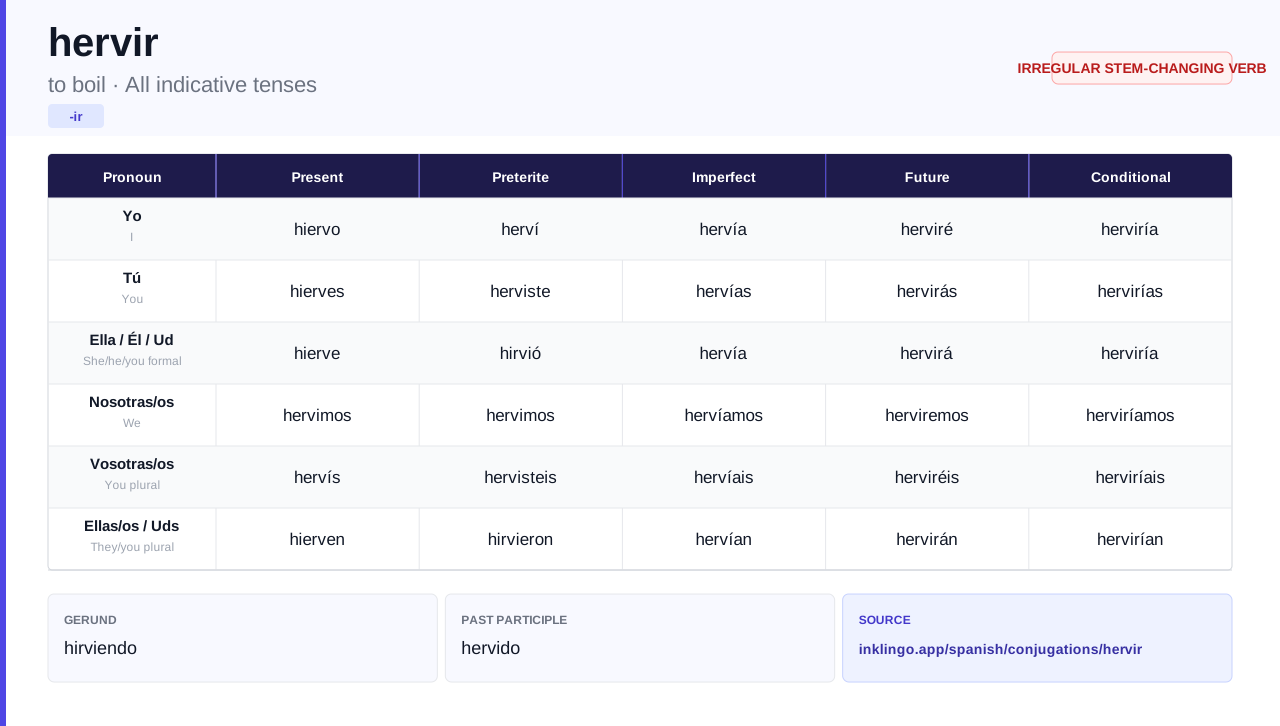
The conditional uses the full infinitive 'hervir' plus the endings -ía, -ías, -ía, etc.
Preterite
Hervir has a 'slipper' stem change (e > i) only in the third-person forms: hirvió and hirvieron.
Imperfect
Hervir is completely regular in the imperfect: hervía, hervías, hervía, hervíamos, hervíais, hervían.
Present
Hervir is an e > ie stem-changer in the present (hiervo, hierves, hierve, hierven), except for nosotros and vosotros.
Future
Hervir is regular in the future; just add the endings to the infinitive: herviré, hervirás, etc.
Ćwicz koniugacje
Sprawdź swoją wiedzę za pomocą interaktywnych ćwiczeń
Przenieś hervir z tabel do prawdziwego hiszpańskiego
Tabele koniugacji to dopiero początek. Przeczytaj ponad 200 ilustrowanych i udźwiękowionych hiszpańskich historii, aby zobaczyć 'hervir' w akcji w prawdziwych zdaniach — i zbuduj instynkt, jaki mają rodzimi użytkownicy języka.
Często zadawane pytania
Co oznacza hervir po hiszpańsku?
hervir oznacza „wrzeć”.
Czy hervir to czasownik regularny czy nieregularny?
hervir to czasownik irregular stem-changing -ir w języku hiszpańskim.
Jak koniuguje się hervir w czasie teraźniejszym?
Czas teraźniejszy hervir to: yo hiervo, tú hierves, él/ella/usted hierve, nosotros hervimos, vosotros hervís, ellos/ellas/ustedes hierven.
Jak koniuguje się hervir w czasie przeszłym dokonanym (preterite)?
Czas przeszły dokonany hervir to: yo herví, tú herviste, él/ella/usted hirvió, nosotros hervimos, vosotros hervisteis, ellos/ellas/ustedes hirvieron.
hervir ściągawka koniugacyjna