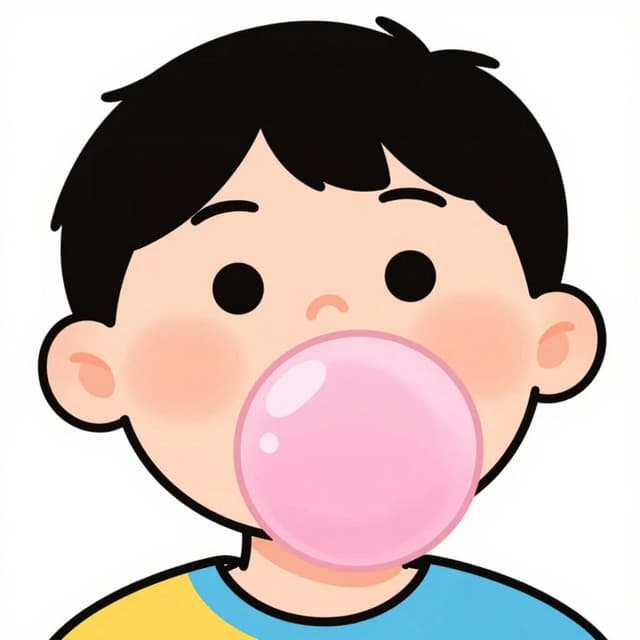
Koniugacja mascar Tryb rozkazujący (przeczący)
mascar — to chew
The negative imperative of mascar always uses the 'qu' spelling change: no masques, no masque, no masquemos, no masquéis, no masquen.
Formy mascar Tryb rozkazujący (przeczący)
Kiedy używać Tryb rozkazujący (przeczący)
Use this to tell someone NOT to chew something, such as 'Don't chew with your mouth open'.
Uwagi dotyczące mascar w czasie Tryb rozkazujący (przeczący)
Every form in the negative imperative uses the 'qu' spelling change to maintain the hard 'k' sound.
Przykładowe zdania
No masques con la boca abierta.
Don't chew with your mouth open.
tú
No masque chicle en la iglesia, por favor.
Don't chew gum in the church, please.
No masquéis los lápices.
Don't chew the pencils.
vosotros
Częste błędy
Błąd: no mascas
Poprawnie: no masques
Dlaczego: Negative commands must use the subjunctive forms, not the indicative 'as' ending.
Opanuj hiszpańskie czasowniki w kontekście
Zapamiętywanie tabel to dopiero początek. Przeczytaj ponad 200 ilustrowanych i udźwiękowionych hiszpańskich historii, aby zobaczyć czasowniki takie jak 'mascar' używane naturalnie — w czasach, których się uczysz.
Powiązane czasy
Czas teraźniejszy
yo: masco
The present tense of mascar is completely regular: masco, mascas, masca, mascamos, mascáis, mascan.
Czas przeszły prosty
yo: masqué
The preterite of mascar is regular except for the 'yo' form spelling change: masqué.
Czas przeszły niedokonany
yo: mascaba
The imperfect of mascar is regular: mascaba, mascabas, mascaba, mascábamos, mascabais, mascaban.
Czas przyszły
yo: mascaré
The future of mascar is regular: mascaré, mascarás, mascará, mascaremos, mascaréis, mascarán.
Tryb warunkowy
yo: mascaría
The conditional of mascar is regular: mascaría, mascarías, mascaría, mascaríamos, mascaríais, mascarían.
Tryb Subj. teraźniejszy
yo: masque
The present subjunctive of mascar requires a c-to-qu spelling change: masque, masques, masque, masquemos, masquéis, masquen.
Tryb Subj. przeszły niedokonany
yo: mascara
The imperfect subjunctive is formed from the third-person plural preterite: mascara, mascaras, mascara, mascáramos, mascarais, mascaran.
Tryb rozkazujący (twierdzący)
yo: masca
The affirmative imperative of mascar uses 'masca' for tú and 'masque' for usted.