Koniugacja montar Tryb warunkowy
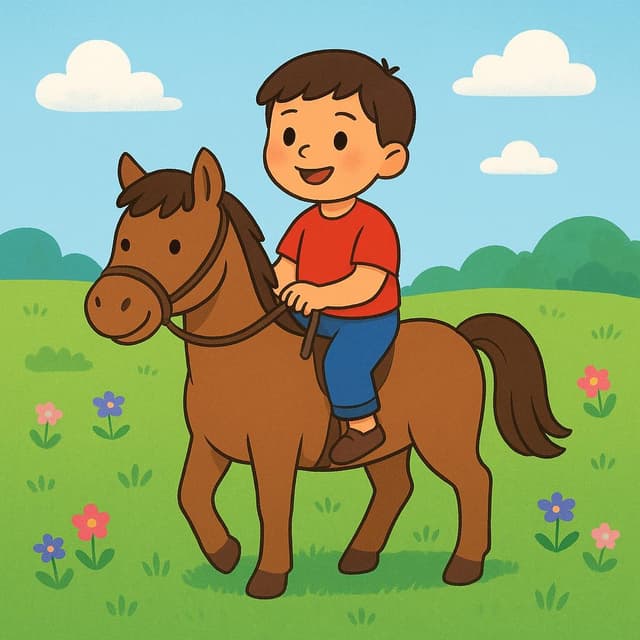
montar — to ride
The conditional of montar expresses 'would' actions, polite requests, or future-in-the-past.
Formy montar Tryb warunkowy
Kiedy używać Tryb warunkowy
Use the conditional tense of 'montar' to talk about what you 'would' do, make polite requests, or describe what was going to happen in the past. It often appears in hypothetical situations.
Uwagi dotyczące montar w czasie Tryb warunkowy
Montar is regular in the conditional tense. The stem is the full infinitive 'montar', and you add the conditional endings (-ía, -ías, -ía, -íamos, -íais, -ían).
Przykładowe zdania
Yo montaría en bicicleta si tuviera tiempo.
I would ride my bike if I had time.
yo
¿Montarías a caballo conmigo?
Would you ride horses with me?
tú
Nos dijeron que montarían un espectáculo increíble.
They told us they would put on an incredible show.
ellos/ellas/ustedes
Me gustaría que montaras en moto.
I would like you to ride a motorcycle.
tú
Częste błędy
Błąd: Confusing conditional with future tense.
Poprawnie: Use the conditional for 'would' ('montaría') and the future for 'will' ('montaré').
Dlaczego: They express different ideas: hypotheticals/politeness vs. certainty/probability.
Błąd: Forgetting the accent on the conditional endings.
Poprawnie: All conditional endings have an accent: 'montaría', 'montarías', etc.
Dlaczego: The accent is required on the 'i' of the ending and indicates the stressed syllable.
Opanuj hiszpańskie czasowniki w kontekście
Zapamiętywanie tabel to dopiero początek. Przeczytaj ponad 200 ilustrowanych i udźwiękowionych hiszpańskich historii, aby zobaczyć czasowniki takie jak 'montar' używane naturalnie — w czasach, których się uczysz.
Powiązane czasy
Czas teraźniejszy
yo: monto
The present tense of montar describes habitual actions, things happening now, or general truths.
Czas przeszły prosty
yo: monté
The preterite of montar describes completed actions like riding or assembling in the past.
Czas przeszły niedokonany
yo: montaba
The imperfect tense of montar describes ongoing or habitual past actions.
Czas przyszły
yo: montaré
The future tense of montar expresses actions that will happen or probabilities.
Tryb Subj. teraźniejszy
yo: monte
The present subjunctive of montar is used for wishes, doubts, and suggestions.
Tryb Subj. przeszły niedokonany
yo: montara
The imperfect subjunctive of montar expresses past doubts, wishes, or hypothetical situations.
Tryb rozkazujący (twierdzący)
yo: monta
Use the imperative of montar for direct commands like 'ride!' or 'let's ride!'.
Tryb rozkazujący (przeczący)
yo: no montes
Use 'no' + present subjunctive for negative commands with montar, like 'don't ride!'.