Koniugacja montar Czas przyszły
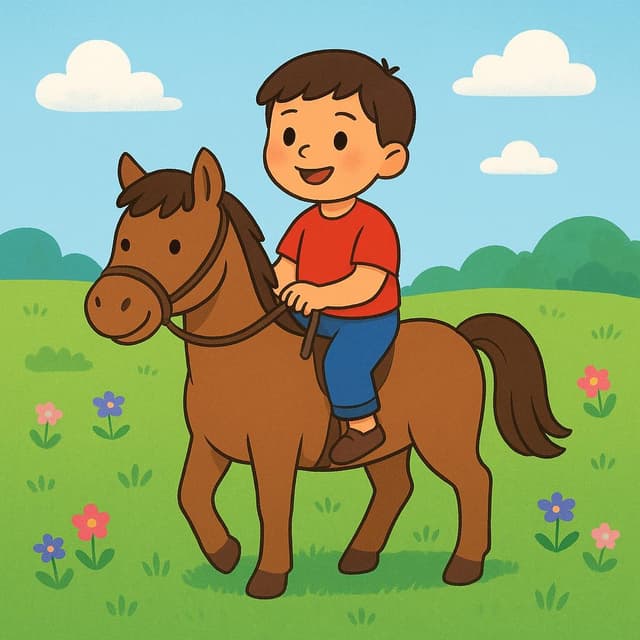
montar — to ride
The future tense of montar expresses actions that will happen or probabilities.
Formy montar Czas przyszły
Kiedy używać Czas przyszły
Use the future tense of 'montar' to talk about actions that are certain to happen in the future or to express a probability or assumption about a present or future event.
Uwagi dotyczące montar w czasie Czas przyszły
Montar is regular in the future tense. The stem is the full infinitive 'montar', and you add the standard future endings (-é, -ás, -á, -emos, -éis, -án).
Przykładowe zdania
Mañana montaré a caballo en la sierra.
Tomorrow I will ride horses in the mountains.
yo
¿Montarás en bicicleta al trabajo?
Will you ride your bike to work?
tú
Ellos montarán la nueva atracción la próxima semana.
They will assemble the new attraction next week.
ellos/ellas/ustedes
Seguro que montará un buen negocio.
He will surely start a good business.
él/ella/usted
Częste błędy
Błąd: Using the present tense or 'ir a + infinitive' when a more formal future is needed.
Poprawnie: Use the future tense for predictions or formal statements about the future: 'Montaré' instead of 'Monto' or 'Voy a montar'.
Dlaczego: While 'ir a + infinitive' is common, the simple future tense has distinct uses for probability and certainty.
Błąd: Forgetting to add the accent on the future endings.
Poprawnie: All future endings require an accent: 'montaré', 'montarás', 'montará', etc.
Dlaczego: The accent indicates the stressed syllable and distinguishes future forms.
Opanuj hiszpańskie czasowniki w kontekście
Zapamiętywanie tabel to dopiero początek. Przeczytaj ponad 200 ilustrowanych i udźwiękowionych hiszpańskich historii, aby zobaczyć czasowniki takie jak 'montar' używane naturalnie — w czasach, których się uczysz.
Powiązane czasy
Czas teraźniejszy
yo: monto
The present tense of montar describes habitual actions, things happening now, or general truths.
Czas przeszły prosty
yo: monté
The preterite of montar describes completed actions like riding or assembling in the past.
Czas przeszły niedokonany
yo: montaba
The imperfect tense of montar describes ongoing or habitual past actions.
Tryb warunkowy
yo: montaría
The conditional of montar expresses 'would' actions, polite requests, or future-in-the-past.
Tryb Subj. teraźniejszy
yo: monte
The present subjunctive of montar is used for wishes, doubts, and suggestions.
Tryb Subj. przeszły niedokonany
yo: montara
The imperfect subjunctive of montar expresses past doubts, wishes, or hypothetical situations.
Tryb rozkazujący (twierdzący)
yo: monta
Use the imperative of montar for direct commands like 'ride!' or 'let's ride!'.
Tryb rozkazujący (przeczący)
yo: no montes
Use 'no' + present subjunctive for negative commands with montar, like 'don't ride!'.