Koniugacja montar Tryb Subj. przeszły niedokonany
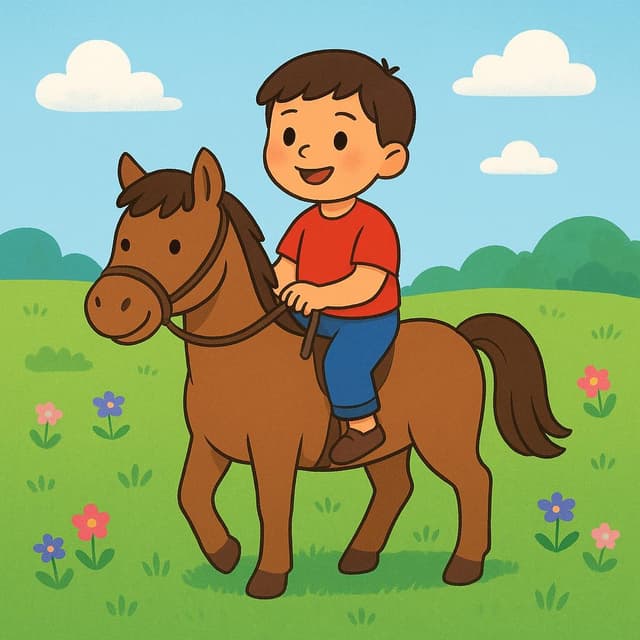
montar — to ride
The imperfect subjunctive of montar expresses past doubts, wishes, or hypothetical situations.
Formy montar Tryb Subj. przeszły niedokonany
Kiedy używać Tryb Subj. przeszły niedokonany
Use the imperfect subjunctive of 'montar' when talking about past hypothetical situations, wishes, or doubts. It often appears in 'if' clauses ('si...') or after expressions like 'ojalá' (hopefully).
Uwagi dotyczące montar w czasie Tryb Subj. przeszły niedokonany
Montar is regular in the imperfect subjunctive. You take the 'ellos/ellas/ustedes' preterite form ('montaron'), drop the '-ron', and add the subjunctive endings (-ra, -ras, -ra, -ramos, -rais, -ran).
Przykładowe zdania
Si montara mi propio negocio, sería mi propio jefe.
If I were to start my own business, I would be my own boss.
yo
Ojalá montaras en bicicleta conmigo mañana.
I wish you would ride your bike with me tomorrow.
tú
Me gustaría que montaran un buen espectáculo.
I would like them to put on a good show.
ellos/ellas/ustedes
Si nosotros montáramos un puesto en el mercado, ¿qué venderíamos?
If we were to set up a stall at the market, what would we sell?
nosotros
Częste błędy
Błąd: Using the preterite instead of the imperfect subjunctive in 'if' clauses.
Poprawnie: For hypothetical past or present situations, use the imperfect subjunctive: 'Si montara...' not 'Si monté...'.
Dlaczego: The preterite refers to completed actions, while the imperfect subjunctive deals with unreal or hypothetical conditions.
Błąd: Confusing the -ra and -se forms.
Poprawnie: Both forms are correct, but the -ra form (montara, montaras) is more common in many regions. Ensure consistency.
Dlaczego: Learners might not realize both endings are valid or get confused about which one to use.
Opanuj hiszpańskie czasowniki w kontekście
Zapamiętywanie tabel to dopiero początek. Przeczytaj ponad 200 ilustrowanych i udźwiękowionych hiszpańskich historii, aby zobaczyć czasowniki takie jak 'montar' używane naturalnie — w czasach, których się uczysz.
Powiązane czasy
Czas teraźniejszy
yo: monto
The present tense of montar describes habitual actions, things happening now, or general truths.
Czas przeszły prosty
yo: monté
The preterite of montar describes completed actions like riding or assembling in the past.
Czas przeszły niedokonany
yo: montaba
The imperfect tense of montar describes ongoing or habitual past actions.
Czas przyszły
yo: montaré
The future tense of montar expresses actions that will happen or probabilities.
Tryb warunkowy
yo: montaría
The conditional of montar expresses 'would' actions, polite requests, or future-in-the-past.
Tryb Subj. teraźniejszy
yo: monte
The present subjunctive of montar is used for wishes, doubts, and suggestions.
Tryb rozkazujący (twierdzący)
yo: monta
Use the imperative of montar for direct commands like 'ride!' or 'let's ride!'.
Tryb rozkazujący (przeczący)
yo: no montes
Use 'no' + present subjunctive for negative commands with montar, like 'don't ride!'.