Koniugacja noquear Tryb warunkowy
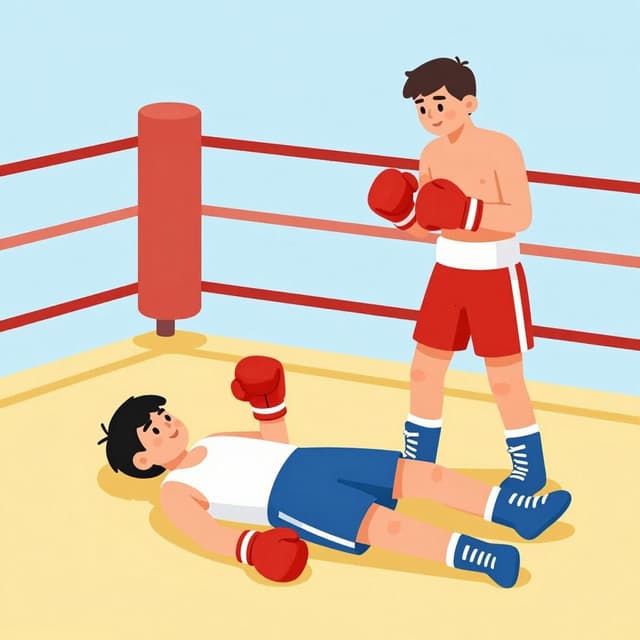
noquear — to knock out
The conditional of noquear is regular: noquearía, noquearías, noquearía, noquearíamos, noquearíais, noquearían.
Formy noquear Tryb warunkowy
Kiedy używać Tryb warunkowy
Use the conditional of noquear for hypothetical situations ('I would knock him out if I could'), polite requests ('Would you knock this over?'), or to express future actions from a past perspective ('He said he would knock out the boss').
Uwagi dotyczące noquear w czasie Tryb warunkowy
Noquear is regular in the conditional tense. The stem is the full infinitive 'noquear', and the standard conditional endings (-ía, -ías, -ía, -íamos, -íais, -ían) are added.
Przykładowe zdania
Yo noquearía al oponente si tuviera la oportunidad.
I would knock out the opponent if I had the opportunity.
yo
¿Tú noquearías esa caja para mí?
Would you knock over that box for me?
tú
Él dijo que noquearía al siguiente retador.
He said he would knock out the next challenger.
él/ella/usted
Nosotros noquearíamos el récord si entrenáramos más.
We would break the record if we trained more.
nosotros
Ellos noquearían la competencia.
They would knock out the competition.
ellos/ellas/ustedes
Częste błędy
Błąd: Confusing the conditional 'noquearía' with the imperfect subjunctive 'noqueara'.
Poprawnie: Use 'noquearía' for 'would knock out' (hypothetical result) and 'noqueara' in 'if' clauses or wishes.
Dlaczego: While both deal with hypotheticals, the conditional expresses the consequence ('would do'), and the imperfect subjunctive often introduces the condition ('if I did').
Błąd: Forgetting the accent on the conditional endings.
Poprawnie: The endings require accents: 'noquearía', 'noquearías', 'noquearía', etc.
Dlaczego: These accents are essential for correct spelling and pronunciation in the conditional tense.
Opanuj hiszpańskie czasowniki w kontekście
Zapamiętywanie tabel to dopiero początek. Przeczytaj ponad 200 ilustrowanych i udźwiękowionych hiszpańskich historii, aby zobaczyć czasowniki takie jak 'noquear' używane naturalnie — w czasach, których się uczysz.
Powiązane czasy
Czas teraźniejszy
yo: noqueo
The present tense of noquear is regular: noqueo, noqueas, noquea, noqueamos, noqueáis, noquean.
Czas przeszły prosty
yo: noqueé
The preterite of noquear is regular: noqueé, noqueaste, noqueó, noqueamos, noqueasteis, noquearon.
Czas przeszły niedokonany
yo: noqueaba
The imperfect of noquear is regular: noqueaba, noqueabas, noqueaba, noqueábamos, noqueabais, noqueaban.
Czas przyszły
yo: noquearé
The future tense of noquear is regular: noquearé, noquearás, noqueará, noquearemos, noquearéis, noquearán.
Tryb Subj. teraźniejszy
yo: noquee
Use the present subjunctive of noquear after expressions of doubt, desire, or emotion, like 'Espero que noquees'.
Tryb Subj. przeszły niedokonany
yo: noqueara
Use the imperfect subjunctive of noquear for past hypotheticals or wishes, like 'si noqueara' or 'ojalá noqueara'.
Tryb rozkazujący (twierdzący)
yo: noquea
Use 'noquea', 'noquee', 'noqueemos', 'noquead', 'noqueen' for direct commands with noquear.
Tryb rozkazujący (przeczący)
yo: no noquees
Use 'no noquees', 'no noquee', 'no noqueemos', 'no noqueéis', 'no noqueen' for negative commands.