Koniugacja noquear Czas przeszły prosty
noquear — to knock out
The preterite of noquear is regular: noqueé, noqueaste, noqueó, noqueamos, noqueasteis, noquearon.
Formy noquear Czas przeszły prosty
Kiedy używać Czas przeszły prosty
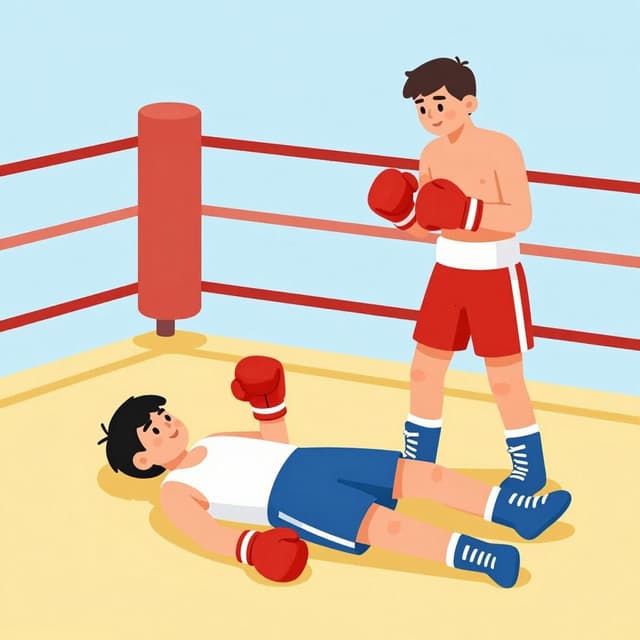
Use the preterite of noquear to talk about a specific instance where someone or something was knocked out, or a specific action of knocking someone/something out that has been completed. For example, 'The boxer knocked out his opponent in the third round'.
Uwagi dotyczące noquear w czasie Czas przeszły prosty
Noquear is fully regular in the preterite. It follows the standard pattern for -ar verbs: infinitive stem (noque-) plus the endings (-é, -aste, -ó, -amos, -asteis, -aron).
Przykładowe zdania
El boxeador noqueó a su rival en el tercer asalto.
The boxer knocked out his rival in the third round.
él/ella/usted
Anoche, mi equipo noqueó al otro en el último minuto.
Last night, my team knocked out the other one in the last minute.
él/ella/usted
Yo noqueé la lámpara sin querer.
I knocked over the lamp by accident.
yo
¿Tú noqueaste al personaje del videojuego?
Did you knock out the video game character?
tú
Ellos noquearon al campeón defensor.
They knocked out the defending champion.
ellos/ellas/ustedes
Częste błędy
Błąd: Using the imperfect 'noqueaba' instead of the preterite 'noqueó' for a single, completed action.
Poprawnie: Use 'noqueó' for specific completed events like 'He knocked him out'.
Dlaczego: The preterite is for completed actions, while the imperfect describes ongoing or habitual past actions.
Błąd: Forgetting the accent on the 'yo' and 'él/ella/usted' forms.
Poprawnie: The forms are 'yo noqueé' and 'él/ella/usted noqueó'.
Dlaczego: The accent marks the stressed syllable and distinguishes these forms from other tenses or moods.
Opanuj hiszpańskie czasowniki w kontekście
Zapamiętywanie tabel to dopiero początek. Przeczytaj ponad 200 ilustrowanych i udźwiękowionych hiszpańskich historii, aby zobaczyć czasowniki takie jak 'noquear' używane naturalnie — w czasach, których się uczysz.
Powiązane czasy
Czas teraźniejszy
yo: noqueo
The present tense of noquear is regular: noqueo, noqueas, noquea, noqueamos, noqueáis, noquean.
Czas przeszły niedokonany
yo: noqueaba
The imperfect of noquear is regular: noqueaba, noqueabas, noqueaba, noqueábamos, noqueabais, noqueaban.
Czas przyszły
yo: noquearé
The future tense of noquear is regular: noquearé, noquearás, noqueará, noquearemos, noquearéis, noquearán.
Tryb warunkowy
yo: noquearía
The conditional of noquear is regular: noquearía, noquearías, noquearía, noquearíamos, noquearíais, noquearían.
Tryb Subj. teraźniejszy
yo: noquee
Use the present subjunctive of noquear after expressions of doubt, desire, or emotion, like 'Espero que noquees'.
Tryb Subj. przeszły niedokonany
yo: noqueara
Use the imperfect subjunctive of noquear for past hypotheticals or wishes, like 'si noqueara' or 'ojalá noqueara'.
Tryb rozkazujący (twierdzący)
yo: noquea
Use 'noquea', 'noquee', 'noqueemos', 'noquead', 'noqueen' for direct commands with noquear.
Tryb rozkazujący (przeczący)
yo: no noquees
Use 'no noquees', 'no noquee', 'no noqueemos', 'no noqueéis', 'no noqueen' for negative commands.