Koniugacja noquear Czas przeszły niedokonany
noquear — to knock out
The imperfect of noquear is regular: noqueaba, noqueabas, noqueaba, noqueábamos, noqueabais, noqueaban.
Formy noquear Czas przeszły niedokonany
Kiedy używać Czas przeszły niedokonany
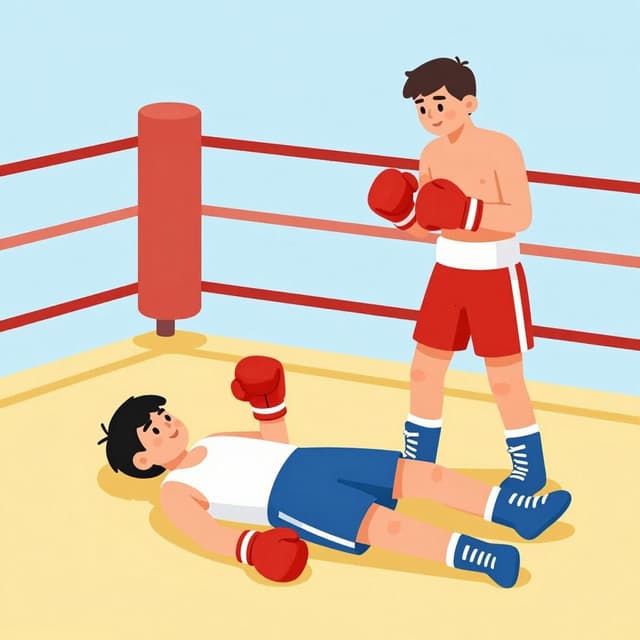
Use the imperfect of noquear to describe ongoing actions in the past ('He was knocking out opponents'), habitual actions ('He used to knock out his rivals every week'), or to set the scene ('The boxer was already knocking out his opponent when the bell rang').
Uwagi dotyczące noquear w czasie Czas przeszły niedokonany
Noquear is regular in the imperfect indicative tense. It follows the standard conjugation for -ar verbs.
Przykładowe zdania
Cuando yo era niño, noqueaba a mi hermano jugando.
When I was a child, I used to knock out my brother while playing.
yo
Él noqueaba a todos en el gimnasio.
He used to knock out everyone at the gym.
él/ella/usted
El jugador noqueaba la pelota con mucha fuerza.
The player was hitting (knocking) the ball with a lot of force.
él/ella/usted
Ustedes noqueaban a los enemigos mientras yo buscaba la salida.
You all were knocking out the enemies while I was looking for the exit.
ellos/ellas/ustedes
Nosotros noqueábamos al jefe final cada día.
We used to knock out the final boss every day.
nosotros
Częste błędy
Błąd: Using the preterite 'noqueó' for a description or habitual action in the past.
Poprawnie: Use 'noqueaba' for ongoing or repeated actions like 'He was knocking out...' or 'He used to knock out...'.
Dlaczego: The imperfect describes the background, duration, or repetition of past actions, while the preterite describes a single completed event.
Błąd: Incorrectly forming the 'vosotros' form, e.g., 'noqueabais' becoming 'noqueais'.
Poprawnie: The correct 'vosotros' imperfect ending is '-abais'.
Dlaczego: This ending is specific to the imperfect tense for -ar verbs.
Opanuj hiszpańskie czasowniki w kontekście
Zapamiętywanie tabel to dopiero początek. Przeczytaj ponad 200 ilustrowanych i udźwiękowionych hiszpańskich historii, aby zobaczyć czasowniki takie jak 'noquear' używane naturalnie — w czasach, których się uczysz.
Powiązane czasy
Czas teraźniejszy
yo: noqueo
The present tense of noquear is regular: noqueo, noqueas, noquea, noqueamos, noqueáis, noquean.
Czas przeszły prosty
yo: noqueé
The preterite of noquear is regular: noqueé, noqueaste, noqueó, noqueamos, noqueasteis, noquearon.
Czas przyszły
yo: noquearé
The future tense of noquear is regular: noquearé, noquearás, noqueará, noquearemos, noquearéis, noquearán.
Tryb warunkowy
yo: noquearía
The conditional of noquear is regular: noquearía, noquearías, noquearía, noquearíamos, noquearíais, noquearían.
Tryb Subj. teraźniejszy
yo: noquee
Use the present subjunctive of noquear after expressions of doubt, desire, or emotion, like 'Espero que noquees'.
Tryb Subj. przeszły niedokonany
yo: noqueara
Use the imperfect subjunctive of noquear for past hypotheticals or wishes, like 'si noqueara' or 'ojalá noqueara'.
Tryb rozkazujący (twierdzący)
yo: noquea
Use 'noquea', 'noquee', 'noqueemos', 'noquead', 'noqueen' for direct commands with noquear.
Tryb rozkazujący (przeczący)
yo: no noquees
Use 'no noquees', 'no noquee', 'no noqueemos', 'no noqueéis', 'no noqueen' for negative commands.