Koniugacja pegar Tryb warunkowy
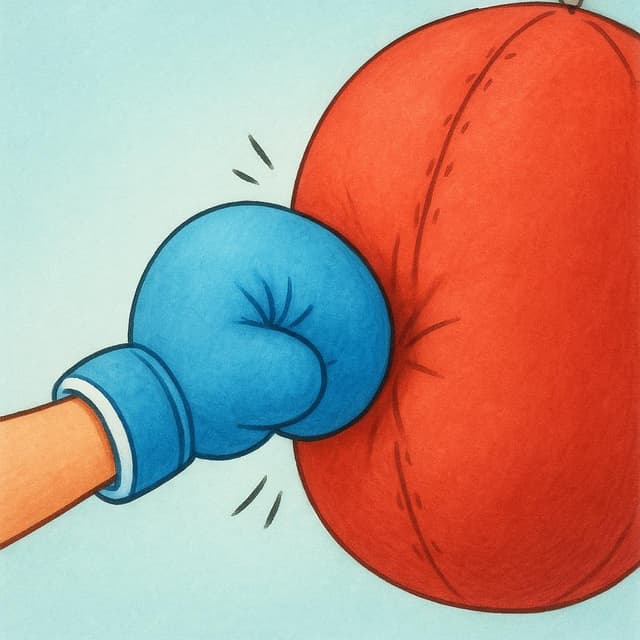
pegar — to hit
The conditional of pegar is regular: pegaría, pegarías, pegaría, pegaríamos, pegaríais, pegarían.
Formy pegar Tryb warunkowy
Kiedy używać Tryb warunkowy
Use this to express what you 'would' glue if you had the chance, or to wonder if two things would match in a hypothetical scenario.
Uwagi dotyczące pegar w czasie Tryb warunkowy
Pegar is regular in the conditional. The stem is the infinitive 'pegar'.
Przykładowe zdania
Yo lo pegaría con pegamento fuerte.
I would glue it with strong glue.
yo
¿Pegarían estos cuadros en el salón?
Would these paintings look good in the living room?
ellos/ellas/ustedes
Si tuviéramos tiempo, pegaríamos los carteles.
If we had time, we would stick the posters.
nosotros
Częste błędy
Błąd: Confusing the conditional 'pegaría' with the imperfect 'pegaba'.
Poprawnie: pegaría (would hit) vs. pegaba (used to hit).
Dlaczego: The conditional refers to hypotheticals, while the imperfect refers to repeated past actions.
Opanuj hiszpańskie czasowniki w kontekście
Zapamiętywanie tabel to dopiero początek. Przeczytaj ponad 200 ilustrowanych i udźwiękowionych hiszpańskich historii, aby zobaczyć czasowniki takie jak 'pegar' używane naturalnie — w czasach, których się uczysz.
Powiązane czasy
Czas teraźniejszy
yo: pego
The present tense of pegar is completely regular: pego, pegas, pega, pegamos, pegáis, pegan.
Czas przeszły prosty
yo: pegué
The preterite of pegar has a spelling change in the 'yo' form (pegué) to keep the hard 'g' sound.
Czas przeszły niedokonany
yo: pegaba
The imperfect of pegar is regular: pegaba, pegabas, pegaba, pegábamos, pegabais, pegaban.
Czas przyszły
yo: pegaré
The future tense of pegar is regular, using the full infinitive as the stem: pegaré, pegarás, pegará...
Tryb Subj. teraźniejszy
yo: pegue
The present subjunctive of pegar uses the 'gu' spelling change in all forms: pegue, pegues, pegue, peguemos, peguéis, peguen.
Tryb Subj. przeszły niedokonany
yo: pegara
The imperfect subjunctive of pegar is regular: pegara, pegaras, pegara, pegáramos, pegarais, pegaran.
Tryb rozkazujący (twierdzący)
yo: pega
Use 'pega' (tú) for commands, and remember the 'gu' change for 'pegue' (usted) and 'peguen' (ustedes).
Tryb rozkazujący (przeczący)
yo: no pegues
Negative commands always use the 'gu' spelling: no pegues, no pegue, no peguemos, no peguéis, no peguen.