Koniugacja pegar Tryb Subj. przeszły niedokonany
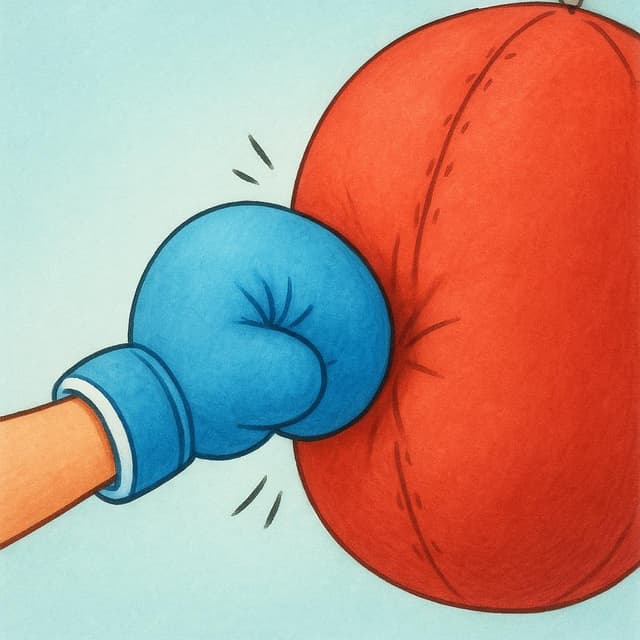
pegar — to hit
The imperfect subjunctive of pegar is regular: pegara, pegaras, pegara, pegáramos, pegarais, pegaran.
Formy pegar Tryb Subj. przeszły niedokonany
Kiedy używać Tryb Subj. przeszły niedokonany
Use this in 'if' clauses (e.g., 'If I hit the ball...') or after past-tense expressions of doubt or desire.
Uwagi dotyczące pegar w czasie Tryb Subj. przeszły niedokonany
Pegar is regular here. The spelling change 'gu' from the preterite 'yo' form does NOT apply because the endings start with 'a'.
Przykładowe zdania
Si yo le pegara a la pelota, volaría lejos.
If I hit the ball, it would fly far.
yo
Me gustaría que pegaras las fotos hoy.
I would like you to glue the photos today.
tú
Si pegáramos los trozos, el plato serviría.
If we glued the pieces, the plate would be useful.
nosotros
Częste błędy
Błąd: Using 'peguara' instead of 'pegara'.
Poprawnie: pegara
Dlaczego: The 'u' is only needed before 'e' or 'i'. Before 'a', the 'g' is naturally hard.
Opanuj hiszpańskie czasowniki w kontekście
Zapamiętywanie tabel to dopiero początek. Przeczytaj ponad 200 ilustrowanych i udźwiękowionych hiszpańskich historii, aby zobaczyć czasowniki takie jak 'pegar' używane naturalnie — w czasach, których się uczysz.
Powiązane czasy
Czas teraźniejszy
yo: pego
The present tense of pegar is completely regular: pego, pegas, pega, pegamos, pegáis, pegan.
Czas przeszły prosty
yo: pegué
The preterite of pegar has a spelling change in the 'yo' form (pegué) to keep the hard 'g' sound.
Czas przeszły niedokonany
yo: pegaba
The imperfect of pegar is regular: pegaba, pegabas, pegaba, pegábamos, pegabais, pegaban.
Czas przyszły
yo: pegaré
The future tense of pegar is regular, using the full infinitive as the stem: pegaré, pegarás, pegará...
Tryb warunkowy
yo: pegaría
The conditional of pegar is regular: pegaría, pegarías, pegaría, pegaríamos, pegaríais, pegarían.
Tryb Subj. teraźniejszy
yo: pegue
The present subjunctive of pegar uses the 'gu' spelling change in all forms: pegue, pegues, pegue, peguemos, peguéis, peguen.
Tryb rozkazujący (twierdzący)
yo: pega
Use 'pega' (tú) for commands, and remember the 'gu' change for 'pegue' (usted) and 'peguen' (ustedes).
Tryb rozkazujący (przeczący)
yo: no pegues
Negative commands always use the 'gu' spelling: no pegues, no pegue, no peguemos, no peguéis, no peguen.