Koniugacja pegar Czas przyszły
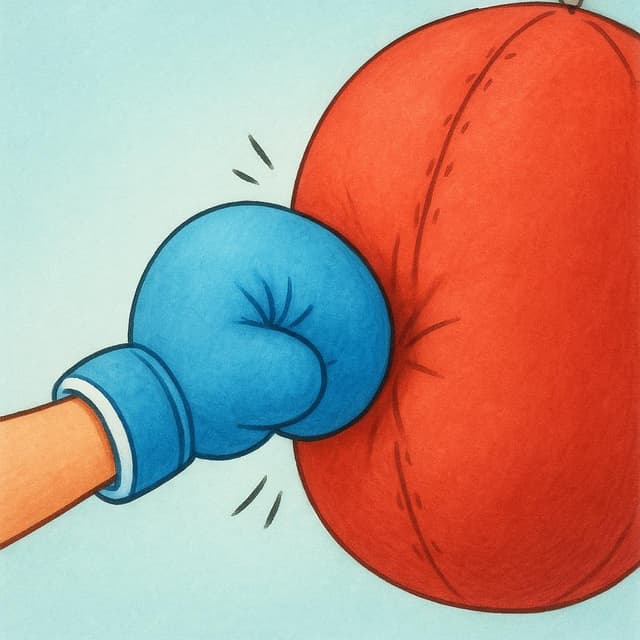
pegar — to hit
The future tense of pegar is regular, using the full infinitive as the stem: pegaré, pegarás, pegará...
Formy pegar Czas przyszły
Kiedy używać Czas przyszły
Use this to talk about things you will glue, posters you will hang, or to predict if something will 'catch on' or become popular.
Uwagi dotyczące pegar w czasie Czas przyszły
Pegar is regular in the future tense. Simply add the future endings to the infinitive.
Przykładowe zdania
Pegaré el aviso en la puerta mañana.
I will stick the notice on the door tomorrow.
yo
Esa canción pegará fuerte este verano.
That song will be a big hit this summer.
él/ella/usted
Ellos pegarán los trozos con cuidado.
They will glue the pieces carefully.
ellos/ellas/ustedes
Częste błędy
Błąd: Forgetting the accent marks on the endings.
Poprawnie: pegaré, pegarás, pegará, etc.
Dlaczego: All future tense endings except 'nosotros' require an accent to show stress on the last syllable.
Opanuj hiszpańskie czasowniki w kontekście
Zapamiętywanie tabel to dopiero początek. Przeczytaj ponad 200 ilustrowanych i udźwiękowionych hiszpańskich historii, aby zobaczyć czasowniki takie jak 'pegar' używane naturalnie — w czasach, których się uczysz.
Powiązane czasy
Czas teraźniejszy
yo: pego
The present tense of pegar is completely regular: pego, pegas, pega, pegamos, pegáis, pegan.
Czas przeszły prosty
yo: pegué
The preterite of pegar has a spelling change in the 'yo' form (pegué) to keep the hard 'g' sound.
Czas przeszły niedokonany
yo: pegaba
The imperfect of pegar is regular: pegaba, pegabas, pegaba, pegábamos, pegabais, pegaban.
Tryb warunkowy
yo: pegaría
The conditional of pegar is regular: pegaría, pegarías, pegaría, pegaríamos, pegaríais, pegarían.
Tryb Subj. teraźniejszy
yo: pegue
The present subjunctive of pegar uses the 'gu' spelling change in all forms: pegue, pegues, pegue, peguemos, peguéis, peguen.
Tryb Subj. przeszły niedokonany
yo: pegara
The imperfect subjunctive of pegar is regular: pegara, pegaras, pegara, pegáramos, pegarais, pegaran.
Tryb rozkazujący (twierdzący)
yo: pega
Use 'pega' (tú) for commands, and remember the 'gu' change for 'pegue' (usted) and 'peguen' (ustedes).
Tryb rozkazujący (przeczący)
yo: no pegues
Negative commands always use the 'gu' spelling: no pegues, no pegue, no peguemos, no peguéis, no peguen.