Koniugacja pegar Czas przeszły niedokonany
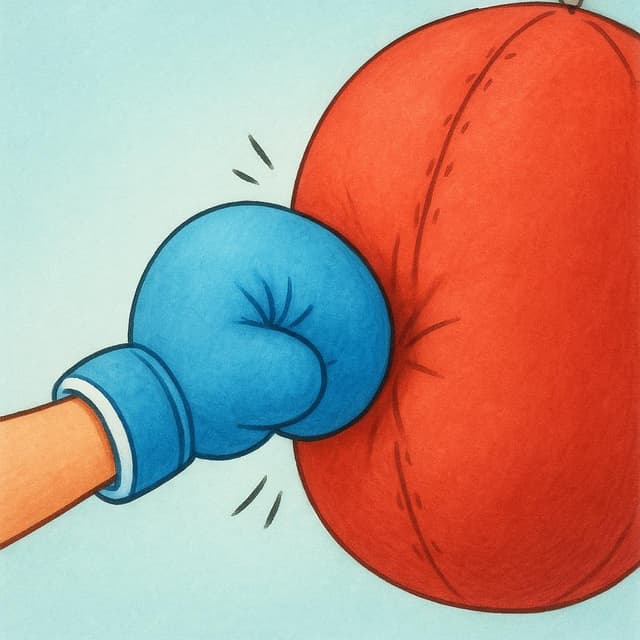
pegar — to hit
The imperfect of pegar is regular: pegaba, pegabas, pegaba, pegábamos, pegabais, pegaban.
Formy pegar Czas przeszły niedokonany
Kiedy używać Czas przeszły niedokonany
Use this for past habits (like a kid who used to hit), ongoing actions (was sticking), or describing how things used to match.
Uwagi dotyczące pegar w czasie Czas przeszły niedokonany
Pegar is regular in the imperfect. It follows the standard -aba pattern for -ar verbs.
Przykładowe zdania
De niño, él siempre pegaba a los demás.
As a child, he was always hitting others.
él/ella/usted
Nosotros pegábamos cromos en el cuaderno.
We used to stick stickers in the notebook.
nosotros
Antes, esa chaqueta te pegaba más.
Before, that jacket suited you better.
él/ella/usted
Częste błędy
Błąd: Forgetting the accent on the 'nosotros' form.
Poprawnie: pegábamos
Dlaczego: The 'nosotros' form of -ar verbs in the imperfect always has an accent on the first 'a' of the ending.
Opanuj hiszpańskie czasowniki w kontekście
Zapamiętywanie tabel to dopiero początek. Przeczytaj ponad 200 ilustrowanych i udźwiękowionych hiszpańskich historii, aby zobaczyć czasowniki takie jak 'pegar' używane naturalnie — w czasach, których się uczysz.
Powiązane czasy
Czas teraźniejszy
yo: pego
The present tense of pegar is completely regular: pego, pegas, pega, pegamos, pegáis, pegan.
Czas przeszły prosty
yo: pegué
The preterite of pegar has a spelling change in the 'yo' form (pegué) to keep the hard 'g' sound.
Czas przyszły
yo: pegaré
The future tense of pegar is regular, using the full infinitive as the stem: pegaré, pegarás, pegará...
Tryb warunkowy
yo: pegaría
The conditional of pegar is regular: pegaría, pegarías, pegaría, pegaríamos, pegaríais, pegarían.
Tryb Subj. teraźniejszy
yo: pegue
The present subjunctive of pegar uses the 'gu' spelling change in all forms: pegue, pegues, pegue, peguemos, peguéis, peguen.
Tryb Subj. przeszły niedokonany
yo: pegara
The imperfect subjunctive of pegar is regular: pegara, pegaras, pegara, pegáramos, pegarais, pegaran.
Tryb rozkazujący (twierdzący)
yo: pega
Use 'pega' (tú) for commands, and remember the 'gu' change for 'pegue' (usted) and 'peguen' (ustedes).
Tryb rozkazujący (przeczący)
yo: no pegues
Negative commands always use the 'gu' spelling: no pegues, no pegue, no peguemos, no peguéis, no peguen.