Koniugacja prender Tryb Subj. teraźniejszy
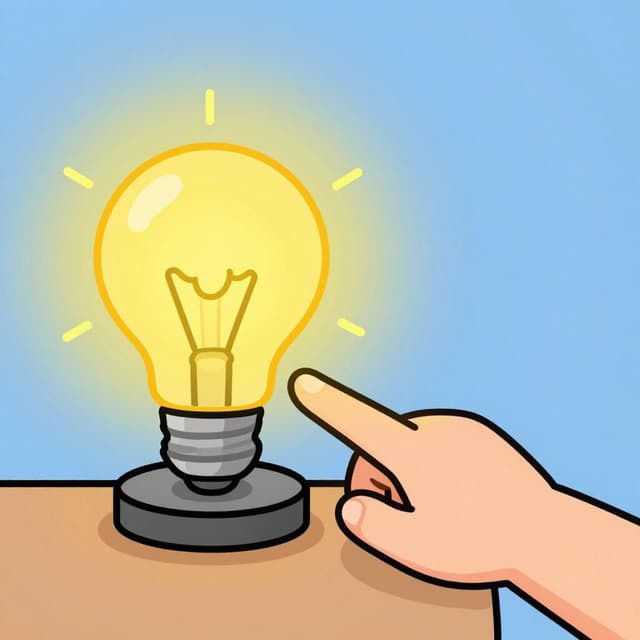
prender — to turn on
Use 'prenda' for wishes, doubts, or emotions, like 'I hope you turn on'.
Formy prender Tryb Subj. teraźniejszy
Kiedy używać Tryb Subj. teraźniejszy
The present subjunctive is used after expressions of desire, doubt, emotion, or uncertainty. If you hope someone turns on the light, or you're unsure if they will turn on the alarm, you'll use this tense. It's often triggered by phrases like 'Espero que...' (I hope that...) or 'Dudo que...' (I doubt that...).
Uwagi dotyczące prender w czasie Tryb Subj. teraźniejszy
Prender is regular in the present subjunctive. The yo form is 'prendo', and the other forms are derived from it, with stem changes for -er verbs in the 'nosotros' form if applicable (not in this case).
Przykładowe zdania
Espero que prendas la estufa pronto.
I hope you turn on the stove soon.
tú
Dudo que él prenda el proyector a tiempo.
I doubt he will turn on the projector on time.
él/ella/usted
Queremos que ustedes prendan las velas.
We want you (plural) to turn on the candles.
ellos/ellas/ustedes
Es importante que prendamos el modo de ahorro.
It's important that we turn on the savings mode.
nosotros
Częste błędy
Błąd: Using the present indicative instead of subjunctive: 'Espero que prendes la luz'.
Poprawnie: After 'Espero que', you need the subjunctive: 'Espero que prendas la luz'.
Dlaczego: Expressions of hope, doubt, and emotion trigger the subjunctive mood, not the indicative.
Błąd: Using the infinitive after 'que': 'Quiero que prender la tele'.
Poprawnie: The verb following 'que' must be conjugated in the subjunctive: 'Quiero que prendas la tele'.
Dlaczego: When the subject changes between the main clause (yo quiero) and the subordinate clause (tú prendas), the subjunctive is required.
Opanuj hiszpańskie czasowniki w kontekście
Zapamiętywanie tabel to dopiero początek. Przeczytaj ponad 200 ilustrowanych i udźwiękowionych hiszpańskich historii, aby zobaczyć czasowniki takie jak 'prender' używane naturalnie — w czasach, których się uczysz.
Powiązane czasy
Czas teraźniejszy
yo: prendo
Use 'prendo', 'prendes', 'prende' for actions happening now or habitually, like 'I turn on the TV'.
Czas przeszły prosty
yo: prendí
Use 'prendí', 'prendiste', 'prendió' for completed actions like 'I turned on the light'.
Czas przeszły niedokonany
yo: prendía
Use 'prendía' for ongoing or habitual past actions, like 'I used to turn on'.
Czas przyszły
yo: prenderé
Use 'prenderé', 'prenderás' for actions that will happen, like 'I will turn on'.
Tryb warunkowy
yo: prendería
Use 'prendería' for hypothetical situations, like 'I would turn on'.
Tryb Subj. przeszły niedokonany
yo: prendiera
Use 'prendiera' or 'prendiera' for past hypotheticals or wishes, like 'if I turned on'.
Tryb rozkazujący (twierdzący)
yo: prende
Use 'prende' for tú, 'prendan' for ustedes to command someone to turn something on.
Tryb rozkazujący (przeczący)
yo: no prendas
Use 'no prendas' for tú, 'no prendan' for ustedes to forbid someone from turning something on.