referirKoniugacja
referir oznacza kierować.
Kompletne tabele koniugacji
Odniesienie do wszystkich czasów i trybów
Subjunctive
Present Subjunctive
Referir has a stem change (e > ie) and a special change in the nosotros/vosotros forms (e > i).
Imperfect Subjunctive
The stem changes to 'refiri-' for all persons in this past-tense hypothetical form.
Imperative
Imperative
The imperative uses the e > ie stem change for 'tú' and 'usted', but 'i' for 'nosotros'.
Negative Imperative
The negative imperative uses the present subjunctive forms with 'no'.
Indicative
Present
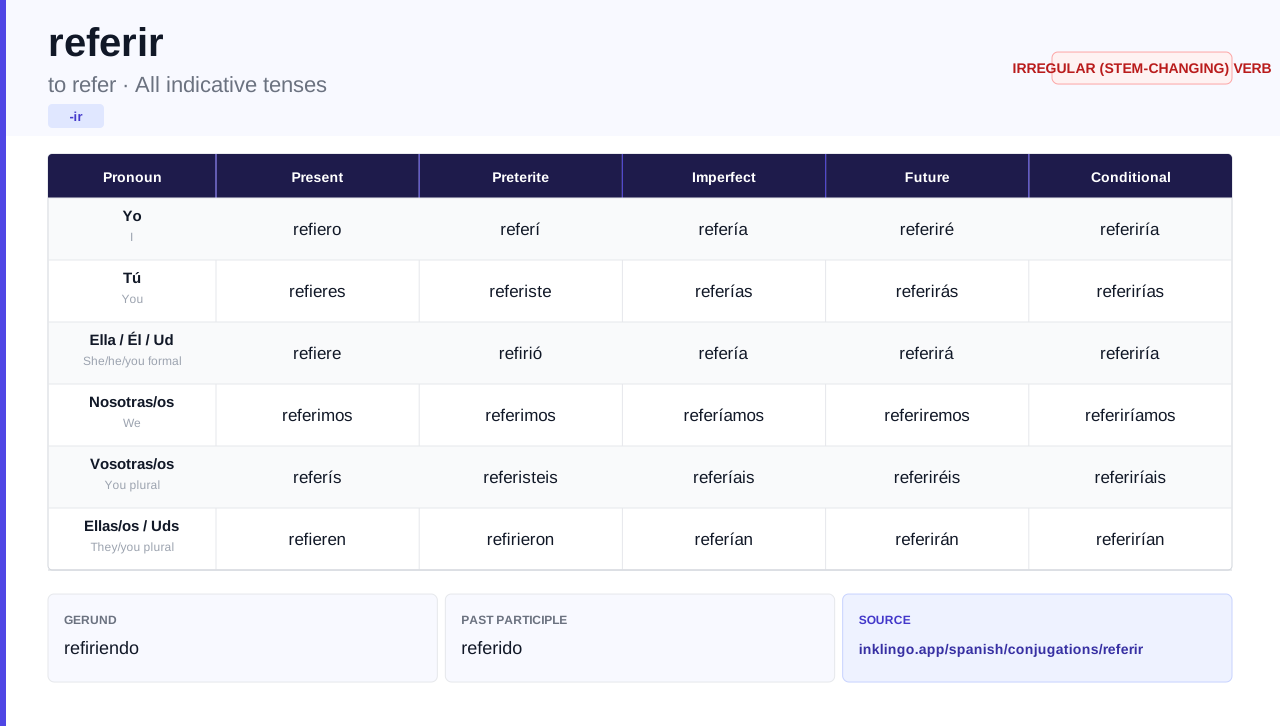
Referir is an e > ie stem-changing verb, except for the nosotros and vosotros forms.
Preterite
Referir is mostly regular but has a 'slipper' stem change (e > i) in the third-person forms.
Future
Referir is completely regular in the future tense: infinitive + endings.
Imperfect
Referir is completely regular in the imperfect: refería, referías, refería...
Conditional
Referir is regular in the conditional: infinitive + -ía, -ías, -ía...
Ćwicz koniugacje
Sprawdź swoją wiedzę za pomocą interaktywnych ćwiczeń
Przenieś referir z tabel do prawdziwego hiszpańskiego
Tabele koniugacji to dopiero początek. Przeczytaj ponad 200 ilustrowanych i udźwiękowionych hiszpańskich historii, aby zobaczyć 'referir' w akcji w prawdziwych zdaniach — i zbuduj instynkt, jaki mają rodzimi użytkownicy języka.
Często zadawane pytania
Co oznacza referir po hiszpańsku?
referir oznacza „kierować”.
Czy referir to czasownik regularny czy nieregularny?
referir to czasownik irregular (stem-changing) -ir w języku hiszpańskim.
Jak koniuguje się referir w czasie teraźniejszym?
Czas teraźniejszy referir to: yo refiero, tú refieres, él/ella/usted refiere, nosotros referimos, vosotros referís, ellos/ellas/ustedes refieren.
Jak koniuguje się referir w czasie przeszłym dokonanym (preterite)?
Czas przeszły dokonany referir to: yo referí, tú referiste, él/ella/usted refirió, nosotros referimos, vosotros referisteis, ellos/ellas/ustedes refirieron.
referir ściągawka koniugacyjna