Koniugacja saludar Tryb rozkazujący (twierdzący)
saludar — to greet
The imperative of saludar gives commands: saluda (tú), salude (usted), saludemos (nosotros), saludad (vosotros), saluden (ustedes).
Formy saludar Tryb rozkazujący (twierdzący)
Kiedy używać Tryb rozkazujący (twierdzący)
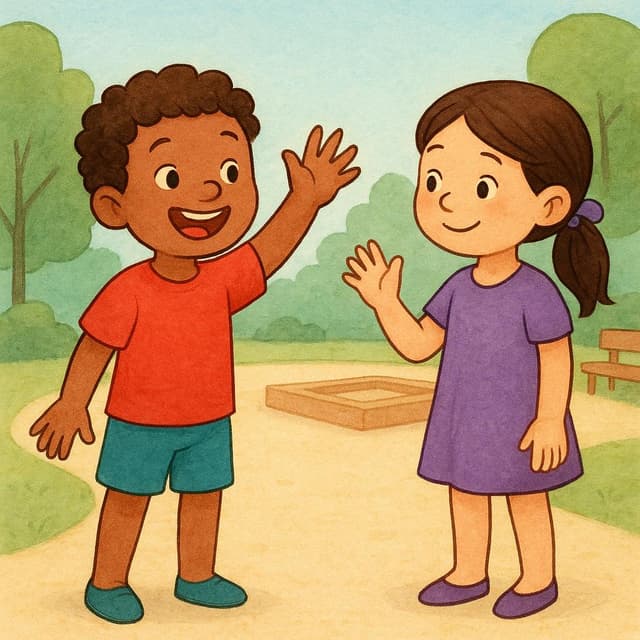
Use the imperative to tell someone to greet another person, like telling a child to say hello to their grandparents.
Uwagi dotyczące saludar w czasie Tryb rozkazujący (twierdzący)
Saludar is regular. The 'tú' form matches the third-person present, and 'vosotros' simply changes the -r to -d.
Przykładowe zdania
Saluda a tu abuela, por favor.
Greet your grandmother, please.
tú
Saluden a los nuevos vecinos.
Greet the new neighbors (you all).
ustedes
Saludemos al público antes de empezar.
Let's greet the audience before starting.
nosotros
Częste błędy
Błąd: Using 'saludar' as a command for 'vosotros'.
Poprawnie: The correct command is 'saludad'.
Dlaczego: In informal Spain Spanish, the infinitive is often used incorrectly as a command instead of the -d ending.
Opanuj hiszpańskie czasowniki w kontekście
Zapamiętywanie tabel to dopiero początek. Przeczytaj ponad 200 ilustrowanych i udźwiękowionych hiszpańskich historii, aby zobaczyć czasowniki takie jak 'saludar' używane naturalnie — w czasach, których się uczysz.
Powiązane czasy
Czas teraźniejszy
yo: saludo
The present tense of saludar is regular: saludo, saludas, saluda, saludamos, saludáis, saludan.
Czas przeszły prosty
yo: saludé
Saludar in the preterite is regular: saludé, saludaste, saludó, saludamos, saludasteis, saludaron.
Czas przeszły niedokonany
yo: saludaba
The imperfect of saludar follows the standard -aba pattern: saludaba, saludabas, saludaba, saludábamos, saludabais, saludaban.
Czas przyszły
yo: saludaré
The future of saludar uses the infinitive plus endings: saludaré, saludarás, saludará, saludaremos, saludaréis, saludarán.
Tryb warunkowy
yo: saludaría
The conditional of saludar is regular: saludaría, saludarías, saludaría, saludaríamos, saludaríais, saludarían.
Tryb Subj. teraźniejszy
yo: salude
The present subjunctive of saludar swaps the -ar endings for -e: salude, saludes, salude, saludemos, saludéis, saluden.
Tryb Subj. przeszły niedokonany
yo: saludara
The imperfect subjunctive of saludar is formed from the 'ellos' preterite: saludara, saludaras, saludara, saludáramos, saludarais, saludaran.
Tryb rozkazujący (przeczący)
yo: no saludes
The negative imperative of saludar uses 'no' + present subjunctive: no saludes, no salude, no saludemos, no saludéis, no saluden.