Koniugacja saludar Czas przeszły prosty
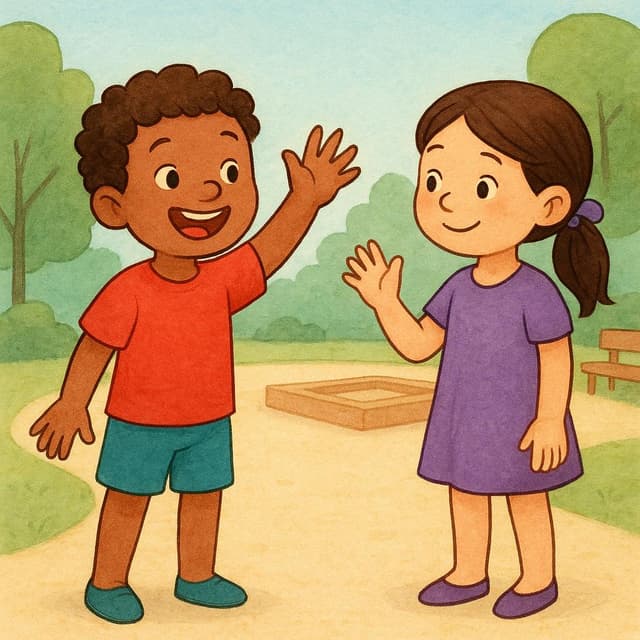
saludar — to greet
Saludar in the preterite is regular: saludé, saludaste, saludó, saludamos, saludasteis, saludaron.
Formy saludar Czas przeszły prosty
Kiedy używać Czas przeszły prosty
Use the preterite to talk about a specific instance when you greeted someone in the past, such as saying hello to a friend you ran into yesterday.
Uwagi dotyczące saludar w czasie Czas przeszły prosty
Saludar is fully regular in the preterite. Note that the 'nosotros' form 'saludamos' is the same as the present tense.
Przykładowe zdania
Ayer saludé a Juan en el supermercado.
Yesterday I greeted Juan at the supermarket.
yo
Ellos nos saludaron desde el coche.
They waved to us (greeted us) from the car.
ellos/ellas/ustedes
Mi jefe me saludó muy amablemente.
My boss greeted me very kindly.
él/ella/usted
Częste błędy
Błąd: Forgetting the accent on 'saludó'.
Poprawnie: The third-person singular is saludó.
Dlaczego: Without the accent, it doesn't sound like the past tense and can be confused with other forms.
Opanuj hiszpańskie czasowniki w kontekście
Zapamiętywanie tabel to dopiero początek. Przeczytaj ponad 200 ilustrowanych i udźwiękowionych hiszpańskich historii, aby zobaczyć czasowniki takie jak 'saludar' używane naturalnie — w czasach, których się uczysz.
Powiązane czasy
Czas teraźniejszy
yo: saludo
The present tense of saludar is regular: saludo, saludas, saluda, saludamos, saludáis, saludan.
Czas przeszły niedokonany
yo: saludaba
The imperfect of saludar follows the standard -aba pattern: saludaba, saludabas, saludaba, saludábamos, saludabais, saludaban.
Czas przyszły
yo: saludaré
The future of saludar uses the infinitive plus endings: saludaré, saludarás, saludará, saludaremos, saludaréis, saludarán.
Tryb warunkowy
yo: saludaría
The conditional of saludar is regular: saludaría, saludarías, saludaría, saludaríamos, saludaríais, saludarían.
Tryb Subj. teraźniejszy
yo: salude
The present subjunctive of saludar swaps the -ar endings for -e: salude, saludes, salude, saludemos, saludéis, saluden.
Tryb Subj. przeszły niedokonany
yo: saludara
The imperfect subjunctive of saludar is formed from the 'ellos' preterite: saludara, saludaras, saludara, saludáramos, saludarais, saludaran.
Tryb rozkazujący (twierdzący)
yo: saluda
The imperative of saludar gives commands: saluda (tú), salude (usted), saludemos (nosotros), saludad (vosotros), saluden (ustedes).
Tryb rozkazujący (przeczący)
yo: no saludes
The negative imperative of saludar uses 'no' + present subjunctive: no saludes, no salude, no saludemos, no saludéis, no saluden.