sostenerKoniugacja
sostener oznacza podtrzymywać.
Kompletne tabele koniugacji
Odniesienie do wszystkich czasów i trybów
Subjunctive
Imperfect Subjunctive
The imperfect subjunctive uses the 'sostuv-' stem: sostuviera, sostuvieras, sostuviera, sostuviéramos, sostuvierais, sostuvieran.
Present Subjunctive
The present subjunctive is based on the 'sosteng-' stem: sostenga, sostengas, sostenga, sostengamos, sostengáis, sostengan.
Imperative
Imperative
The informal command is 'sostén'; others use the 'sosteng-' stem.
Negative Imperative
Negative commands always use the present subjunctive forms: no sostengas, no sostenga, no sostengamos, no sostengáis, no sostengan.
Indicative
Imperfect
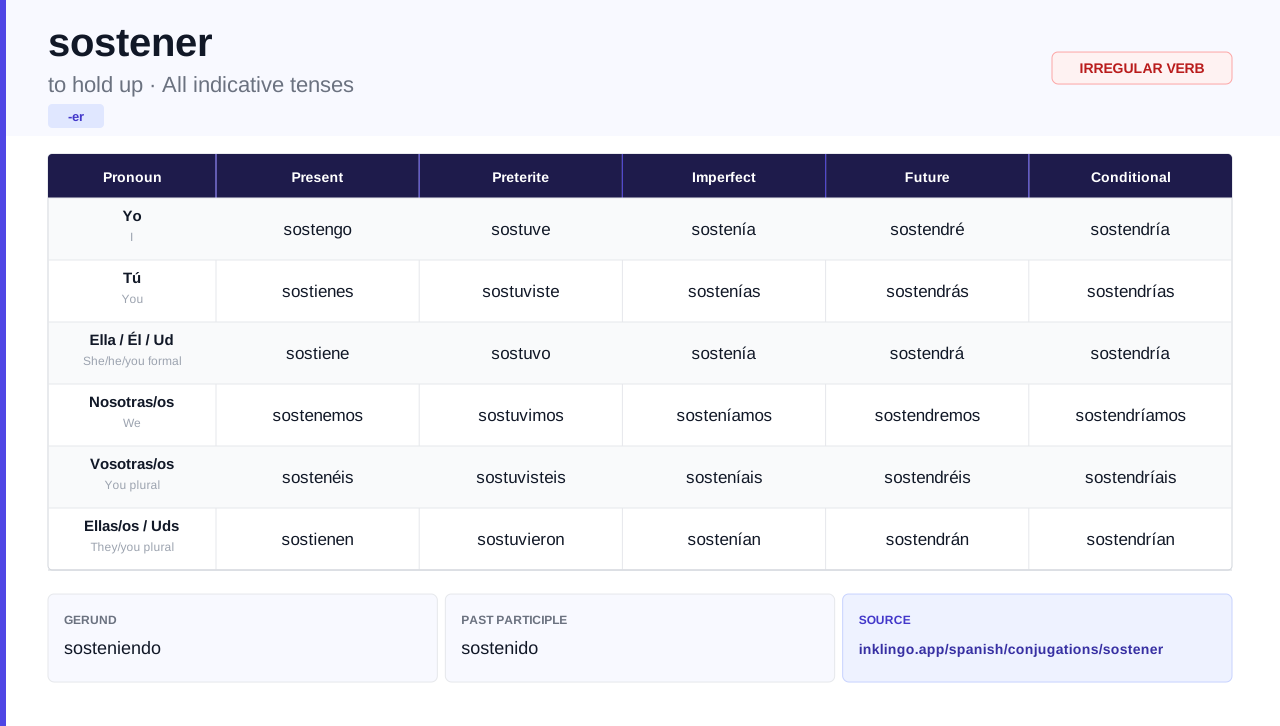
Sostener is regular in the imperfect: sostenía, sostenías, sostenía, sosteníamos, sosteníais, sostenían.
Conditional
The conditional uses the 'sostend-' stem: sostendría, sostendrías, sostendría, sostendríamos, sostendríais, sostendrían.
Present
Sostener follows the 'tener' pattern: it has a 'go' in the yo form and a stem change (e to ie) for most others.
Preterite
Sostener uses the irregular 'uv' stem: sostuve, sostuviste, sostuvo, sostuvimos, sostuvisteis, sostuvieron.
Future
Sostener adds a 'd' to the stem: sostendré, sostendrás, sostendrá, sostendremos, sostendréis, sostendrán.
Ćwicz koniugacje
Sprawdź swoją wiedzę za pomocą interaktywnych ćwiczeń
Przenieś sostener z tabel do prawdziwego hiszpańskiego
Tabele koniugacji to dopiero początek. Przeczytaj ponad 200 ilustrowanych i udźwiękowionych hiszpańskich historii, aby zobaczyć 'sostener' w akcji w prawdziwych zdaniach — i zbuduj instynkt, jaki mają rodzimi użytkownicy języka.
Często zadawane pytania
Co oznacza sostener po hiszpańsku?
sostener oznacza „podtrzymywać”.
Czy sostener to czasownik regularny czy nieregularny?
sostener to czasownik irregular -er w języku hiszpańskim.
Jak koniuguje się sostener w czasie teraźniejszym?
Czas teraźniejszy sostener to: yo sostengo, tú sostienes, él/ella/usted sostiene, nosotros sostenemos, vosotros sostenéis, ellos/ellas/ustedes sostienen.
Jak koniuguje się sostener w czasie przeszłym dokonanym (preterite)?
Czas przeszły dokonany sostener to: yo sostuve, tú sostuviste, él/ella/usted sostuvo, nosotros sostuvimos, vosotros sostuvisteis, ellos/ellas/ustedes sostuvieron.
sostener ściągawka koniugacyjna