Koniugacja susurrar Tryb Subj. przeszły niedokonany
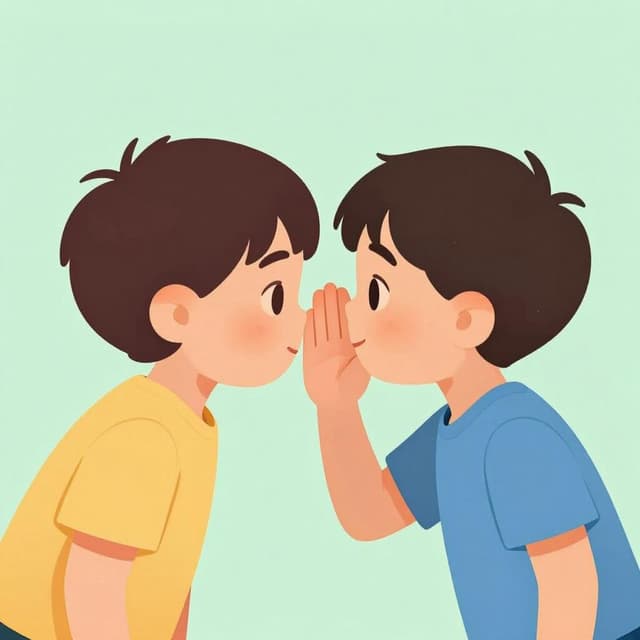
susurrar — to whisper
The imperfect subjunctive ('susurrara'/'susurrarais' forms) is used for past hypotheticals, wishes, or polite requests.
Formy susurrar Tryb Subj. przeszły niedokonany
Kiedy używać Tryb Subj. przeszły niedokonany
Use this tense for hypothetical situations in the past or to express wishes and polite requests that are contrary to fact or unlikely. For example, 'If I had known, I would have whispered...' or 'I wish you would whisper.'
Uwagi dotyczące susurrar w czasie Tryb Subj. przeszły niedokonany
Susurrar is regular in the imperfect subjunctive. Both the -ra and -se endings are correct, but the -ra form is more common.
Przykładowe zdania
Si hubiera sabido, te lo hubiera susurrado al oído.
If I had known, I would have whispered it in your ear.
yo
Ojalá ellos susurraran menos.
I wish they would whisper less.
ellos/ellas/ustedes
Me gustaría que susurraras la respuesta.
I would like you to whisper the answer.
tú
Częste błędy
Błąd: Using the preterite or imperfect indicative instead of the imperfect subjunctive.
Poprawnie: Instead of 'Si sabía...', use 'Si supiera...' or 'Si supiera...'.
Dlaczego: Hypothetical or contrary-to-fact conditions require the subjunctive mood.
Błąd: Confusing the -ra and -se forms.
Poprawnie: Both 'susurrara' and 'susurrase' are correct, but 'susurrara' is generally more common.
Dlaczego: While interchangeable in most contexts, regional preferences and specific phrasing can influence the choice.
Opanuj hiszpańskie czasowniki w kontekście
Zapamiętywanie tabel to dopiero początek. Przeczytaj ponad 200 ilustrowanych i udźwiękowionych hiszpańskich historii, aby zobaczyć czasowniki takie jak 'susurrar' używane naturalnie — w czasach, których się uczysz.
Powiązane czasy
Czas teraźniejszy
yo: susurro
The present tense 'susurro', 'susurras', etc., is for actions happening now, habitual actions, or general truths.
Czas przeszły prosty
yo: susurré
The preterite of susurrar is regular: susurré, susurraste, susurró, susurramos, susurrasteis, susurraron.
Czas przeszły niedokonany
yo: susurraba
The imperfect of susurrar ('susurraba', 'susurrabas', etc.) describes ongoing or habitual past actions and background.
Czas przyszły
yo: susurraré
The future tense 'susurraré', 'susurrarás', etc., is for actions that will happen.
Tryb warunkowy
yo: susurraría
The conditional 'susurraría', 'susurrarías', etc., expresses 'would' actions, polite requests, or future-in-the-past.
Tryb Subj. teraźniejszy
yo: susurre
The present subjunctive ('susurre', 'susurres', etc.) is used for wishes, doubts, emotions, and uncertainty.
Tryb rozkazujący (twierdzący)
yo: susurra
Use 'susurra' (tú), 'susurre' (usted), 'susurremos' (nosotros), 'susurrad' (vosotros), 'susurren' (ustedes) for direct commands.
Tryb rozkazujący (przeczący)
yo: no susurres
Use 'no susurres' (tú), 'no susurre' (usted), 'no susurremos' (nosotros), 'no susurréis' (vosotros), 'no susurren' (ustedes).