Koniugacja susurrar Czas teraźniejszy
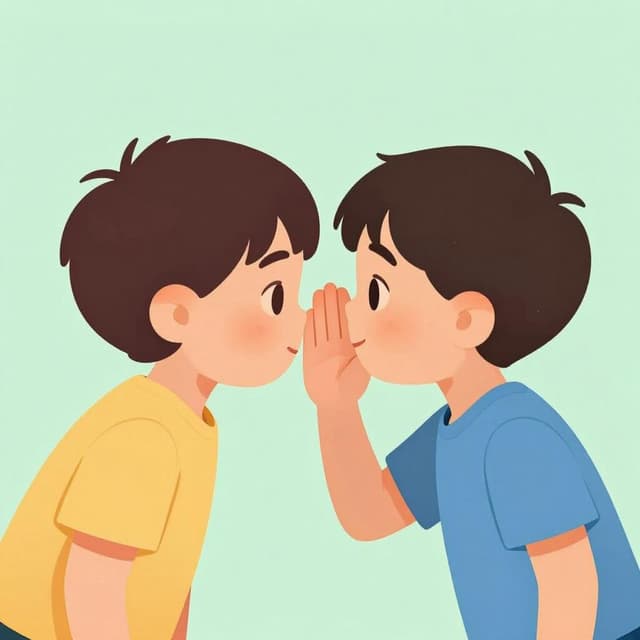
susurrar — to whisper
The present tense 'susurro', 'susurras', etc., is for actions happening now, habitual actions, or general truths.
Formy susurrar Czas teraźniejszy
Kiedy używać Czas teraźniejszy
Use the present tense of 'susurrar' for things happening right now ('I'm whispering'), things you do regularly ('I often whisper'), or general statements ('People whisper when they are secretive').
Uwagi dotyczące susurrar w czasie Czas teraźniejszy
Susurrar is regular in the present indicative tense.
Przykładowe zdania
Te susurro al oído porque no quiero que nadie más oiga.
I'm whispering in your ear because I don't want anyone else to hear.
yo
¿Por qué susurras tanto?
Why are you whispering so much?
tú
Mi abuela susurra historias antiguas.
My grandmother whispers old stories.
él/ella/usted
Ellos susurran cuando están en la biblioteca.
They whisper when they are in the library.
ellos/ellas/ustedes
Częste błędy
Błąd: Using the present for a completed past action.
Poprawnie: If someone whispered yesterday, use the preterite 'susurró', not the present 'susurra'.
Dlaczego: The present tense is for the current moment or habitual actions, not finished past events.
Błąd: Incorrectly conjugating 'vosotros'.
Poprawnie: The 'vosotros' form is 'susurráis', not 'susurras'.
Dlaczego: The '-áis' ending is specific to the 'vosotros' form in the present tense for -ar verbs.
Opanuj hiszpańskie czasowniki w kontekście
Zapamiętywanie tabel to dopiero początek. Przeczytaj ponad 200 ilustrowanych i udźwiękowionych hiszpańskich historii, aby zobaczyć czasowniki takie jak 'susurrar' używane naturalnie — w czasach, których się uczysz.
Powiązane czasy
Czas przeszły prosty
yo: susurré
The preterite of susurrar is regular: susurré, susurraste, susurró, susurramos, susurrasteis, susurraron.
Czas przeszły niedokonany
yo: susurraba
The imperfect of susurrar ('susurraba', 'susurrabas', etc.) describes ongoing or habitual past actions and background.
Czas przyszły
yo: susurraré
The future tense 'susurraré', 'susurrarás', etc., is for actions that will happen.
Tryb warunkowy
yo: susurraría
The conditional 'susurraría', 'susurrarías', etc., expresses 'would' actions, polite requests, or future-in-the-past.
Tryb Subj. teraźniejszy
yo: susurre
The present subjunctive ('susurre', 'susurres', etc.) is used for wishes, doubts, emotions, and uncertainty.
Tryb Subj. przeszły niedokonany
yo: susurrara
The imperfect subjunctive ('susurrara'/'susurrarais' forms) is used for past hypotheticals, wishes, or polite requests.
Tryb rozkazujący (twierdzący)
yo: susurra
Use 'susurra' (tú), 'susurre' (usted), 'susurremos' (nosotros), 'susurrad' (vosotros), 'susurren' (ustedes) for direct commands.
Tryb rozkazujący (przeczący)
yo: no susurres
Use 'no susurres' (tú), 'no susurre' (usted), 'no susurremos' (nosotros), 'no susurréis' (vosotros), 'no susurren' (ustedes).