Koniugacja susurrar Czas przeszły prosty
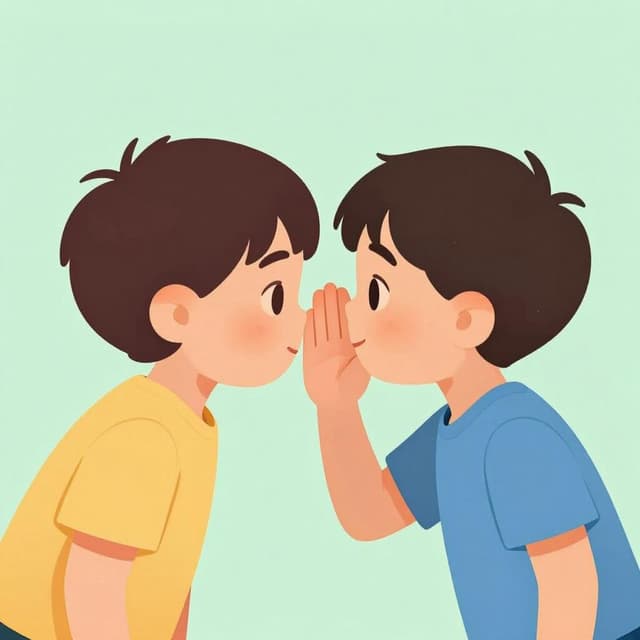
susurrar — to whisper
The preterite of susurrar is regular: susurré, susurraste, susurró, susurramos, susurrasteis, susurraron.
Formy susurrar Czas przeszły prosty
Kiedy używać Czas przeszły prosty
Use the preterite of 'susurrar' to talk about the action of whispering as a completed event in the past. For example, 'He whispered the secret yesterday' or 'We whispered goodbye'.
Uwagi dotyczące susurrar w czasie Czas przeszły prosty
Susurrar is a regular -ar verb and follows the standard preterite conjugation pattern.
Przykładowe zdania
Susurré la respuesta en su oído.
I whispered the answer in his ear.
yo
¿Susurraste algo interesante?
Did you whisper something interesting?
tú
Ella susurró una oración.
She whispered a prayer.
él/ella/usted
Los niños susurraron durante la película.
The children whispered during the movie.
ellos/ellas/ustedes
Częste błędy
Błąd: Using the imperfect instead of the preterite for a single, completed whisper.
Poprawnie: Use 'susurró' for 'He whispered' (completed action), not 'susurraba'.
Dlaczego: The preterite marks a specific, finished action, while the imperfect describes ongoing or habitual past actions.
Błąd: Forgetting the accent on 'yo' and 'él/ella/usted' forms.
Poprawnie: It should be 'susurré' and 'susurró', not 'susurre'.
Dlaczego: The accent mark indicates the stressed syllable and distinguishes these forms.
Opanuj hiszpańskie czasowniki w kontekście
Zapamiętywanie tabel to dopiero początek. Przeczytaj ponad 200 ilustrowanych i udźwiękowionych hiszpańskich historii, aby zobaczyć czasowniki takie jak 'susurrar' używane naturalnie — w czasach, których się uczysz.
Powiązane czasy
Czas teraźniejszy
yo: susurro
The present tense 'susurro', 'susurras', etc., is for actions happening now, habitual actions, or general truths.
Czas przeszły niedokonany
yo: susurraba
The imperfect of susurrar ('susurraba', 'susurrabas', etc.) describes ongoing or habitual past actions and background.
Czas przyszły
yo: susurraré
The future tense 'susurraré', 'susurrarás', etc., is for actions that will happen.
Tryb warunkowy
yo: susurraría
The conditional 'susurraría', 'susurrarías', etc., expresses 'would' actions, polite requests, or future-in-the-past.
Tryb Subj. teraźniejszy
yo: susurre
The present subjunctive ('susurre', 'susurres', etc.) is used for wishes, doubts, emotions, and uncertainty.
Tryb Subj. przeszły niedokonany
yo: susurrara
The imperfect subjunctive ('susurrara'/'susurrarais' forms) is used for past hypotheticals, wishes, or polite requests.
Tryb rozkazujący (twierdzący)
yo: susurra
Use 'susurra' (tú), 'susurre' (usted), 'susurremos' (nosotros), 'susurrad' (vosotros), 'susurren' (ustedes) for direct commands.
Tryb rozkazujący (przeczący)
yo: no susurres
Use 'no susurres' (tú), 'no susurre' (usted), 'no susurremos' (nosotros), 'no susurréis' (vosotros), 'no susurren' (ustedes).