Koniugacja susurrar Tryb Subj. teraźniejszy
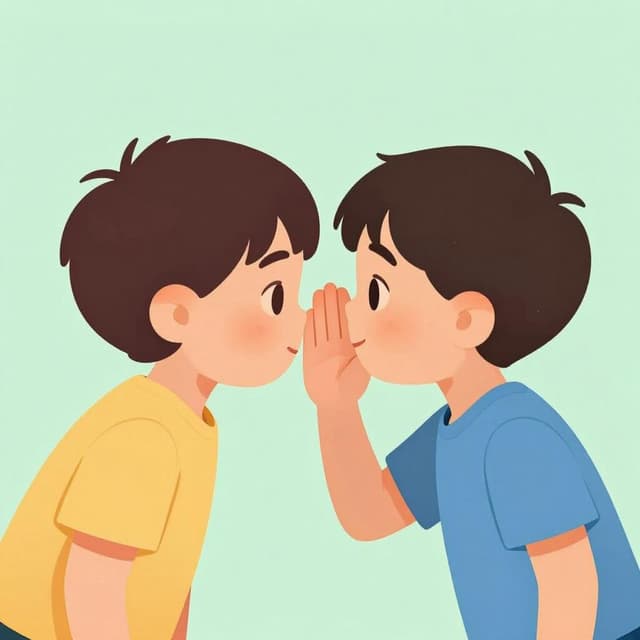
susurrar — to whisper
The present subjunctive ('susurre', 'susurres', etc.) is used for wishes, doubts, emotions, and uncertainty.
Formy susurrar Tryb Subj. teraźniejszy
Kiedy używać Tryb Subj. teraźniejszy
Use the present subjunctive when you want to express a wish, emotion, doubt, or uncertainty about something. For 'susurrar', you might say 'I hope you whisper' or 'It's unlikely that they whisper'.
Uwagi dotyczące susurrar w czasie Tryb Subj. teraźniejszy
Susurrar is regular in the present subjunctive. It follows the standard pattern for -ar verbs.
Przykładowe zdania
Espero que no susurres mi secreto.
I hope you don't whisper my secret.
tú
Dudo que él susurre la respuesta correcta.
I doubt he'll whisper the correct answer.
él/ella/usted
Queremos que ustedes susurren con cuidado.
We want you (plural) to whisper carefully.
ellos/ellas/ustedes
Es importante que susurremos.
It's important that we whisper.
nosotros
Częste błędy
Błąd: Using the present indicative instead of the present subjunctive.
Poprawnie: Instead of 'Espero que susurras...', use 'Espero que susurres...'.
Dlaczego: Expressions of hope, doubt, or emotion trigger the subjunctive mood.
Błąd: Forgetting the 'yo/él/ella/usted' form is the same as 'ellos/ellas/ustedes'.
Poprawnie: The form 'susurre' is used for both singular 'usted' and plural 'ustedes' (when preceded by 'que').
Dlaczego: This is a common pattern in the present subjunctive for -ar verbs.
Opanuj hiszpańskie czasowniki w kontekście
Zapamiętywanie tabel to dopiero początek. Przeczytaj ponad 200 ilustrowanych i udźwiękowionych hiszpańskich historii, aby zobaczyć czasowniki takie jak 'susurrar' używane naturalnie — w czasach, których się uczysz.
Powiązane czasy
Czas teraźniejszy
yo: susurro
The present tense 'susurro', 'susurras', etc., is for actions happening now, habitual actions, or general truths.
Czas przeszły prosty
yo: susurré
The preterite of susurrar is regular: susurré, susurraste, susurró, susurramos, susurrasteis, susurraron.
Czas przeszły niedokonany
yo: susurraba
The imperfect of susurrar ('susurraba', 'susurrabas', etc.) describes ongoing or habitual past actions and background.
Czas przyszły
yo: susurraré
The future tense 'susurraré', 'susurrarás', etc., is for actions that will happen.
Tryb warunkowy
yo: susurraría
The conditional 'susurraría', 'susurrarías', etc., expresses 'would' actions, polite requests, or future-in-the-past.
Tryb Subj. przeszły niedokonany
yo: susurrara
The imperfect subjunctive ('susurrara'/'susurrarais' forms) is used for past hypotheticals, wishes, or polite requests.
Tryb rozkazujący (twierdzący)
yo: susurra
Use 'susurra' (tú), 'susurre' (usted), 'susurremos' (nosotros), 'susurrad' (vosotros), 'susurren' (ustedes) for direct commands.
Tryb rozkazujący (przeczący)
yo: no susurres
Use 'no susurres' (tú), 'no susurre' (usted), 'no susurremos' (nosotros), 'no susurréis' (vosotros), 'no susurren' (ustedes).