haberConjugação
haber significa ter.
Tabelas de Conjugação Completas
Referência de todos os tempos e modos
Indicative
Present
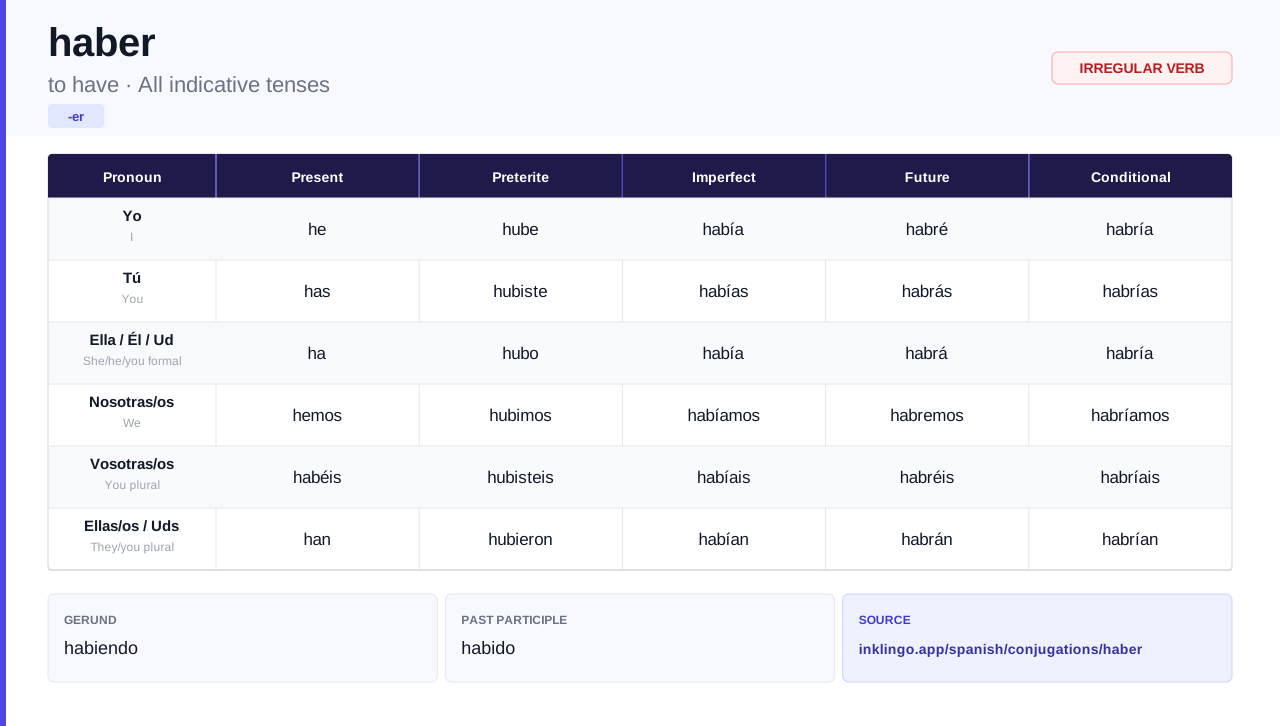
Haber é altamente irregular no presente: he, has, ha/hay, hemos, habéis, han.
Future
O futuro de haber usa o radical irregular 'habr-': habré, habrás, habrá, habremos, habréis, habrán.
Imperfect
O imperfeito de haber é regular para um verbo -er: había, habías, había, habíamos, habíais, habían.
Conditional
O condicional usa o radical irregular 'habr-': habría, habrías, habría, habríamos, habríais, habrían.
Preterite
O pretérito de haber usa o radical irregular 'hub-': hube, hubiste, hubo, hubimos, hubisteis, hubieron.
Imperative
Negative Imperative
O imperativo negativo de haber usa o presente do subjuntivo: no haya, no hayas, etc.
Imperative
O imperativo de haber é quase nunca usado no espanhol moderno.
Subjunctive
Present Subjunctive
O presente do subjuntivo de haber é irregular: haya, hayas, haya, hayamos, hayáis, hayan.
Imperfect Subjunctive
O imperfeito do subjuntivo usa o radical 'hubier-': hubiera, hubieras, hubiera, hubiéramos, hubierais, hubieran.
Praticar Conjugações
Teste seus conhecimentos com exercícios interativos
Leve haber das tabelas para o espanhol real
As tabelas de conjugação são só o começo. Leia mais de 200 histórias em espanhol ilustradas e narradas para ver 'haber' em ação em frases reais — e desenvolver o instinto que os falantes nativos têm.
Perguntas Frequentes
O que significa haber em espanhol?
haber significa "ter".
haber é um verbo regular ou irregular?
haber é um verbo irregular -er em espanhol.
Como se conjuga haber no presente?
O presente de haber é: yo he, tú has, él/ella/usted ha, nosotros hemos, vosotros habéis, ellos/ellas/ustedes han.
Como se conjuga haber no pretérito perfeito (passado)?
O pretérito perfeito de haber é: yo hube, tú hubiste, él/ella/usted hubo, nosotros hubimos, vosotros hubisteis, ellos/ellas/ustedes hubieron.
haber folha de consulta de conjugação