
Aceptar vs Admitir
Aceptar = receive willingly. Admitir = confess or grant entry.
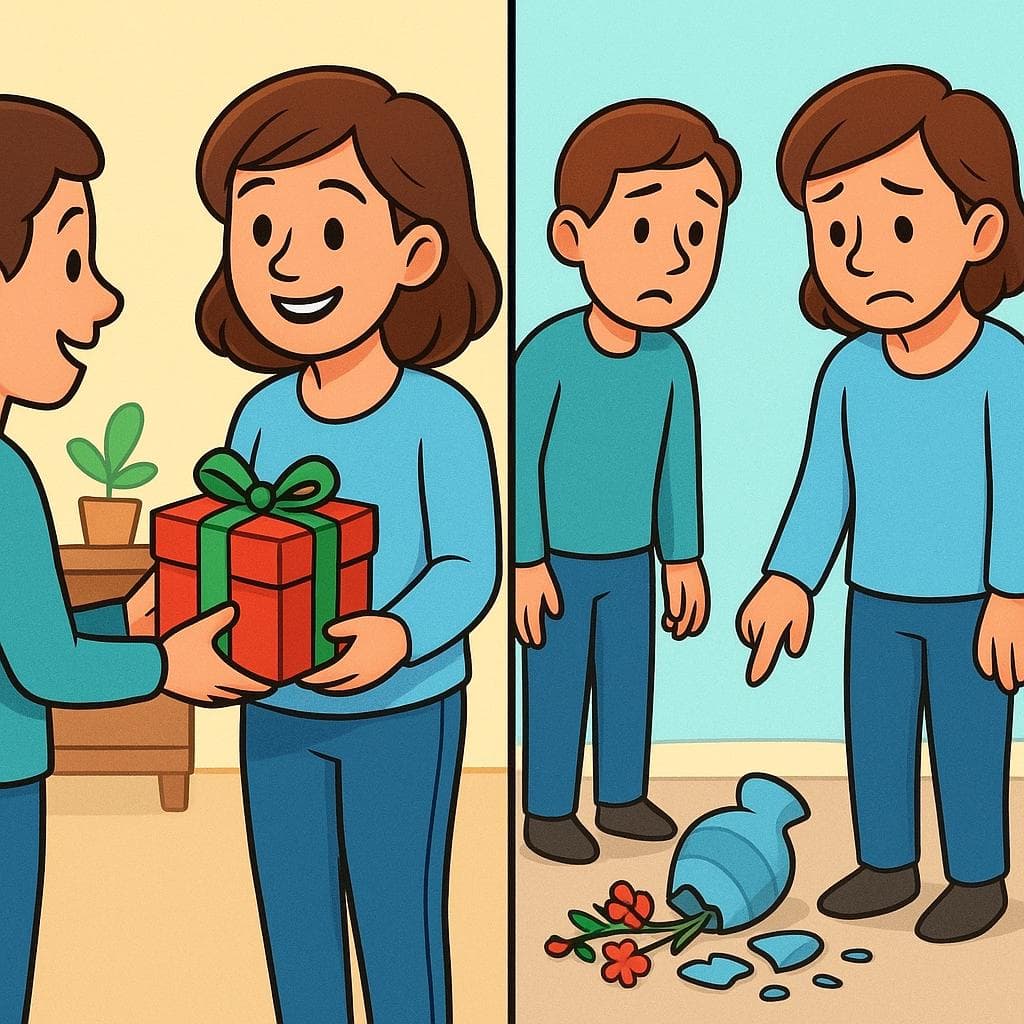
aceptar
To accept, take, agree to, or approve of something offered or presented.
ah-sep-TARadmitir
To admit, confess, acknowledge a fact, or grant entry/access.
ad-mee-TEERQuick Rule
Aceptar = receive willingly. Admitir = confess or grant entry.
Think: You ACEPTAR an award, but you ADMITIR a mistake.
- Both can be used for university admissions, but 'aceptar' implies more personal approval while 'admitir' is more about meeting criteria.
Comparison Table
| Context | aceptar | admitir | Why? |
|---|---|---|---|
| A Mistake | No puedo aceptar tu disculpa. | Admito mi error. | Aceptar is about receiving something from someone else (an apology). Admitir is about confessing your own truth (a mistake). |
| An Offer | Acepto tu oferta. | Admito que es una buena oferta. | Use 'aceptar' to say 'yes' to the offer. Use 'admitir' to acknowledge the quality of the offer, without necessarily saying yes. |
| A Difficult Truth | Acepto que las cosas han cambiado. | Admito que las cosas han cambiado. | 'Aceptar' implies you've come to terms with it emotionally. 'Admitir' simply means you acknowledge it's a fact, perhaps reluctantly. |
| University Admissions | Aceptaron a mi hijo. | Admitieron a mi hijo. | Often interchangeable, but 'aceptar' can feel more personal (they approved of him), while 'admitir' is more formal (he met the criteria). |
When to Use "aceptar / admitir"
aceptar
To accept, take, agree to, or approve of something offered or presented.
ah-sep-TAR
Accepting a gift or offer
Acepté el trabajo que me ofrecieron.
I accepted the job they offered me.
Agreeing to a proposal or condition
Ella aceptó casarse con él.
She agreed to marry him.
Coming to terms with a situation
Tengo que aceptar que ya no somos amigos.
I have to accept that we are not friends anymore.
Approving a transaction
¿Aceptan tarjetas de crédito aquí?
Do you accept credit cards here?
admitir
To admit, confess, acknowledge a fact, or grant entry/access.
ad-mee-TEER
Confessing a mistake or fault
Admito que fue mi culpa.
I admit that it was my fault.
Acknowledging a fact (often reluctantly)
El político admitió que los impuestos subirán.
The politician acknowledged that taxes will go up.
Granting entry or access
Este cine no admite niños menores de 13 años.
This movie theater does not admit children under 13.
Allowing for a possibility (formal)
El documento admite varias interpretaciones.
The document allows for several interpretations.
Contrast Examples
With "aceptar":
Acepto que perdí el partido.
I accept that I lost the game. (I've come to terms with it.)
With "admitir":
Admito que perdí el partido.
I admit that I lost the game. (I'm acknowledging the fact that I lost.)
The Difference: 'Aceptar' focuses on the emotional process of moving on. 'Admitir' focuses on the factual confession, which could be said with frustration or resignation.
With "aceptar":
Acepto tu propuesta.
I accept your proposal. (I agree to it and we're moving forward.)
With "admitir":
Admito que tu propuesta es interesante.
I admit that your proposal is interesting. (I acknowledge its merit, but I'm not agreeing to it yet.)
The Difference: 'Aceptar' is an act of agreement. 'Admitir' is an act of acknowledgement, which is a step before agreement.
Common Mistakes
No quiero aceptar que me equivoqué.
No quiero admitir que me equivoqué.
When you are confessing or acknowledging that you were wrong, the correct verb is 'admitir'. 'Aceptar' would be more for accepting the consequences of being wrong.
El restaurante no admite American Express.
El restaurante no acepta American Express.
For payments and transactions, 'aceptar' is used to mean they take that form of payment. 'Admitir' would sound strange, as if the credit card itself wasn't allowed inside.
Quick Practice
Quick Quiz: Aceptar vs Admitir
Question 1 of 3
Which verb completes the sentence? 'El ladrón ___ que robó el banco.'
Related Grammar
Want to understand the grammar behind this pair? Explore these lessons for a deep dive:
Key Words




Tags
Build the instinct, not just the rule
Rules help you get it right; context makes it automatic. Read 200+ illustrated and narrated Spanish stories to see confusing pairs chosen correctly — over and over — until you stop thinking about it.
Frequently Asked Questions
Are 'aceptar' and 'admitir' ever interchangeable?
In the context of university or school admissions, they are often used interchangeably. 'La universidad me admitió' and 'La universidad me aceptó' both mean 'The university accepted me.' However, 'aceptar' can sound slightly more personal, while 'admitir' sounds more formal and official.
What's a good way to remember the difference in a business context?
Think of it this way: You 'aceptar' the terms of a contract (you agree to them). You 'admitir' that a competitor has a good product (you acknowledge a fact). One is an action of agreement, the other is an action of acknowledgement.