
Cerca de vs Junto a
Cerca de = nearby/in the area. Junto a = right next to/touching.
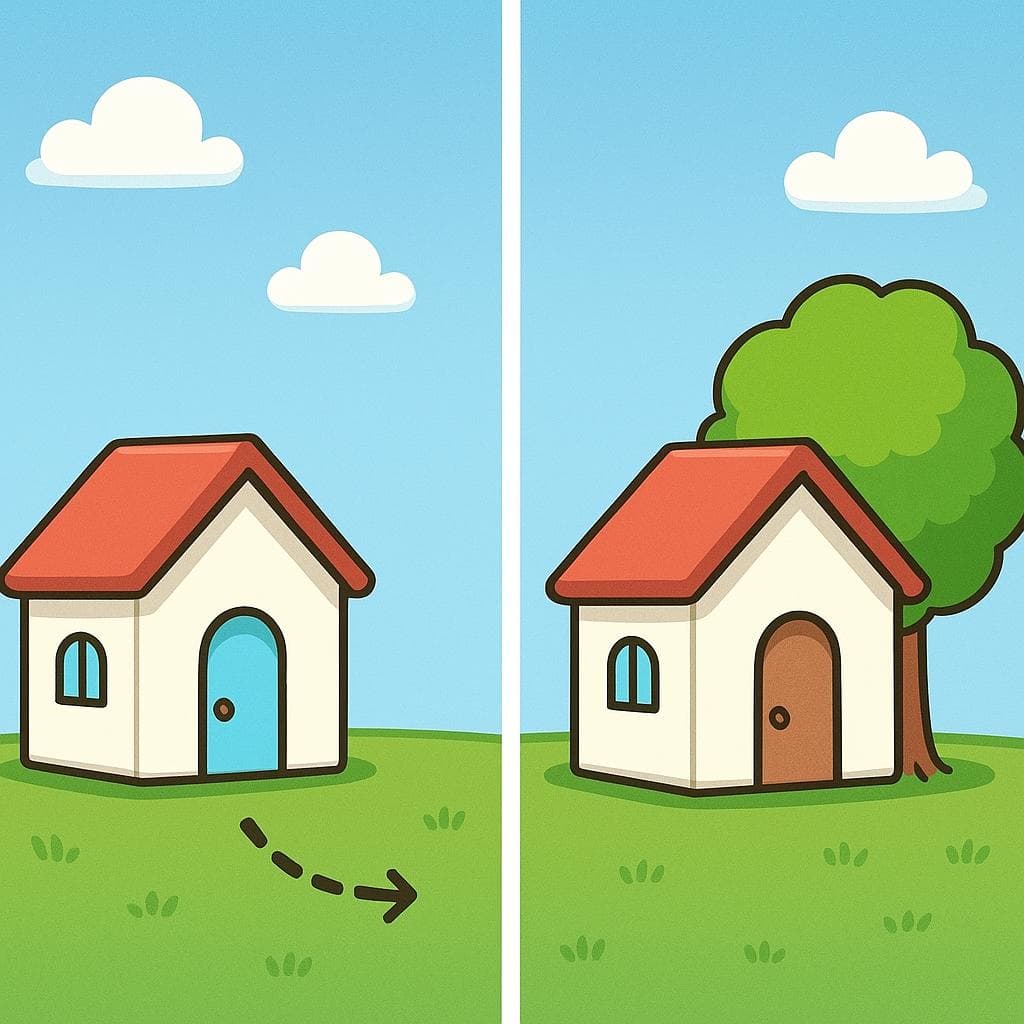
cerca de
Near, close to, in the vicinity of (general proximity)
SEHR-kah dehjunto a
Next to, beside, right by (immediate, often touching, proximity)
HOON-toh ahQuick Rule
Cerca de = nearby/in the area. Junto a = right next to/touching.
Think: 'Junto' sounds like 'joined' — they're joined together, side-by-side.
- Everything that is 'junto a' is also 'cerca de', but not everything that is 'cerca de' is 'junto a'. 'Junto a' is more specific.
Comparison Table
| Context | cerca de | junto a | Why? |
|---|---|---|---|
| Buildings in a city | El museo está cerca del parque. | El café está junto al museo. | 'Cerca de' means in the same neighborhood. 'Junto a' means they are physically adjacent, maybe sharing a wall. |
| Objects on a desk | La lámpara está cerca de la computadora. | El ratón está junto al teclado. | 'Cerca de' is for being in the same area. 'Junto a' implies they are side-by-side, where they should be. |
| People's locations | Mi oficina está cerca de la tuya. | Él se sentó junto a mí en la reunión. | 'Cerca de' describes offices on the same floor or area. 'Junto a' describes sitting in the very next seat. |
When to Use "cerca de / junto a"
cerca de
Near, close to, in the vicinity of (general proximity)
SEHR-kah deh
General vicinity
La farmacia está cerca del supermercado.
The pharmacy is near the supermarket.
Approximation of place
Vivo cerca de la playa.
I live near the beach.
Figurative closeness
Estamos cerca de alcanzar nuestro objetivo.
We are close to reaching our goal.
junto a
Next to, beside, right by (immediate, often touching, proximity)
HOON-toh ah
Immediate proximity
Dejé mis llaves junto a la puerta.
I left my keys right by the door.
Side-by-side
El salero está junto al pimentero.
The salt shaker is next to the pepper shaker.
Alongside someone
Camina junto a mí, por favor.
Walk beside me, please.
Contrast Examples
With "cerca de":
Hay una taquería cerca del hotel.
There's a taqueria near the hotel. (It's a short walk away.)
With "junto a":
Hay una taquería junto al hotel.
There's a taqueria next to the hotel. (It's right there, maybe in the same building.)
The Difference: 'Cerca de' means you're in the right area, but might need to look around. 'Junto a' means it's immediately adjacent and impossible to miss.
With "cerca de":
Vivo cerca de mis padres.
I live near my parents. (e.g., in the same town or neighborhood.)
With "junto a":
Vivo junto a mis padres.
I live next to my parents. (e.g., next door, or in a duplex.)
The Difference: Both are common, but they describe very different living situations. 'Cerca de' is general proximity, while 'junto a' implies a shared property line.
Common Mistakes
Madrid está junto a Segovia.
Madrid está cerca de Segovia.
For separate cities or large geographical areas, 'cerca de' is correct. 'Junto a' implies they are touching or joined, which doesn't make sense for cities.
Pon el vaso cerca del plato.
Pon el vaso junto al plato.
While not strictly wrong, 'junto a' is much more natural when you mean to place something right beside another object, like in a table setting.
Quick Practice
Quick Quiz: Cerca de vs Junto a
Question 1 of 2
The cat is sleeping right beside the fireplace. 'El gato duerme ___ la chimenea.'
Related Grammar
Want to understand the grammar behind this pair? Explore these lessons for a deep dive:
Key Words


Tags
Build the instinct, not just the rule
Rules help you get it right; context makes it automatic. Read 200+ illustrated and narrated Spanish stories to see confusing pairs chosen correctly — over and over — until you stop thinking about it.
Frequently Asked Questions
What's the difference between 'junto a' and 'al lado de'?
They are very close synonyms and often interchangeable! Both mean 'next to'. 'Junto a' can sometimes imply a slightly closer, more connected or 'together' feeling, while 'al lado de' is a very neutral 'to the side of'. For most situations, you can use either.
What about just 'cerca' or 'juntos' without 'de' or 'a'?
Yes, they are used differently. 'Cerca' alone is an adverb meaning 'nearby' (e.g., 'Vivo muy cerca' - I live very nearby). 'Juntos' is an adjective or adverb meaning 'together' (e.g., 'Vamos juntos' - Let's go together). You need 'de' and 'a' to connect them to a specific noun.