
Encima de vs Sobre vs Arriba de
Use 'encima de' or 'sobre' for things that are TOUCHING. Use 'arriba de' for things that are NOT touching.
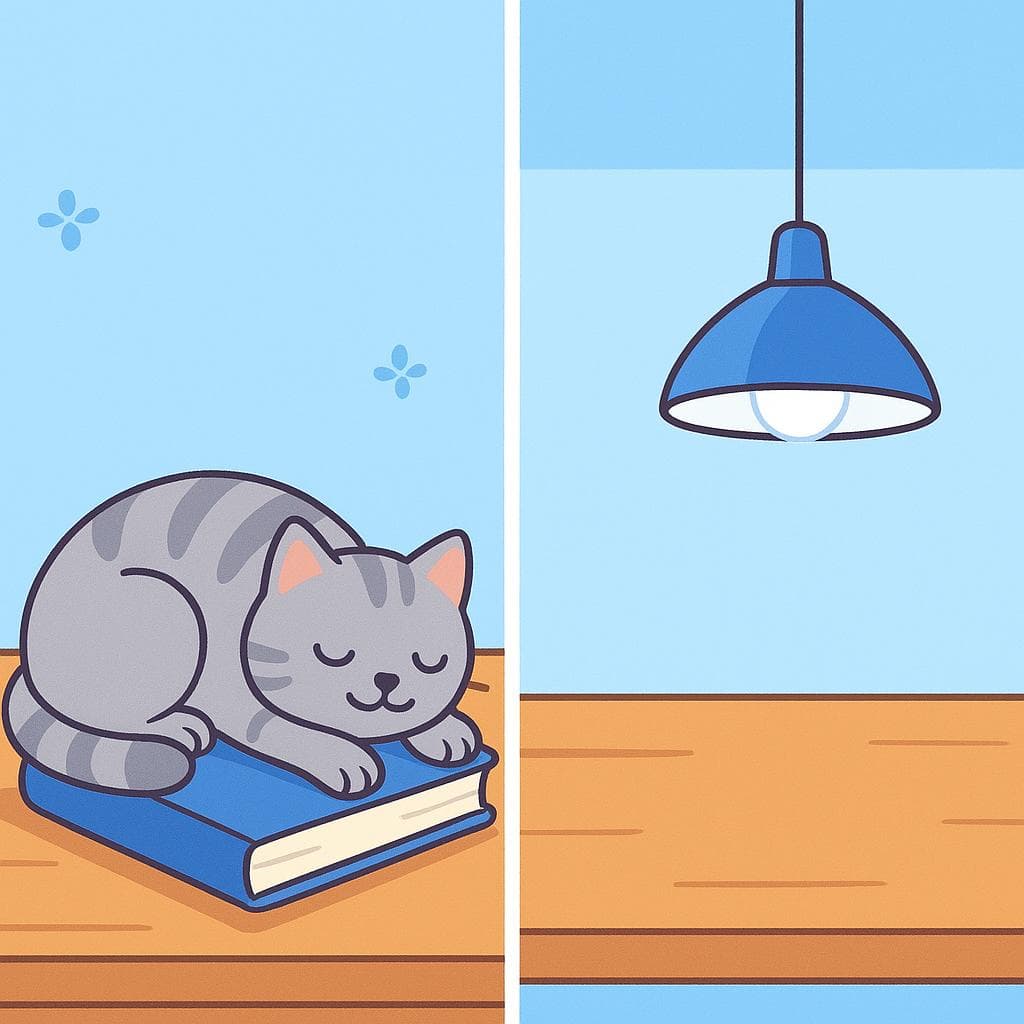
encima de / sobre
On top of, on (physically touching a surface)
en-SEE-mah deh / SOH-breharriba de
Above, over (in a higher position, but not touching)
ah-RREE-bah dehQuick Rule
Use 'encima de' or 'sobre' for things that are TOUCHING. Use 'arriba de' for things that are NOT touching.
Think 'sobre' like an envelope ('sobre') touching the letter inside. 'Arriba' is up in the 'air', not touching anything.
- 'Sobre' can also mean 'about', as in 'un libro sobre piratas' (a book about pirates).
- For things spanning across something, like a bridge over a river, 'sobre' is common even without touching.
Comparison Table
| Context | encima de / sobre | arriba de | Why? |
|---|---|---|---|
| On a desk | El portátil está sobre el escritorio. | El estante está arriba del escritorio. | Sobre = the laptop is touching the desk. Arriba de = the shelf is on the wall above it. |
| In a living room | El gato duerme encima del sofá. | El ventilador de techo está arriba del sofá. | Encima de = the cat is touching the sofa. Arriba de = the fan is high above, not touching. |
| Crossing a river | Hay un puente sobre el río. | Un pájaro voló arriba del río. | Sobre is used for things that span 'over' something. Arriba de just means it's higher up. |
| Topics of conversation | Es una película sobre la amistad. | (not applicable) | Only 'sobre' can mean 'about'. 'Encima de' and 'arriba de' are only for physical locations. |
When to Use "encima de / sobre / arriba de"
encima de / sobre
On top of, on (physically touching a surface)
en-SEE-mah deh / SOH-breh
Object resting on a surface
El libro está encima de la mesa.
The book is on top of the table.
Covering something
Puso una manta sobre la cama.
He put a blanket on the bed.
Directly on the next level up
Mi apartamento está encima del tuyo.
My apartment is above yours.
Meaning 'about' a topic (sobre only)
Hablamos sobre nuestros planes.
We talked about our plans.
arriba de
Above, over (in a higher position, but not touching)
ah-RREE-bah deh
Object in a higher position (no contact)
La lámpara está arriba de la mesa.
The lamp is above the table.
Something flying over
El avión voló arriba de las nubes.
The plane flew above the clouds.
Higher on a vertical surface
El cuadro está arriba de la chimenea.
The painting is above the fireplace.
Generally in a higher location
Vivimos en el piso de arriba.
We live on the floor above.
Contrast Examples
With "encima de / sobre":
La taza está encima de la mesa.
The cup is on top of the table.
With "arriba de":
La lámpara está arriba de la mesa.
The lamp is above the table.
The Difference: 'Encima de' means the cup is resting directly on the table's surface. 'Arriba de' means the lamp is hanging in the space above it, with no contact.
With "encima de / sobre":
Vivo en el piso encima del supermercado.
I live on the floor on top of the supermarket.
With "arriba de":
El penthouse está muy arriba del supermercado.
The penthouse is high above the supermarket.
The Difference: 'Encima de' implies being directly on the next level. 'Arriba de' is more general and just means at a higher level, which could be many floors up.
Common Mistakes
La lámpara está encima de la mesa.
La lámpara está arriba de la mesa.
If the lamp is hanging from the ceiling and not touching the table, you must use 'arriba de'.
Hablamos encima del proyecto.
Hablamos sobre el proyecto.
To talk 'about' a topic, the correct word is 'sobre'. 'Encima de' would mean you were physically on top of the project papers!
Quick Practice
Quick Quiz: Encima de vs Sobre vs Arriba de
Question 1 of 3
The bird is flying over the house. 'El pájaro vuela ___ la casa.'
Related Grammar
Want to understand the grammar behind this pair? Explore these lessons for a deep dive:
Key Words

Tags
Build the instinct, not just the rule
Rules help you get it right; context makes it automatic. Read 200+ illustrated and narrated Spanish stories to see confusing pairs chosen correctly — over and over — until you stop thinking about it.
Frequently Asked Questions
What's the real difference between 'encima de' and 'sobre'?
For physical objects touching a surface, they are almost always interchangeable. 'Encima de' is very common in everyday conversation. 'Sobre' can sound slightly more formal and has the unique extra meaning of 'about' a topic. When in doubt for physical objects, 'encima de' is a safe bet.
Can I just say 'arriba' without 'de'?
Yes, but it has a more general meaning of 'upstairs' or 'up there'. For example, '¿Dónde está Juan? - Está arriba.' (He's upstairs). You need to add 'de' when you want to specify what it is above: 'arriba de la mesa'.
What is the opposite of these words?
The opposite is 'debajo de' (underneath, touching) or 'abajo de' (below, not touching). The logic is the same: 'El gato está debajo de la mesa' (The cat is under the table).