
Gerund vs Infinitive
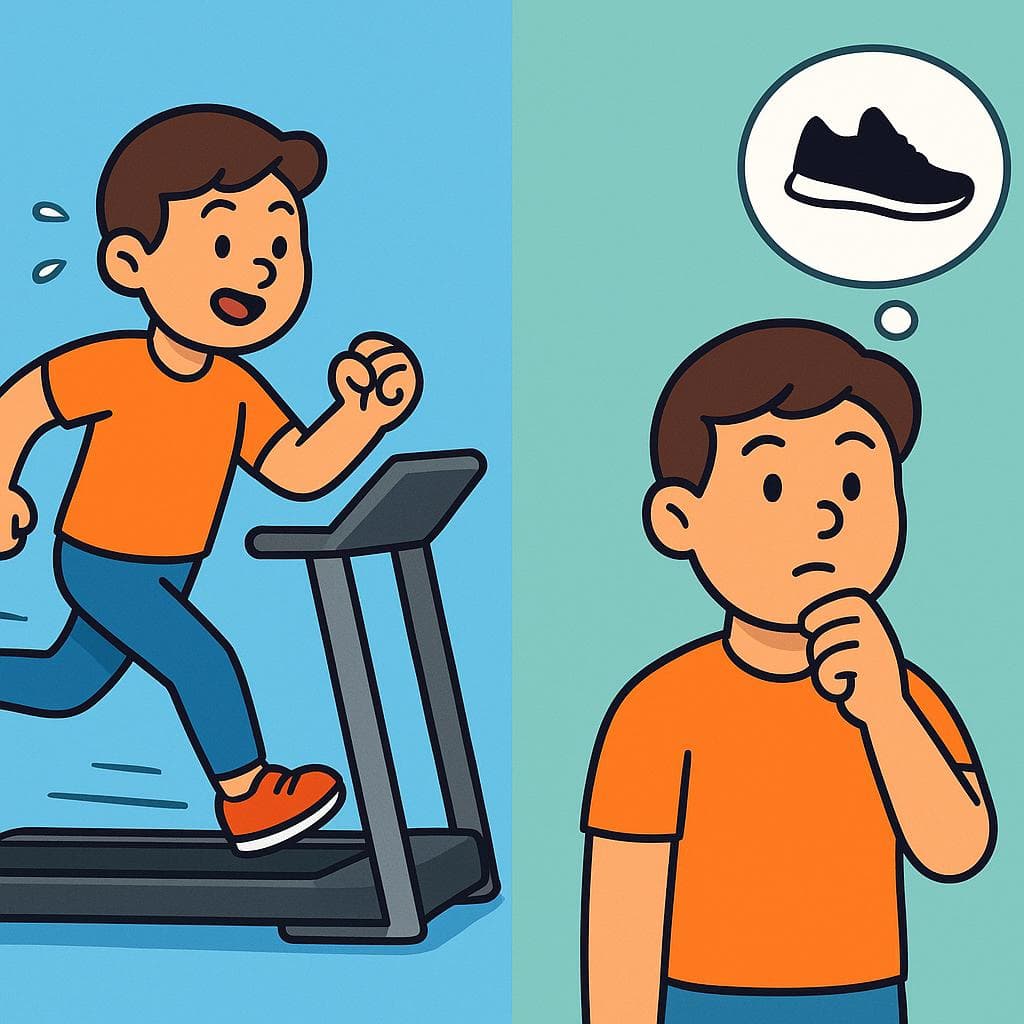
Use the gerund (-ando/-iendo) for an action in progress. Use the infinitive (-ar/-er/-ir) as the 'idea' of an action, like a noun.
gerund
The '-ing' form of a verb (e.g., hablando, comiendo), used to describe an action that is currently happening or in progress.
heh-ROON-dyohinfinitive
The basic, unconjugated form of a verb ('to do something'), which acts like a noun representing the concept of an action.
een-fee-nee-TEE-vohQuick Rule
Use the gerund (-ando/-iendo) for an action in progress. Use the infinitive (-ar/-er/-ir) as the 'idea' of an action, like a noun.
Gerund is happenING right now. Infinitive is the Idea of an action.
- When an action is the subject ('Swimming is fun'), Spanish uses the infinitive: 'Nadar es divertido'.
- After prepositions ('Thanks for coming'), Spanish uses the infinitive: 'Gracias por venir'.
Comparison Table
| Context | gerund | infinitive | Why? |
|---|---|---|---|
| The 'idea' of an action | Estoy corriendo. | Correr es divertido. | Gerund for the action in progress ('I am running'), infinitive for the concept ('Running is fun'). |
| After a preposition | Aprendo mirando. | Gracias por mirar. | Gerund can show 'how' (by watching), but the infinitive is required after prepositions like 'por'. |
| Following another verb | Sigo pensando. | Quiero pensar. | Gerund is used with specific verbs like 'seguir' (to keep doing). Most verbs are followed by an infinitive. |
| Likes and dislikes | No me molestes, estoy leyendo. | Me gusta leer. | Gerund for what you are doing now. Infinitive for the general activity you like or dislike. |
When to Use "gerund / infinitive"
gerund
The '-ing' form of a verb (e.g., hablando, comiendo), used to describe an action that is currently happening or in progress.
heh-ROON-dyoh
Action in progress (with 'estar')
Estoy trabajando ahora.
I am working now.
Describing 'how' something is done
Aprendo español escuchando música.
I learn Spanish by listening to music.
Continuing an action (with 'seguir')
Ella sigue estudiando para el examen.
She keeps studying for the exam.
Describing a simultaneous action
Vi a los niños corriendo en el parque.
I saw the children running in the park.
infinitive
The basic, unconjugated form of a verb ('to do something'), which acts like a noun representing the concept of an action.
een-fee-nee-TEE-voh
As the subject of a sentence
Fumar es malo para la salud.
Smoking is bad for your health.
After prepositions (por, para, sin, de, a...)
Gracias por venir.
Thanks for coming.
After another conjugated verb
Quiero aprender a cocinar.
I want to learn to cook.
On signs and in general commands
No tocar.
Do not touch.
Contrast Examples
With "gerund":
Estoy leyendo un libro.
I am reading a book. (The action is happening now.)
With "infinitive":
Leer es mi pasatiempo favorito.
Reading is my favorite hobby. (The concept of the activity.)
The Difference: The gerund describes the action you are physically doing right now. The infinitive talks about the activity as a general concept or hobby.
With "gerund":
Te vi caminando por la calle.
I saw you walking down the street. (Describes the action you were doing when I saw you.)
With "infinitive":
Fui a ver una película.
I went to see a movie. (The purpose of my action.)
The Difference: The gerund describes a simultaneous action. The infinitive is used after another verb (ir a + infinitive) to state the purpose or intention.
With "gerund":
Sigo trabajando en el mismo lugar.
I keep working in the same place. (Continuing an action.)
With "infinitive":
Tengo que trabajar mañana.
I have to work tomorrow. (Expressing an obligation.)
The Difference: The gerund is used in specific structures like 'seguir + gerund' to mean 'to keep doing'. The infinitive is used in structures like 'tener que + infinitive' to mean 'to have to do'.
Common Mistakes
Caminando es mi ejercicio favorito.
Caminar es mi ejercicio favorito.
When an action is the subject of a sentence, Spanish always uses the infinitive, even though English uses the '-ing' form.
Gracias por ayudando.
Gracias por ayudar.
In Spanish, you must use the infinitive form of a verb after a preposition like 'por', 'para', 'sin', or 'después de'.
Me gusta nadando.
Me gusta nadar.
After verbs like 'gustar', 'odiar', or 'preferir', use the infinitive to talk about the activity in general.
Quick Practice
Quick Quiz: Gerund vs Infinitive
Question 1 of 3
Which sentence means 'Swimming is good exercise'?
Related Grammar
Want to understand the grammar behind this pair? Explore these lessons for a deep dive:
Key Words


Tags
Build the instinct, not just the rule
Rules help you get it right; context makes it automatic. Read 200+ illustrated and narrated Spanish stories to see confusing pairs chosen correctly — over and over — until you stop thinking about it.
Frequently Asked Questions
Why can't I say 'Me gusta corriendo' if I like running?
Because in Spanish, verbs like 'gustar' refer to the general concept of an activity, not the action in progress. You have to use the infinitive: 'Me gusta correr'. Saying 'estoy corriendo' means 'I am running right now'.
So the Spanish gerund is NOT the same as the English '-ing' form?
Correct! This is the key difference. The English '-ing' form can be a verb ('I am running'), a noun ('Running is fun'), or an adjective ('a running joke'). The Spanish gerund is almost exclusively for describing an action in progress. For the other uses, Spanish uses the infinitive or an adjective.