
Ir + gerund vs Estar + gerund
Estar + gerund is a snapshot in time. Ir + gerund is a process over time.
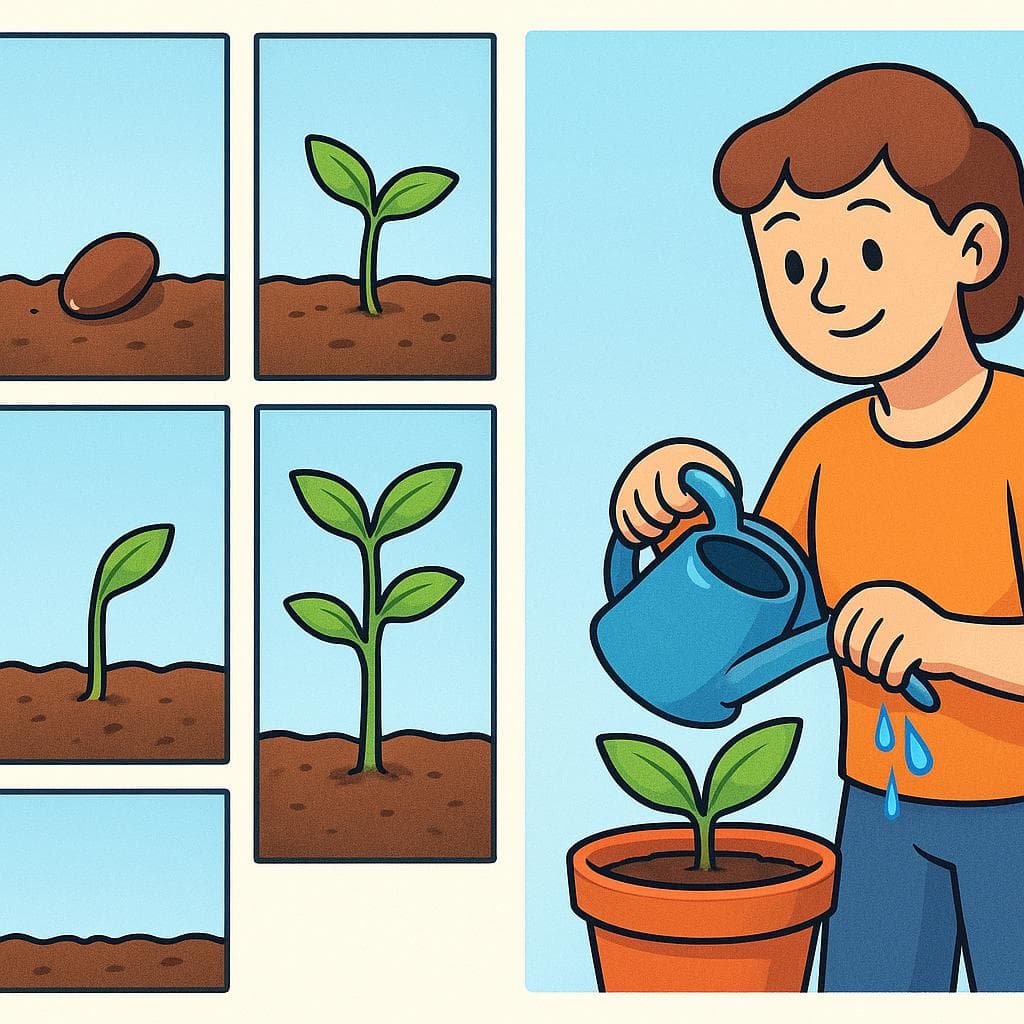
ir + gerund
Describes a gradual process, an action that unfolds slowly or in stages over time.
EER + gerundestar + gerund
Describes an action happening right now or in the current period. It's a snapshot of an ongoing action.
ehs-TAR + gerundQuick Rule
Estar + gerund is a snapshot in time. Ir + gerund is a process over time.
Think: Estar = 'staying' in the moment. Ir = 'going' through a process.
- Estar + gerund can also describe a temporary action around the present, not just right this second (e.g., 'Estoy leyendo un libro').
- Ir + gerund is not used for actions happening at the exact moment of speaking.
Comparison Table
| Context | ir + gerund | estar + gerund | Why? |
|---|---|---|---|
| Learning a skill | Voy aprendiendo a conducir. | Estoy practicando el aparcamiento. | Ir for the entire, slow process of learning. Estar for a specific practice session happening now. |
| Weather changes | El día se va nublando. | Ahora mismo está lloviendo. | Ir for a gradual transition (getting cloudy). Estar for the current state (raining). |
| Understanding | Voy entendiendo la trama. | Estoy escuchando tu explicación. | Ir for the gradual dawning of understanding. Estar for the action you're doing right now to understand. |
| Building something | Voy construyendo mi futuro. | Estoy pintando la pared. | Ir for a long-term, abstract process. Estar for a concrete, immediate action. |
When to Use "ir + gerund / estar + gerund"
ir + gerund
Describes a gradual process, an action that unfolds slowly or in stages over time.
EER + gerund
Gradual change or development
La situación va mejorando poco a poco.
The situation is gradually improving.
Accumulation over time
Voy entendiendo más con cada clase.
I'm understanding more with each class.
Starting a process (often as a command)
Ve preparando la cena mientras llego.
Go ahead and start preparing dinner while I get there.
Natural transitions
Ya va anocheciendo.
It's starting to get dark now.
estar + gerund
Describes an action happening right now or in the current period. It's a snapshot of an ongoing action.
ehs-TAR + gerund
Action in progress at this moment
¿Qué estás haciendo?
What are you doing (right now)?
Describing a scene
Los niños están jugando en el parque.
The children are playing in the park.
Temporary current activity
Este mes estoy trabajando desde casa.
This month I'm working from home.
Expressing annoyance (with 'siempre')
Siempre estás perdiendo las llaves.
You are always losing your keys.
Contrast Examples
With "ir + gerund":
Voy entendiendo el subjuntivo.
I'm gradually getting the hang of the subjunctive.
With "estar + gerund":
Estoy entendiendo lo que dices.
I am understanding what you're saying (right now).
The Difference: Ir + gerund describes the slow journey to understanding a complex topic over time. Estar + gerund describes the immediate comprehension of something being said at this moment.
With "ir + gerund":
Voy ahorrando para un coche.
I'm slowly saving up for a car.
With "estar + gerund":
Estoy guardando el cambio en la hucha.
I'm putting my change in the piggy bank (right now).
The Difference: Ir + gerund focuses on the long-term, cumulative goal of saving. Estar + gerund describes a specific, physical action of saving money that is happening at this instant.
With "ir + gerund":
Me voy acostumbrando al nuevo horario.
I'm gradually getting used to the new schedule.
With "estar + gerund":
Me estoy levantando temprano hoy.
I'm getting up early today.
The Difference: Ir + gerund describes the slow, internal process of adaptation over days or weeks. Estar + gerund describes the single action happening on this particular day.
Common Mistakes
Voy hablando por teléfono.
Estoy hablando por teléfono.
To describe an action happening right now, use 'estar + gerund'. 'Voy hablando' would strangely imply you are talking in gradual stages.
Estoy mejorando poco a poco.
Voy mejorando poco a poco.
While not strictly wrong, adding 'poco a poco' (little by little) emphasizes a gradual process, making 'ir + gerund' the more natural and precise choice.
Quick Practice
Quick Quiz: Ir + gerund vs Estar + gerund
Question 1 of 3
Choose the best option: 'Con el tiempo, ___ entendiendo mejor a mis padres.'
Related Grammar
Want to understand the grammar behind this pair? Explore these lessons for a deep dive:
Key Words



Tags
Build the instinct, not just the rule
Rules help you get it right; context makes it automatic. Read 200+ illustrated and narrated Spanish stories to see confusing pairs chosen correctly — over and over — until you stop thinking about it.
Frequently Asked Questions
Can I always just use 'estar + gerund' and be understood?
Yes, in most cases. 'Estar + gerund' is far more common, and you will always be understood. Using 'ir + gerund' is a sign of a more advanced, nuanced understanding of Spanish. It adds a layer of meaning that 'estar + gerund' doesn't have, but its absence won't usually cause confusion.
Is 'ir + gerund' used in all Spanish-speaking countries?
It is understood everywhere, but its frequency varies. It's quite common in Spain and some parts of Latin America. In other regions, it might sound a bit more literary or formal, but it's still a correct and useful structure to know.
Are there other verbs that can be used with a gerund like this?
Yes! Spanish has several verbs that create these 'verbal periphrases'. Two other common ones are 'seguir + gerund' (to keep on doing something) and 'llevar + gerund' (to have been doing something for a period of time).