
Present Progressive vs Imperfect
Progressive = a specific action IN PROGRESS. Imperfect = the background scene or a habit.
present progressive
Describes an action that was actively in progress at a specific moment in the past, often one that got interrupted.
preh-SEHN-teh proh-greh-SEE-bohimperfect
Describes background information, habitual actions, ongoing conditions, or what 'used to' happen in the past.
eem-pehr-FEK-tohQuick Rule
Progressive = a specific action IN PROGRESS. Imperfect = the background scene or a habit.
Think: Progressive is the movie's ACTION shot (what was happening). Imperfect is the movie's OPENING shot (setting the scene).
- For two simultaneous past actions, the imperfect is more common, e.g., 'Mientras yo cocinaba, él leía' (While I was cooking, he was reading).
Comparison Table
| Context | present progressive | imperfect | Why? |
|---|---|---|---|
| Interrupted Action | Estaba leyendo cuando llegaste. | Leía cuando llegaste. | Progressive emphasizes the action was 'in the middle of happening'. Imperfect sets the background action. Both are often possible, but progressive is more vivid. |
| Setting a Scene | (Uncommon/Unnatural) | Llovía y hacía mucho viento. | To describe the general atmosphere or 'what it was like', the imperfect is the right choice. Progressive is for specific actions within that scene. |
| Storytelling Focus | ¿Qué estabas haciendo anoche? | ¿Qué hacías en esa época? | Progressive asks about a specific, ongoing action at a point in time. Imperfect asks about general activities or habits over a longer period. |
When to Use "present progressive / imperfect"
present progressive
Describes an action that was actively in progress at a specific moment in the past, often one that got interrupted.
preh-SEHN-teh proh-greh-SEE-boh
An interrupted action
Estaba durmiendo cuando sonó el teléfono.
I was sleeping when the phone rang.
An action at a specific time
A las diez de la noche, todavía estábamos cenando.
At 10 PM, we were still eating dinner.
Emphasizing an ongoing process
Estuve pensando en ti todo el día.
I was thinking about you all day.
imperfect
Describes background information, habitual actions, ongoing conditions, or what 'used to' happen in the past.
eem-pehr-FEK-toh
Setting the scene (weather, time, location)
Hacía sol y los pájaros cantaban.
It was sunny and the birds were singing.
Habitual actions ('used to')
De niño, siempre jugaba en el parque.
As a child, I always used to play in the park.
Descriptions of people, things, or states
La casa era grande y tenía un jardín.
The house was big and had a garden.
Age, feelings, and thoughts in the past
Tenía 20 años y me sentía invencible.
I was 20 years old and I felt invincible.
Contrast Examples
With "present progressive":
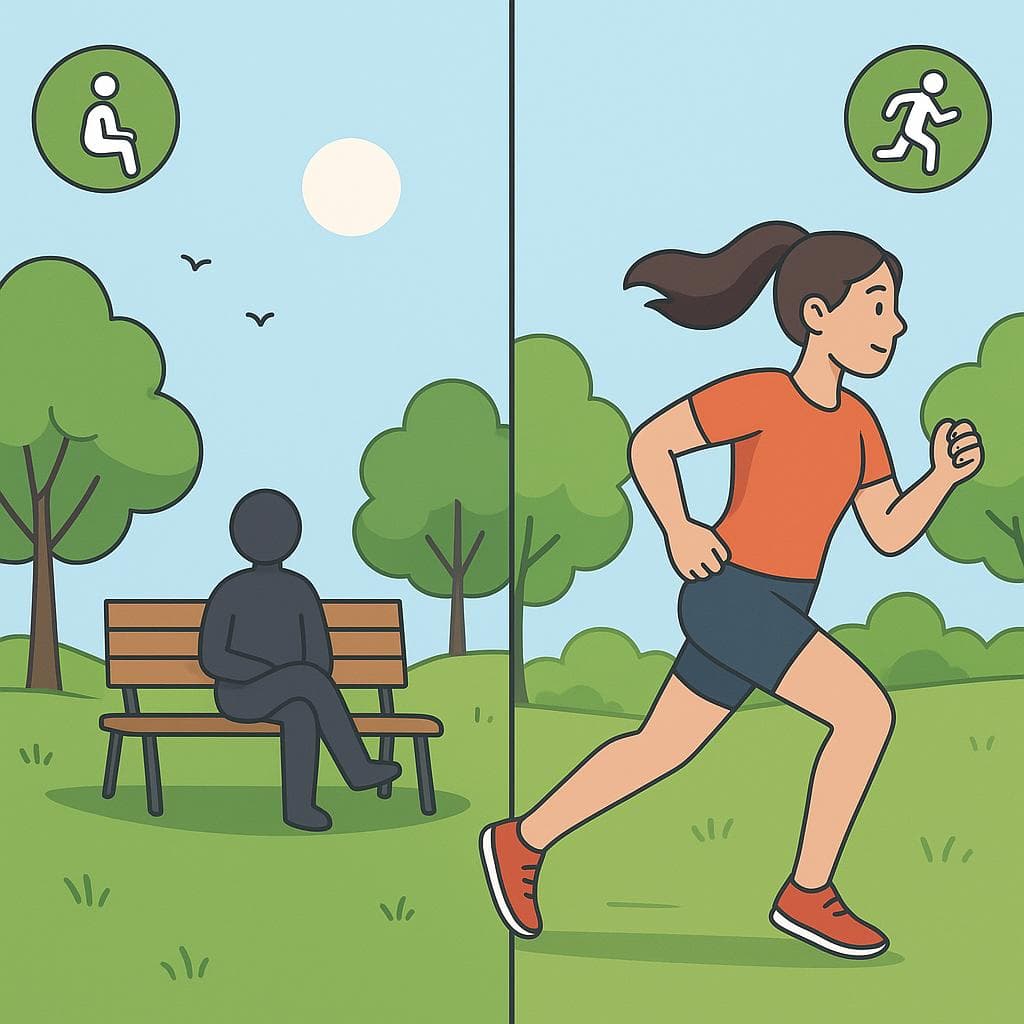
Ayer a las 5, estaba corriendo en el parque.
Yesterday at 5, I was running in the park.
With "imperfect":
Antes, corría en el parque todos los días.
Before, I used to run in the park every day.
The Difference: The progressive pinpoints an action in progress at a specific moment. The imperfect describes a past routine or habit over an extended period.
With "present progressive":
Estaba estudiando para el examen cuando me llamaste.
I was studying for the exam when you called me.
With "imperfect":
Estudiaba mucho en la universidad.
I used to study a lot in college.
The Difference: Progressive is for the specific action that was interrupted ('I was in the middle of studying'). Imperfect describes a general habit from a past phase of life ('I was a person who studied a lot').
Common Mistakes
Cuando era niño, estaba viviendo en México.
Cuando era niño, vivía en México.
For describing a condition over a long, undefined period (like where you lived), use the imperfect. The progressive implies it was a temporary, in-progress state.
Hacía mis deberes cuando mi amigo estaba llamando.
Hacía mis deberes cuando mi amigo llamó.
The imperfect or progressive sets the background action ('was doing homework'), but the interrupting action (the phone call) is a completed event, so it needs the preterite tense ('llamó').
Quick Practice
Quick Quiz: Present Progressive vs Imperfect
Question 1 of 2
Choose the best option: 'Cuando llegué a la fiesta, todos ___.'
Related Grammar
Want to understand the grammar behind this pair? Explore these lessons for a deep dive:
Key Words


Tags
Build the instinct, not just the rule
Rules help you get it right; context makes it automatic. Read 200+ illustrated and narrated Spanish stories to see confusing pairs chosen correctly — over and over — until you stop thinking about it.
Frequently Asked Questions
Can I always translate English '-ing' to the Spanish progressive?
No, this is a very common trap! English uses '-ing' for many things. In Spanish, the progressive is ONLY for an action actively in progress. For background descriptions or habits, even if you'd say 'was -ing' in English (e.g., 'It was raining'), you need the imperfect in Spanish ('Llovía').
Is the imperfect ever used for an interrupted action?
Yes, absolutely. It's very common to use the imperfect for the background action, like 'Yo leía un libro cuando sonó el teléfono.' The progressive ('estaba leyendo') just adds extra emphasis that you were right in the middle of it. Often, both are acceptable, but they have a slightly different feel.