
Se Pasivo vs Se Impersonal
Pasivo: Verb matches the THING (singular/plural). Impersonal: Verb is always singular, about PEOPLE.
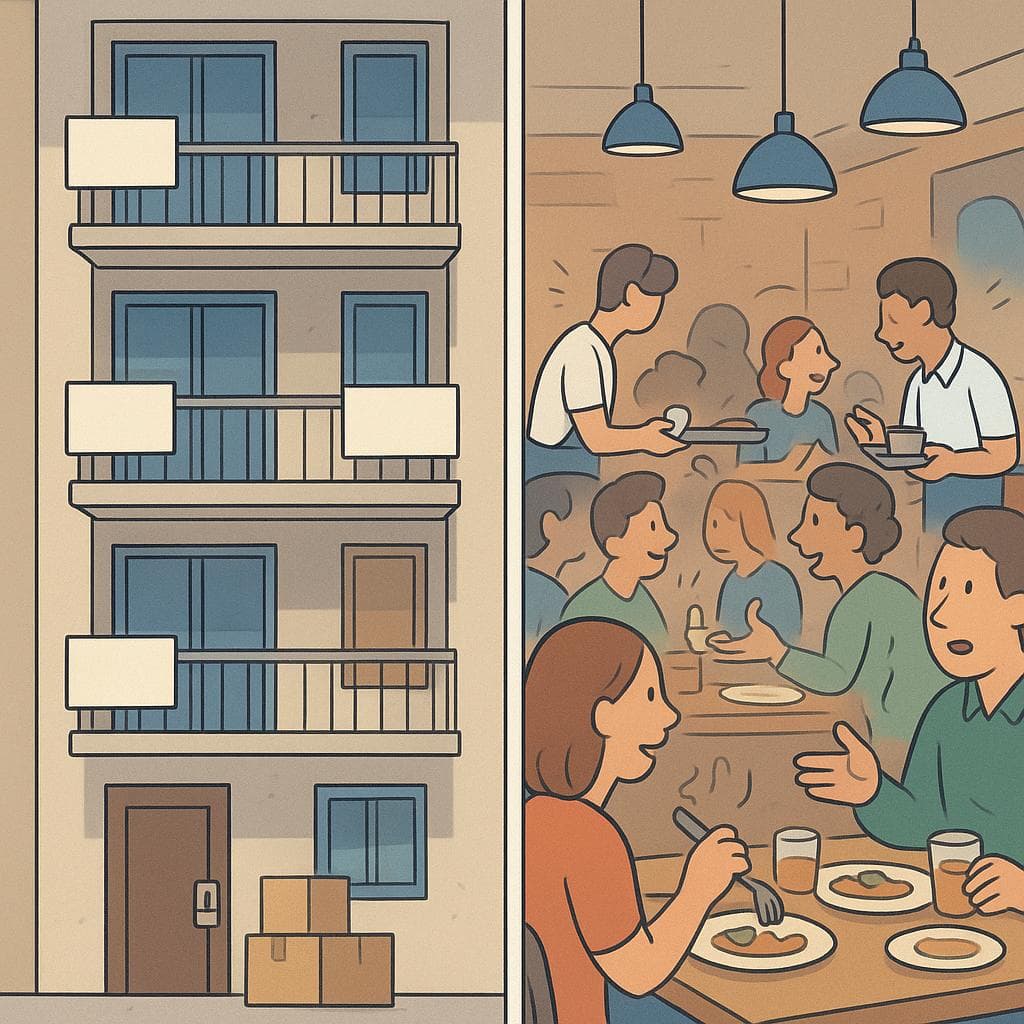
se pasivo
The 'passive se' is used to say something was done without saying who did it. The focus is on the object or thing that receives the action.
seh pah-SEE-bohse impersonal
The 'impersonal se' is used to talk about what 'one', 'people', or 'they' do in general, without specifying anyone. The verb is always singular.
seh eem-pehr-soh-NAHLQuick Rule
Pasivo: Verb matches the THING (singular/plural). Impersonal: Verb is always singular, about PEOPLE.
Pasivo = Plural is Possible. Impersonal = Impossible for the verb to be plural.
- When the impersonal 'se' refers to a specific human object, you must use 'a' and keep the verb singular (e.g., 'Se busca a los testigos').
Comparison Table
| Context | se pasivo | se impersonal | Why? |
|---|---|---|---|
| Verb Agreement | Se venden bicicletas. | Se vive bien aquí. | Pasivo: The verb ('venden') is plural to match the object ('bicicletas'). Impersonal: The verb ('vive') is always singular. |
| Focus of Sentence | Se construyó un nuevo estadio. | Se trabaja mucho para ganar poco. | Pasivo focuses on the THING that was built (the stadium). Impersonal focuses on the ACTION people do (working). |
| Referring to People | Se necesitan enfermeras. | Se contrata a las enfermeras. | Pasivo: 'Enfermeras' is the subject, so the verb is plural. Impersonal: 'A las enfermeras' is the object, so the verb stays singular. |
When to Use "se pasivo / se impersonal"
se pasivo
The 'passive se' is used to say something was done without saying who did it. The focus is on the object or thing that receives the action.
seh pah-SEE-boh
Focus on a singular thing
Se vende el coche.
The car is for sale. (Literally: The car is sold.)
Focus on plural things
Se venden coches.
Cars are for sale. (Literally: Cars are sold.)
General statements about a thing
El español se habla en 20 países.
Spanish is spoken in 20 countries.
Signs and advertisements
Se alquilan apartamentos.
Apartments for rent.
se impersonal
The 'impersonal se' is used to talk about what 'one', 'people', or 'they' do in general, without specifying anyone. The verb is always singular.
seh eem-pehr-soh-NAHL
General actions of people
En España se come muy tarde.
In Spain, people eat very late.
Making general observations
Se vive muy bien en esta ciudad.
One lives very well in this city.
Referring to a human object (with 'a')
Se busca a los responsables.
They are looking for the people responsible.
With verbs that don't take a direct object
Se duerme poco en la universidad.
People sleep little in college.
Contrast Examples
With "se pasivo":
Se necesitan traductores.
Translators are needed.
With "se impersonal":
Se busca a traductores.
They are looking for translators. / One looks for translators.
The Difference: The passive form states a general need (the translators are the subject). The impersonal form describes the action of searching for them (translators are the object, so the verb stays singular).
With "se pasivo":
Aquí se habla español.
Spanish is spoken here.
With "se impersonal":
Se habla de todo un poco.
People talk about a little of everything.
The Difference: The passive form focuses on the language itself, like a fact on a sign. The impersonal form describes the general action of people talking.
Common Mistakes
Se vende casas en esta calle.
Se venden casas en esta calle.
This is about the 'casas' (plural things). It's passive, so the verb must be plural ('venden') to match.
En verano se van mucho a la playa.
En verano se va mucho a la playa.
This is about what 'people' do. It's impersonal, so the verb must always be singular ('va').
Se buscan los ladrones.
Se busca a los ladrones.
When the object of an impersonal 'se' is a specific person or people, you must use the 'personal a' and keep the verb singular.
Quick Practice
Quick Quiz: Se Pasivo vs Se Impersonal
Question 1 of 3
Choose the correct verb: 'En esta tienda, no ___ aceptan tarjetas de crédito.'
Related Grammar
Want to understand the grammar behind this pair? Explore these lessons for a deep dive:
The Passive Voice
Provides a deep dive into the 'se pasivo' and other ways to form the passive.
Impersonal Sentences
Explains how to form and use impersonal sentences with 'se'.
Direct Object Pronouns
Understanding objects helps clarify why the verb changes in passive but not impersonal sentences.
Key Words


Tags
Build the instinct, not just the rule
Rules help you get it right; context makes it automatic. Read 200+ illustrated and narrated Spanish stories to see confusing pairs chosen correctly — over and over — until you stop thinking about it.
Frequently Asked Questions
So, the verb is always singular with 'se impersonal'?
Yes, that's the key rule. Because you're talking about a generic 'one' or 'people', the verb always takes the third-person singular form (like for él/ella/usted), even if the object of the sentence is plural.
Can I just use the normal passive voice instead of 'se pasivo'?
You can, but it's much less common in everyday Spanish. Saying 'Las casas son vendidas por la agencia' is grammatically correct, but 'Se venden casas' is far more natural and common. Mastering the 'se pasivo' will make your Spanish sound much more authentic.
What's the difference between 'Se necesitan doctores' and 'Se necesita a doctores'?
Great question! 'Se necesitan doctores' is passive. 'Doctores' is the subject, so the verb is plural. It means 'Doctors are needed.' 'Se necesita a doctores' is impersonal. 'a doctores' is the object. It means 'One needs doctors' or 'They need doctors.' Both are grammatically correct and very similar in meaning, but they are different structures.