
Señor vs Don
Señor = Last Name (formal). Don = First Name (respectful).
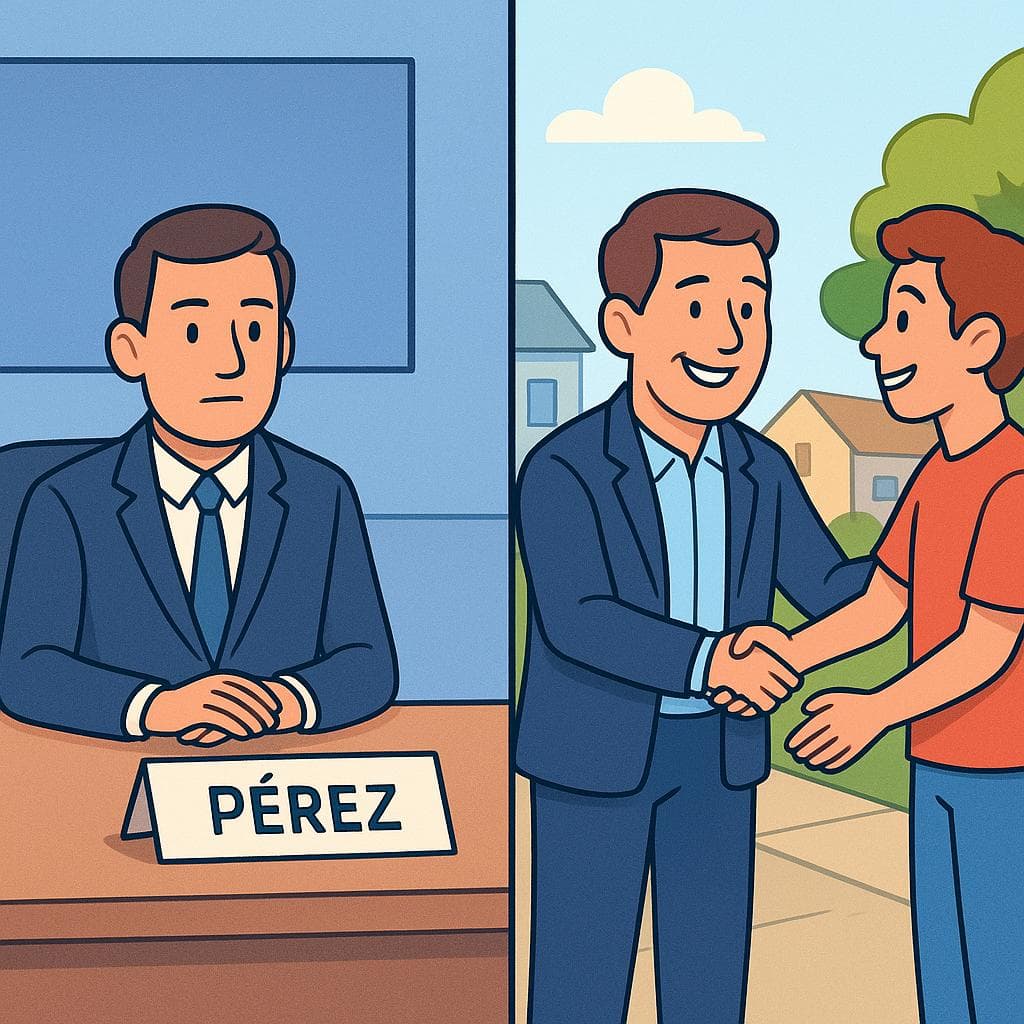
señor
Mr., Sir. A formal title used with a man's last name or by itself to show general respect.
sen-YORdon
A traditional title of high respect used with a man's first name, often for someone older or of high social standing.
DOHNQuick Rule
Señor = Last Name (formal). Don = First Name (respectful).
Think: Señor for Surnames, Don for Deference (with a first name).
- You can use 'señor' by itself as a general 'sir' (e.g., 'Sí, señor').
- Very formally, you can combine them: 'el Señor Don Carlos'.
Comparison Table
| Context | señor | don | Why? |
|---|---|---|---|
| How to Use with Names | Señor García | Don Carlos | Señor is always paired with a last name. Don is always paired with a first name. |
| Level of Formality | Formal (like a business email) | Respectful (like addressing an elder) | Señor is standard professional formal. Don implies a deeper, more traditional respect. |
| Addressing Strangers | Disculpe, señor. | (Not used for strangers) | Only 'señor' can be used on its own to mean 'sir' when addressing someone you don't know. |
| Female Equivalent | Señora Martínez | Doña Isabel | The female equivalent of Señor is Señora. The female equivalent of Don is Doña. |
When to Use "señor / don"
señor
Mr., Sir. A formal title used with a man's last name or by itself to show general respect.
sen-YOR
With a last name (formal)
El señor Pérez no está en la oficina.
Mr. Pérez is not in the office.
As a general 'Sir' (no name)
Disculpe, señor, ¿me puede ayudar?
Excuse me, sir, can you help me?
Referring to a man formally
El señor de la corbata azul es mi jefe.
The gentleman in the blue tie is my boss.
don
A traditional title of high respect used with a man's first name, often for someone older or of high social standing.
DOHN
With a first name (respectful)
Don Miguel es el dueño de la tienda.
Don Miguel is the owner of the store.
For older, esteemed figures
Mi abuelo, don Francisco, era un hombre muy sabio.
My grandfather, Don Francisco, was a very wise man.
Shows personal respect and familiarity
Gracias por todo, don Carlos.
Thank you for everything, Don Carlos.
Contrast Examples
With "señor":
Buenos días, señor Morales.
Good morning, Mr. Morales.
With "don":
Buenos días, don Juan.
Good morning, Don Juan.
The Difference: 'Señor Morales' is standard, professional, and formal. 'Don Juan' is also formal but adds a layer of personal deference and respect, common for an older or highly esteemed boss.
With "señor":
El señor Ruiz vive en esa casa.
Mr. Ruiz lives in that house.
With "don":
Don Carlos vive en esa casa.
Don Carlos lives in that house.
The Difference: Using 'señor' is a neutral, formal way to refer to him. Using 'don' implies a more personal connection and shows you hold him in high esteem, likely due to his age and role in the community.
Common Mistakes
Buenos días, Señor Juan.
Buenos días, Don Juan.
'Señor' is used with last names. To show respect with a first name, you must use 'Don'.
El Don Pérez es mi vecino.
El Señor Pérez es mi vecino.
'Don' is only for first names. When using a last name, the correct formal title is 'Señor'.
Quick Practice
Quick Quiz: Señor vs Don
Question 1 of 2
You need to formally address your new boss, whose name is Ricardo Gómez. What is the most standard way to greet him?
Related Grammar
Want to understand the grammar behind this pair? Explore these lessons for a deep dive:
Key Words

Tags
Build the instinct, not just the rule
Rules help you get it right; context makes it automatic. Read 200+ illustrated and narrated Spanish stories to see confusing pairs chosen correctly — over and over — until you stop thinking about it.
Frequently Asked Questions
Is there a female version of Don?
Yes! The female equivalent is 'Doña'. It's used in the exact same way: with a first name to show respect for a woman, especially one who is older or holds a position of authority. For example, 'Doña Carmen'.
Is using 'Don' old-fashioned?
It is traditional, but not necessarily old-fashioned. In many parts of the Spanish-speaking world, it's still very common in daily life to show respect. It's less common in very modern, international business settings but very common in communities, small towns, and family contexts.
Can I just use 'Señor' for everyone to be safe?
Yes, using 'Señor' + last name is always a safe, formal, and polite option if you're unsure. You will never offend someone by being too formal. Using 'Don' requires a bit more social awareness of the person's age and status relative to you.